The Iberá Wetlands never close. There is no season when the water drains away or the animals disappear, and every month of the year has something worth flying for. But the trip changes character completely depending on when you come, and one season is measurably better than the others for the thing most visitors come for. Two things to fix in your head first: Iberá is in the southern hemisphere, so July is midwinter and January is the height of summer. And winter here does not mean cold.
The short answer: June to August
If your priority is seeing animals, come in the southern winter. It is not close.
The logic is water. Iberá is a wetland fed by rain, and from roughly April onwards the rains ease and the water level drops. As the marshes shrink, wildlife concentrates around the lagoons and channels that hold water year-round. Everything gets closer, more visible and easier to photograph. Fish concentrate too, which is why the big waders and the jabiru stork are at their most reliable in the dry months.
What winter actually feels like: daytime temperatures of roughly 18 to 25 degrees Celsius, cool nights, and a sun that is fierce even in July. Bring sunscreen and a warm layer for early mornings on the water.
The rest of the winter case:
- Clear skies, which matter for photography and for the night skies, which are genuinely dark out here
- Practically no mosquitoes, because the cold nights knock the insect population down
- More dependable roads, since the unpaved access routes suffer less
- Wildlife concentrated near water rather than dispersed across a flooded landscape
The trade-off is company. June to October is the high season, and July, along with Argentine long weekends, is the peak. Book one to two months ahead for July; two to three weeks is usually enough in the shoulder months.
Spring, September to November: the wetland in flower
Spring is the most photogenic time of year. The water hyacinth comes into bloom and carpets the lagoons in violet, and the birds shift into breeding mode: display flights, fresh plumage, nests everywhere.
It is also the season for the specialities that winter cannot give you. The Iberá Seedeater, the bird described new to science in 2016 and the reason many international birders come at all, is present essentially only from October to March. The Strange-tailed Tyrant is at its most spectacular in the spring and summer breeding season, in the tall grasslands of the San Nicolás and Cambyretá portals. The reintroduced Red-and-Green Macaws at Cambyretá are at their most active in spring and summer, during nesting.
So the rule splits cleanly. General wildlife watching peaks in winter. Grassland bird specialities peak in spring and early summer. If you are a serious birder, that inversion is the single most important line in this article, and the full birding field guide goes species by species.
Summer, December to March: hot, high water, alive at dawn
Corrientes summer is genuinely hot: highs above 35 degrees with heavy humidity. This is the low season, and it is low for a reason.
It still has arguments. High water opens channels that are impassable the rest of the year, so boat trips reach deeper into the marsh. The evenings are the longest of the year. The villages are at their most alive, with local families using the river beaches. Wildlife remains very active, just compressed into the cool hours.
The strategy is simply to travel like a local: out at first light, back before midday, siesta through the worst of the heat, out again for the late afternoon.
Mosquitoes are a real factor from December to March, worst at dusk. Repellent and light long sleeves handle it, and lodges in the wetland have mosquito nets as standard.
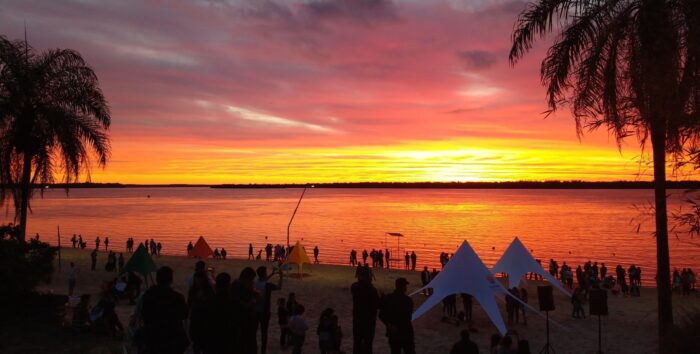
If you do travel in summer, ask for the 6 am departure rather than a mid-morning one. First light on the water is the best hour of the day for wildlife in any season, and in January it is the only comfortable one. The siesta afterwards is fully earned.
Month by month, in one line each
- January and February: intense heat, high water, low season. For travellers who tolerate the climate and get up early.
- March and April: the heat breaks, water is still generous. An underrated window.
- May to August: dry and cool, with clear skies, concentrated animals and no mosquitoes. The season most visitors pick for wildlife and photography.
- September to November: water hyacinth in flower, birds breeding, grassland specialities arriving. High season, so book ahead.
- December: the turn into summer. Good wildlife, and fewer visitors than in spring.
If you are coming for one specific thing
- Jaguars. Dawn and dusk, any season. Sightings are rare in every month; see what your realistic odds are.
- Capybaras and caimans. Any month at all. Capybaras are practically guaranteed at the Laguna Iberá and Galarza portals year-round.
- Marsh deer. Dawn along the wetland edges, best at the Uguay, San Nicolás and Laguna Iberá portals.
- Grassland birds. October to March for the breeding specialities; year-round for the Yellow Cardinal in the dry Chaco woodland at San Nicolás and Mburucuyá.
- Golden dorado fishing. September to March, with a closed season in November and December to protect spawning.
The portal matters as much as the month
Travellers work this out too late. Choosing which of the ten gateway portals you enter shapes the trip at least as much as the date, because each one has its own star species, its own level of infrastructure and its own character. Cambyretá is macaws and grassland; Laguna Iberá is the classic lagoon boat safari; San Nicolás is dry Chaco woodland and a 4x4 road.
Sort out the portal and the date together, then check how to actually get there, because the travel day is longer than most people plan for, and where to stay at each portal, because the choice is narrower than you would expect.
Frequently asked questions
When should I visit the Iberá Wetlands?
June, July and August, the southern winter, are the driest and coolest months and the easiest for general wildlife watching. Low water concentrates animals near the lagoons, the skies are clear and there are almost no mosquitoes.
Is the Iberá Wetlands worth visiting in summer?
Yes, but plan around the heat. Highs pass 35 degrees from December to March. Wildlife stays active at dawn and dusk, water levels are high enough to open extra channels, and prices and crowds are lower.
Are there mosquitoes in the Iberá Wetlands?
From December to March, yes, especially at dusk. From May to August there are practically none. Lodges provide mosquito nets and light long sleeves plus repellent are enough the rest of the time.
When should I come for birding in Iberá?
October to March for the grassland specialities, including the Iberá Seedeater and the Strange-tailed Tyrant in breeding plumage. Winter is better for waterbirds and for sheer visibility.
How far in advance should I book?
One to two months for July and Argentine long weekends, which are the peak. Two to three weeks is generally enough in the shoulder seasons.
Does it rain a lot in Iberá?
Rain peaks in autumn, with March and April among the wettest months of the year, and eases into the winter dry season. It matters mostly for the unpaved access roads, which deteriorate quickly after sustained rain, so check conditions locally before you drive.
Iberá Experience is the free guide app to the Ibera Wetlands. It shows you which of the ten gateway portals to choose, where to stay, and who runs the boat safaris, birding walks and transfers, with direct contact for each one. No sign-up, and it works straight from your browser. Start at iberaexperience.com.
Sources, last checked July 2026: seasonal patterns, high season, mosquito months, booking windows and species timing (Iberá Experience field data and species encyclopedia, cross-checked with local operators); dorado fishing season and closed season (provincial fishing regulations); temperatures are typical ranges, not guarantees. Water levels vary year to year: confirm conditions with your lodge before travelling.
Start planning your Iberá trip
Free, no download and no sign-up: the app that gathers all 10 access portals and more than 400 local providers of the wetlands.
Open Iberá Experience