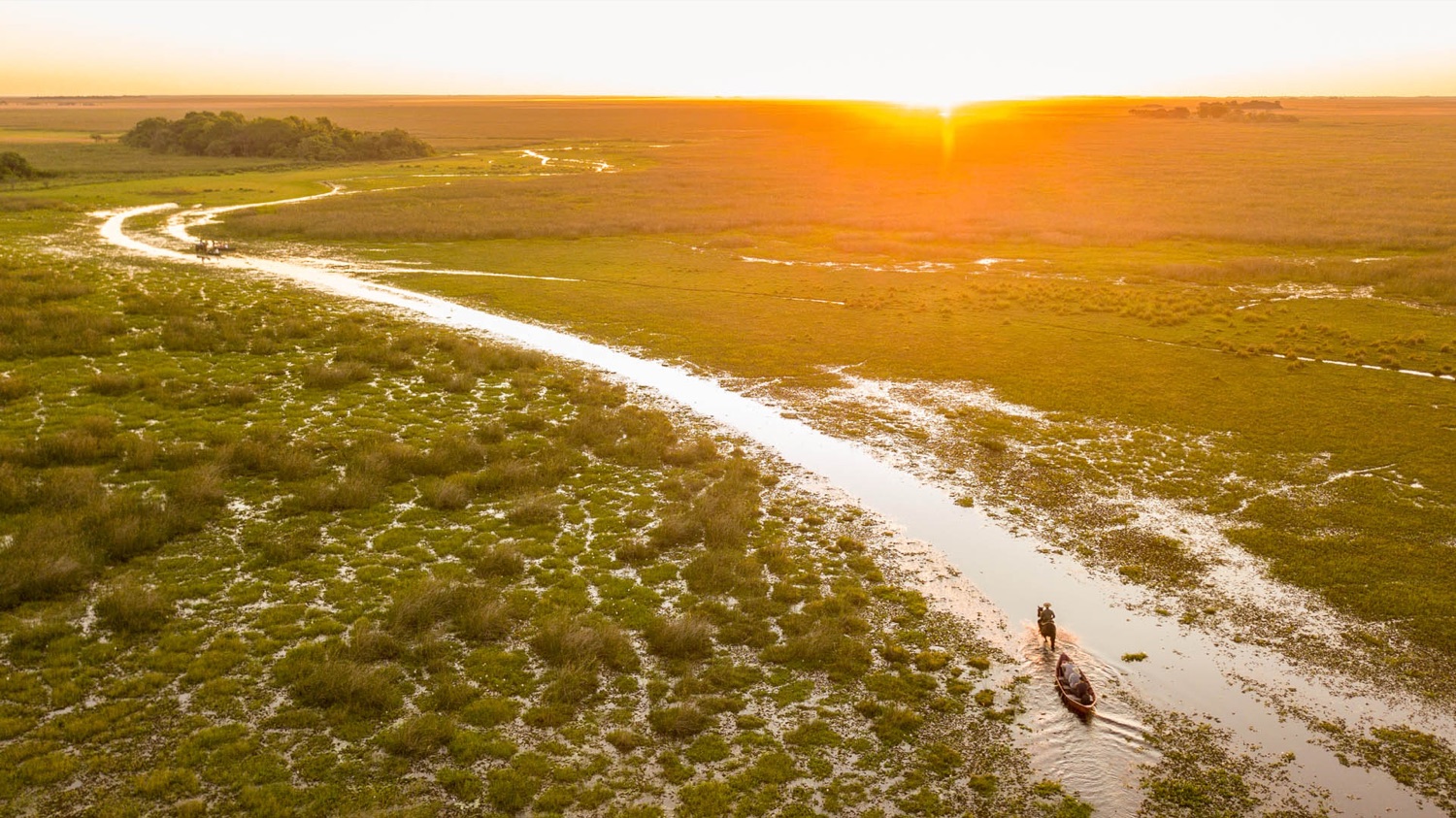
The Iberá can be visited all year round: there is no season when the wetland closes or the wildlife disappears. What changes is the character of the trip.
🦌 April to August brings cooler weather: mild days, cool nights and clear skies. April is still among the wettest months; from May it rains less, there are almost no mosquitoes and winter is the driest part of the year. In the cold, caimans spend hours sunning on the banks.
🌸 September to November is when the wetland blooms: sarandí shrubs, ingá trees and the last lapachos in flower, birds in full breeding season and the red macaws of Cambyretá very active. The best known gateways fill up, so book ahead.
☀️ December to March is genuinely hot, with highs above 35°C and storms that blow in suddenly, and the water hyacinths carpet the lagoons in violet. The local strategy: go out early in the morning and at dusk, and rest at midday.
The Iberá calendar shows month by month what you can see in each one.
Month by month
What happens in the wetlands at each time of year: blooms, migrations, breeding season and the species you can only see in certain months.
High and low season
The high season of the Iberá is from June to October. Winter (June to August) is a very good time: cool, dry weather, no mosquitoes and caimans sunning on the banks. Long weekends and July are the peaks of occupancy: book in advance. The low season (January to March) has extreme heat but also very active wildlife at dawn.
Weather
The Iberá has a humid subtropical climate. Average temperature in January: 27°C, in July: 16°C. Absolute highs exceed 40°C in summer. Frosts are possible between June and August. It rains all year round, around 1,400 mm annually. Rain is concentrated between autumn and spring (March, April and October are among the wettest months) and winter is the driest part of the year, with August the driest month.
Mosquitoes
Mosquitoes are most active in summer (December to March) and at dusk. With proper repellent and lightweight long clothing they are not a real problem. In the cold months (May to August) there are practically no mosquitoes. The lodgings in the Iberá always have mosquito nets.
What to bring
For the Iberá bring: lightweight clothing in neutral colors, insect repellent, sunscreen, a hat, closed comfortable shoes for the trails, and binoculars if you have them. In winter add a layer for the mornings. In summer, repellent is essential at dusk and during the night.
Plan your trip to the Iberá
Map, wildlife, verified providers and trip planner, all in one place. Free, on the web and on Google Play.
Open Iberá Experience