Most conservation stories are about holding a line: keeping what is left, slowing the losses. Iberá is one of the rare places where the line moved the other way. A landscape that had been quietly emptied of its largest animals has spent the last two decades getting them back, one species at a time, and it is now the most ambitious multi-species rewilding programme in Latin America. If you visit, you are walking through the middle of that experiment while it is still running.
What was lost, and how completely
The wetland itself was never destroyed. What went missing was the wildlife.
Over the twentieth century, hunting and land conversion stripped Corrientes of most of its large animals. The list of species that disappeared from the province, in some cases from the whole country, is bleak: the jaguar, the giant river otter, the tapir, the collared and white-lipped peccaries, the giant anteater, the bare-faced curassow, the red-and-green macaw and the glaucous macaw. Others held on in collapsing numbers: the pampas deer, the maned wolf, the ocelot, the lowland paca, the red-legged seriema.
The marshes still looked magnificent. They were, ecologically speaking, running on a fraction of their cast.
Buying back a landscape
The turn came through land. Starting in the late 1990s, Douglas and Kristine Tompkins, through Tompkins Conservation and The Conservation Land Trust, began buying old cattle ranches on the edge of the existing provincial reserve. In total around 158,000 hectares of former ranch land were acquired, deliberately including habitats the provincial park did not protect: Espinal woodland, the shrub-and-grass mosaic locals call malezal, and patches of forest.
The purchase was never the goal. Donation was. In December 2018 the Argentine congress created Iberá National Park by national law 27,481, largely on that donated land. The park covers 195,094 hectares and sits inside the Iberá Natural Reserve, which the province of Corrientes declared back in 1983 and which spans about 1.3 million hectares. Within that reserve, roughly 600,000 hectares form the Iberá Provincial Park, created by decree in 2009 and expanded in 2016 and 2021.
It is worth saying plainly that this was not universally welcomed. Large-scale land purchase by foreign philanthropists, followed by the conversion of working ranches into protected area, was contentious in Corrientes and remains a live argument in parts of the province. The counter-argument the project makes is economic, and it is testable: the gateway towns now live off visitors who come to see animals that were not there twenty years ago.
The species, in the order they came back
The reintroduction programme has run since 2007, and it works species by species, each with its own breeding enclosures, monitoring and release protocol.
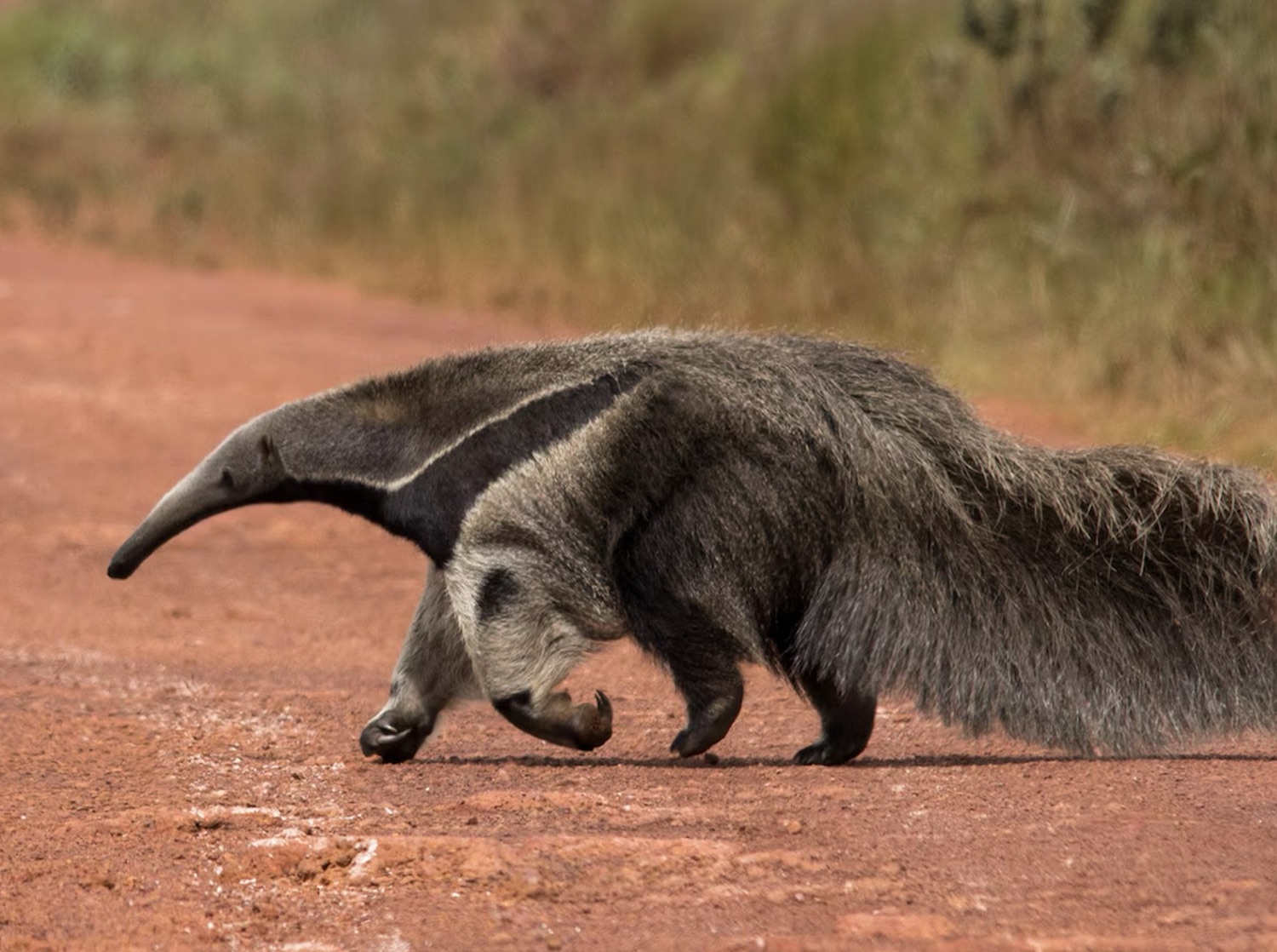
The giant anteater, 2007
The first one back, and still the quiet success of the programme. One of the biologists involved calls it "the project that opened the door for all the others". Many of the founding animals were orphaned pups rescued after their mothers were killed by vehicles or poachers. Roughly a hundred have been released, and about 200 now live free across seven population nuclei inside the reserve, among them Rincón del Socorro, San Alonso, Carambola and San Nicolás. The recovery has spilled past the borders too, with an anteater turning up in Rio Grande do Sul, Brazil, after some 130 years of local extinction.
The red-and-green macaw, 2015
Extinct nationwide in Argentina, and absent from Corrientes for roughly 150 years. Seven captive-bred birds were released experimentally in 2015, most of which had never flown properly before and had to be taught. In 2020 the project announced the first chicks hatched in the wild in a century and a half. The population is now established at the Cambyretá portal, with a second nucleus at Yerbalito begun in 2026.
Macaws are the species most likely to give a casual visitor a genuine rewilding moment: they are loud, enormous and impossible to miss when a flock crosses the forest at dawn.
The jaguar, 2021
The headline act, and the hardest. The jaguar had been gone from Corrientes since the middle of the twentieth century, and Argentina's entire remaining population was estimated at 200 to 250 animals in 2018. Rewilding Argentina began the jaguar project in 2012, building a breeding and pre-release centre on San Alonso Island, deep inside the marsh, where cubs could learn to hunt without ever associating food with people.
The first jaguars walked free in Iberá in 2021. Since then the population has grown across several generations to at least 50 free-ranging animals, and biologists think the wetland could eventually hold around 100. In 2025 the project crossed a threshold few reintroductions ever reach: an Iberá-born wild jaguar was translocated to help seed a new population in the Gran Chaco, the first wild-to-wild jaguar translocation in the country. Iberá had gone from recipient to source.
If you are wondering whether you will see one: almost certainly not, and the honest maths is here.
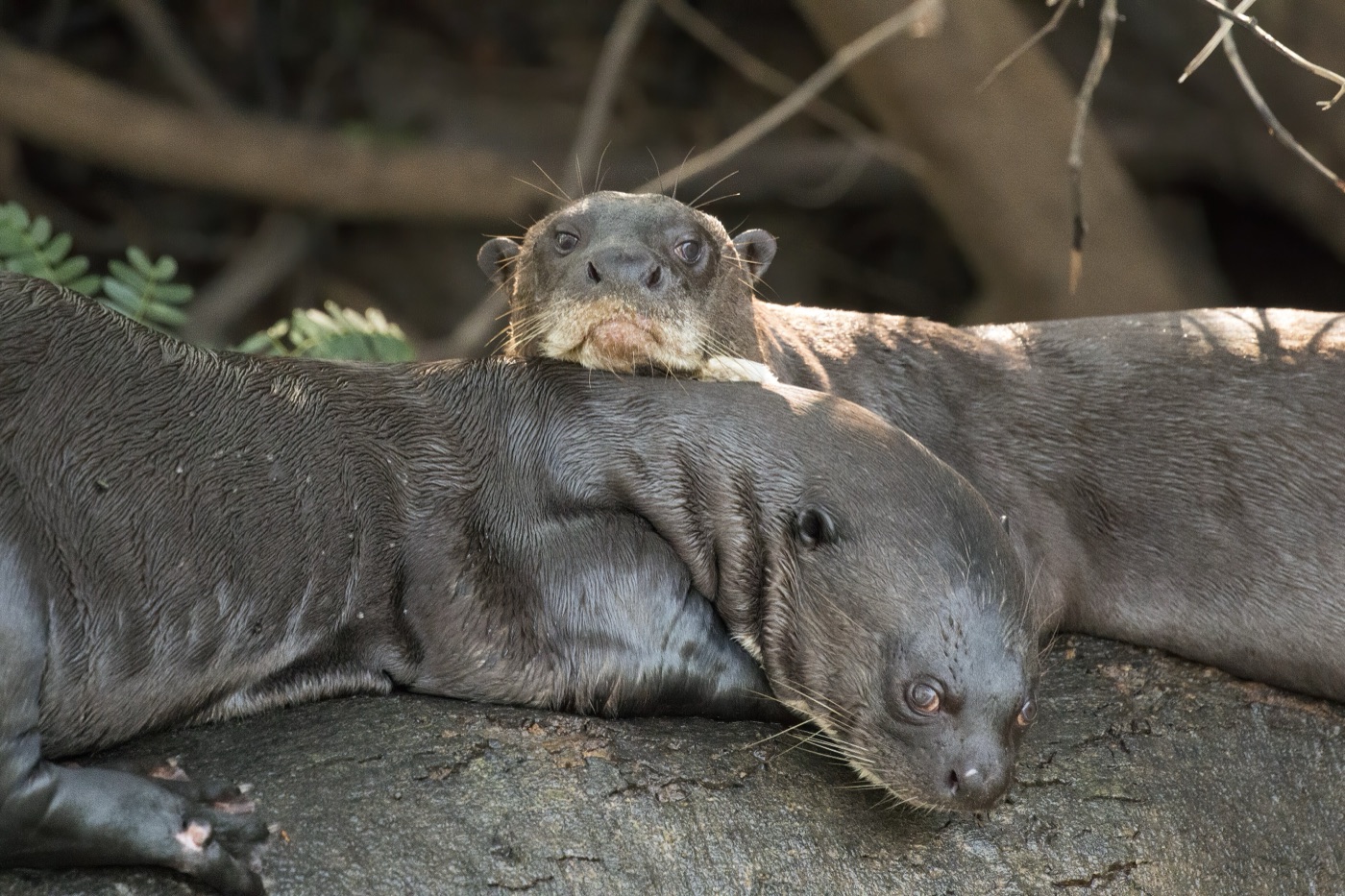
The giant otter, 2025
The most recent, and in some ways the most extraordinary. The giant otter is the largest otter on earth, reaching about 1.8 metres, and it was the apex predator of the province's rivers before it was hunted out for its pelt. The last family groups anywhere in Argentina were seen in 1986.
On 30 June 2025 a family of four was released into Laguna Paraná inside the park: a breeding pair, Coco from Givskud Zoo in Denmark and Nima from Madrid Zoo, and their two pups Pirú and Kyra, born in the park's facilities in November 2024. It was the first time the species had been returned anywhere it had been driven to national extinction, and the first time a top predator had been brought back from nationwide extinction in Argentina.
And the rest
Working alongside those four: the lowland tapir, the collared peccary (now in several populations at Rincón del Socorro, San Alonso, Carambola, San Nicolás and Yerbalito), the pampas deer, the ocelot, the red-legged seriema, and the bare-faced curassow, whose reintroduction is still in its early phase.
Ask your guide which reintroduced species they have personally seen and when. Guides here track this the way birders track lists, and their answers will tell you far more about the current state of each population than any published figure, including the ones in this article.
What rewilding actually looks like on a visit
Not like a zoo, and not like a safari park. There are no enclosures on the tourist routes and no feeding stations. What you notice instead is density: an ordinary boat trip on the lagoon puts you close to more large animals than anywhere else in Argentina, because they have not been hunted for decades and have no particular reason to fear a boat.
The bird list is the other measure. More than 350 species have been recorded in the park, including grassland specialities that are close to extinct elsewhere in Argentina because their habitat has become farmland. The full run-down is in the birding field guide.
And the towns matter. Ten public-access gateways have been opened around the wetland, linked by a scenic route of more than 1,000 kilometres and around 500 kilometres of gravel road, deliberately routed through the towns and hamlets around the wetland. The lodges, guides, boatmen and cooks are local. Choosing them is the part of the story a visitor actually participates in.
Frequently asked questions
What is rewilding in Iberá?
A programme run since 2007 by Rewilding Argentina, working with the provincial government and the national parks administration, to bring locally extinct species back to Iberá Park and rebuild the ecological processes that depend on them. It is the largest multi-species reintroduction effort in Latin America.
Which species have been reintroduced to Iberá?
Giant anteater, pampas deer, collared peccary, lowland tapir, red-and-green macaw, ocelot, red-legged seriema, jaguar and giant river otter, with the bare-faced curassow in an earlier phase.
When were jaguars reintroduced to Iberá?
The first jaguars were released into the wild in 2021, after a breeding programme begun in 2012. At least 50 now range free, and in 2025 an Iberá-born jaguar was translocated to help start a new population in the Gran Chaco.
Who created Iberá National Park?
It was created by Argentine national law 27,481 in 2018 and covers 195,094 hectares. Roughly 158,000 hectares of former cattle ranch, bought and donated by Tompkins Conservation and Rewilding Argentina, made it possible. The park sits inside the Iberá Natural Reserve, which the province of Corrientes declared in 1983.
Can visitors see the reintroduced animals?
Some, easily. Giant anteaters and red-and-green macaws are seen regularly, pampas deer and peccaries less so. Jaguars and giant otters are rare sightings that no operator can promise.
Is Iberá National Park free to enter?
Entry to the national park sectors is free and self-registered. The provincial sector at the Laguna Iberá portal in Carlos Pellegrini charges a modest fee.
Iberá Experience is the free guide app to the Ibera Wetlands. It shows you which of the ten gateway portals to choose, where to stay, and who runs the boat safaris, birding walks and transfers, with direct contact for each one. No sign-up, and it works straight from your browser. Start at iberaexperience.com.
Sources, last checked July 2026: national park area of 195,094 ha, law 27,481/18 and the 1983 provincial reserve (Administración de Parques Nacionales, ficha del área protegida); land purchased and donated, species lost from Corrientes, reintroduction programme and gateway infrastructure (Rewilding Argentina, Iberá Project); giant anteater numbers and the Brazil record (Mongabay, Tompkins Conservation); red-and-green macaw releases and first wild chicks (Tompkins Conservation, The Macaw Society); jaguar timeline, population and the 2025 Gran Chaco translocation (Rewilding Argentina, Mongabay); giant otter release of 30 June 2025 and the 1986 extinction date (Mongabay, UNEP, Rewilding). Population figures are estimates and move: treat them as orientation.
Start planning your Iberá trip
Free, no download and no sign-up: the app that gathers all 10 access portals and more than 400 local providers of the wetlands.
Open Iberá Experience