For well over a century, the red-and-green macaw was missing from Corrientes, and the species had been wiped out across Argentina. Today these big red birds, up to almost a metre long, fly again over the north of the Iberá Wetlands, and Portal Cambyretá, near the town of Ituzaingó in Corrientes province, is where their return began. If one bird is the reason you plan an Iberá trip, this is the portal to plan it around.
This guide covers what Cambyretá is, how the macaws came back, what else you are likely to see, and the practical details a first-time visitor to Argentina needs: how to reach it, what the gravel road is like, and what you will not find once you get there.
Cambyretá, in the north of Iberá National Park
Iberá National Park has four public entrances, and Cambyretá is the one you reach from Ituzaingó. The nearest towns are Ituzaingó and Villa Olivari, both on national route 12 (RN 12).
The portal has a conservation history of its own. The land was donated by the Rewilding Argentina foundation in 2016, and that donation began the handover of public access areas to the state. Today the wider Iberá park has ten public access portals.
What you find on the ground is marsh, shallow water and patches of forest, with the wetland animals Iberá is known for. What sets it apart from the other portals is the sound overhead. The macaws were released here first, and the forests of the north of the park are the ones the project hopes they will help regenerate: the birds eat large native fruits and spread the seeds.
The red-and-green macaw: gone, and back
The red-and-green macaw (Ara chloropterus) once lived in the forests of north-eastern Argentina, including the gallery forests along the Paraná River and the north and centre of what is now Iberá. One of the last well-documented records in Corrientes comes from the naturalist Alcide d'Orbigny, who came across the species in the late 1820s while travelling on the Paraná River near today's Itá Ibaté. The last known records in the province date from the mid-nineteenth century. Capture for the pet trade, persecution for the feather trade and the felling of forests finished the job, and the species disappeared from Argentina altogether.
In 2015 Rewilding Argentina and the province of Corrientes, later joined by Argentina's National Parks Administration, began what Rewilding describes as the first attempt in the country to bring back a bird species that had gone completely extinct. The birds come from private donations, zoos and wildlife rescue centres; the Ecoparque de Buenos Aires, Fundación Temaikèn and the Bioparque La Máxima in Olavarría have bred chicks for the project. None of them knew how to live wild. At the Centro Aguará in Corrientes they are taught to fly long distances, to recognise native fruit and to avoid predators, and each bird is released with a small radio transmitter so the team can follow it.
The founding population, eight birds, was released at Cambyretá. The milestones since then:
- 2019: macaws at Cambyretá began using nest boxes and laid eggs, the first breeding recorded by the project. No chicks hatched that year.
- June 2020: five juveniles were released at Yerbalito, also in the north of the wider Iberá park, as a second nucleus. That brought the macaws flying over the north of the park to 15.
- Spring 2020: the first red-and-green macaw chicks born in the wild in Argentina in more than a century hatched in Iberá. Wild-born chicks made their first flights in January 2021.
- Early 2022: the wildfires of January and February forced the team to evacuate four chicks growing at Cambyretá. Two survived, were trained at the Aguará centre to fly, recognise native fruit and escape predators, and returned to Cambyretá several months later.
- Mid-2022: five more birds, four females and a male, joined the macaws already living free in the forests of Yerbalito, an area Rewilding Argentina donated to the province for Iberá Provincial Park.
- 2023: three chicks hatched in the wild at Cambyretá (more on their travels below).
By 2026, Rewilding Argentina counts the red-and-green macaw among the species with a healthy recovered population in Iberá. The bird is also protected by law: in 2021 Corrientes declared it a Natural Monument of the province (provincial law 6557). That gives it the absolute protection of the province's natural monuments law, and harming one is a punishable offence.
For the other species returned to the wetland, from giant anteaters to jaguars, read the wider Iberá rewilding story.
Seeing the macaws: what to expect
They are big and loud. Argentina's National Parks Administration gives the species a length of 73 to 96 centimetres (about 29 to 38 inches) and a weight of up to 1.7 kilos (3.7 pounds). Look up, and listen too.
They are not on a schedule. These are wild birds that roam. Rewilding Argentina reports macaws sometimes visiting nearby towns such as Ituzaingó, Apipé, Loreto and Villa Olivari, and the three chicks born at Cambyretá in 2023 flew some 350 kilometres (about 220 miles) around the wetland, as far as Concepción. A morning at the portal gives you a real chance, not a guarantee.
Spring and summer are the breeding season. Rewilding Argentina and the National Parks Administration give slightly different months, but both include October to March. At the start of the season the males court the females with open wings, circling flights and a great deal of calling, a display Rewilding describes as a show worth watching.
Nests are off limits. The project places nest boxes high in the trees and monitors them closely. Keep your distance from any nest, follow your guide's lead, and if you post a photo, name the portal, never the exact spot.
Go with a local guide. You do not need a guide to walk or cycle in the national park, but the park service recommends one, and it publishes a list of guides authorised for Cambyretá. Ask yours where the macaws have been seen lately. You can compare the guides based in Ituzaingó in the app and contact them directly.
Plan around the heat, not the calendar. For wildlife watching in general, the park service advises starting very early in the warm months, resting in the shade around midday and going out again in the afternoon. In the cool months it suggests the strong sun from mid-morning to afternoon, since the animals make the most of the sun too.
What else lives at Cambyretá
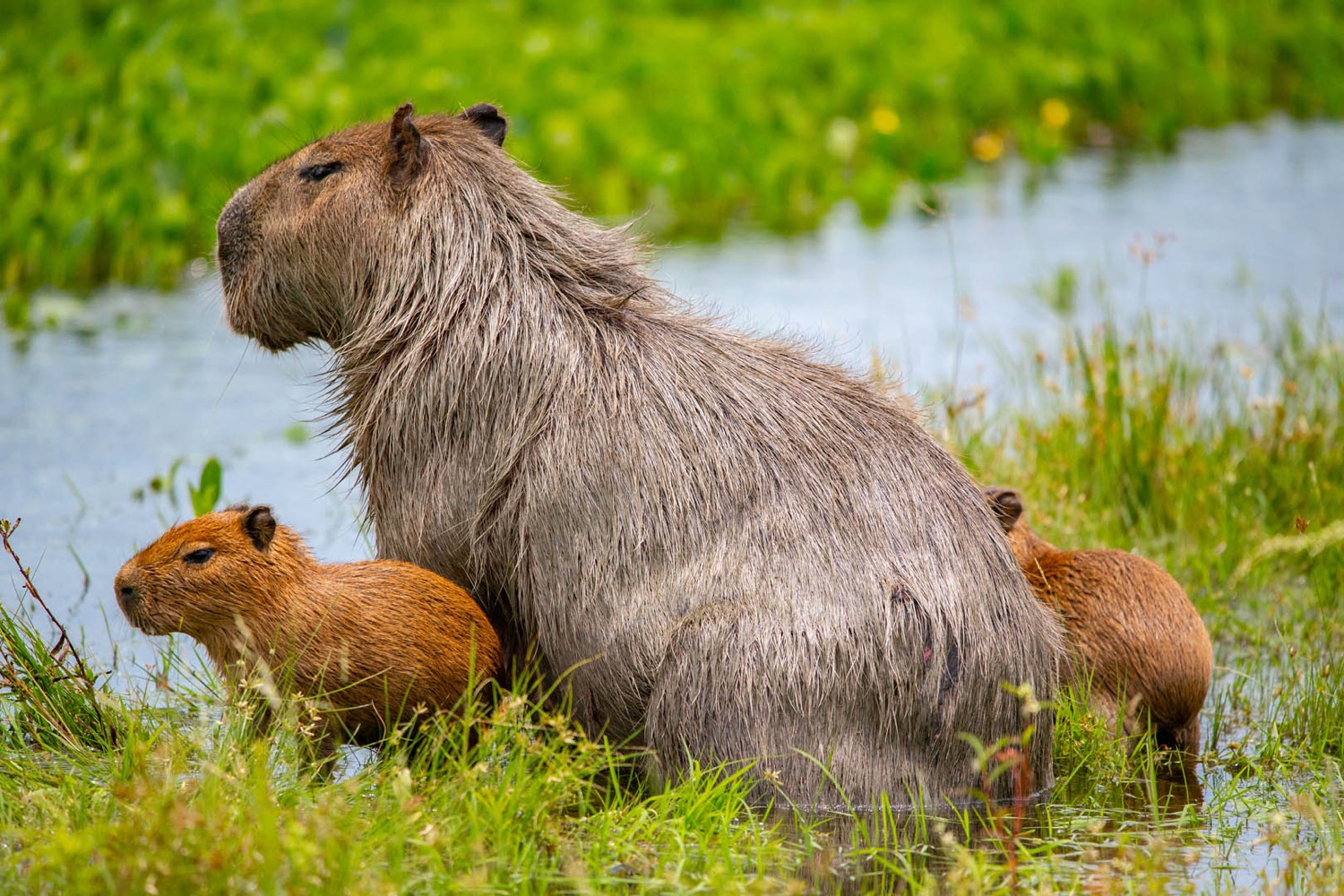
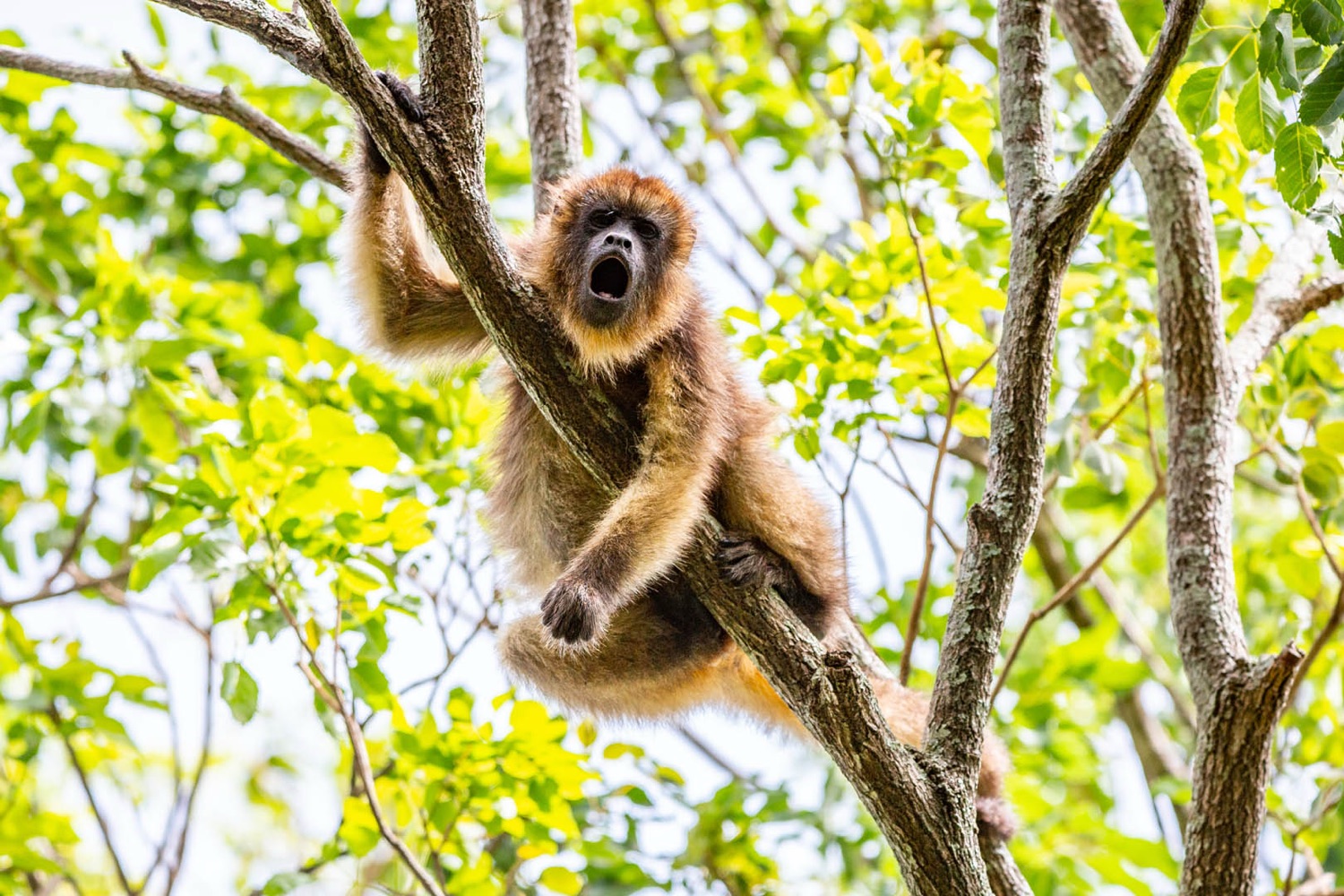
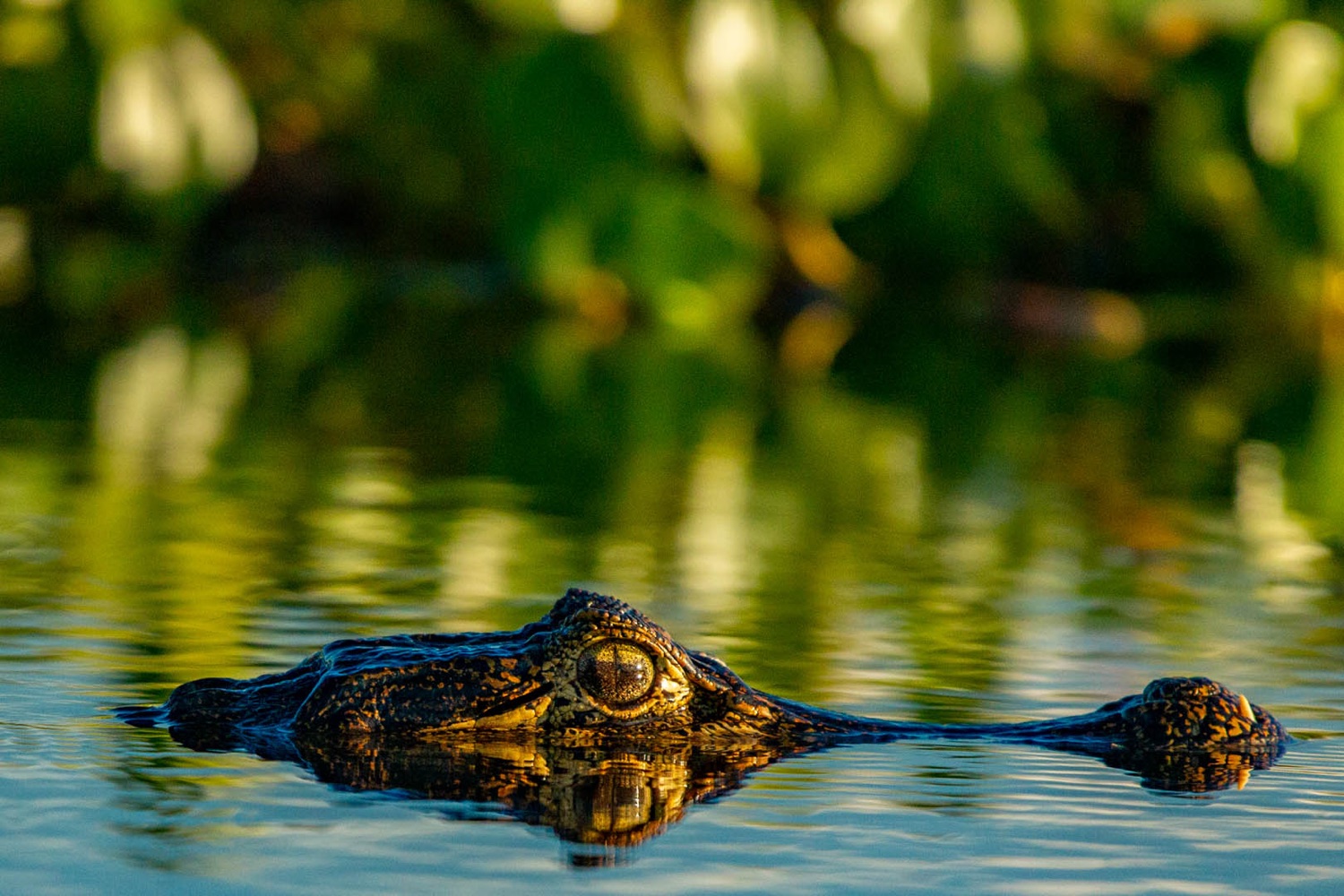
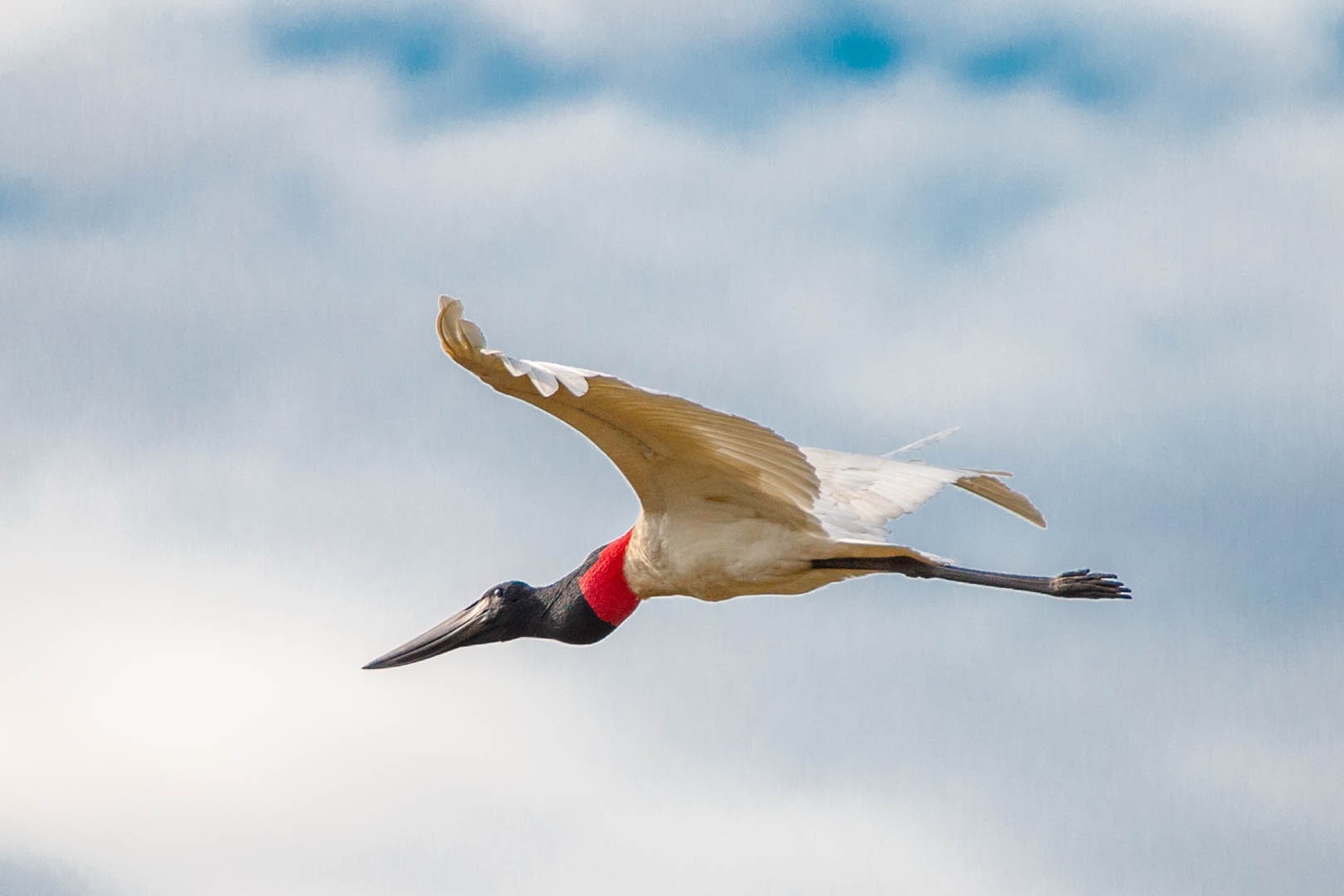
The macaws are the headline, but the town of Ituzaingó's own guide to the portal lists a long cast: marsh deer, capybaras, caimans, brocket deer, Neotropical otters, crab-eating raccoons, foxes and howler monkeys (the mono carayá). Among the birds it names the southern screamer, the jabiru, herons and roseate spoonbills. For the whole of Iberá, the park service counts more than 350 bird species; the birding field guide explains which ones to target and where.
What you can do at the portal
Cambyretá is a place to explore on foot, by bicycle or by vehicle. The park service lists walking trails of low and medium difficulty, birdwatching, cycling on designated trails, picnic areas and camping, and Ituzaingó's tourism page adds drives by vehicle and wildlife watching.
One thing it does not have is boat trips. According to the park service, boat, canoe and kayak outings take place in the neighbouring Iberá Provincial Park, and its list places motorboat outings at the Carambola and Laguna Iberá portals, not at Cambyretá. If a boat safari is on your list, plan it for another portal, such as Laguna Iberá or Carambola; the boat safari guide covers how the outings work.
How to get there
Fly to Posadas. The nearest airport is Posadas, in Misiones province, with direct flights from Buenos Aires on Aerolíneas Argentinas. Low-cost service to Posadas was disrupted in 2026, so check which airlines are flying when you book. Ituzaingó is 85 kilometres (53 miles) from Posadas airport. Ituzaingó is also served by long-distance buses from several companies.
From Ituzaingó to the portal. Take RN 12 for 15 kilometres (9 miles) to the turn-off at km 1242, 8 kilometres (5 miles) from Villa Olivari. From there it is 29 kilometres (18 miles) of gravel, so roughly 44 kilometres (27 miles) from Ituzaingó in total. In normal conditions, meaning no heavy rain in the previous days, any ordinary car can do it. After a lot of rain, drive with care; the app's road conditions page shows how much it has rained at each portal.
Mind the gates. The access road is a local road across private farmland before it reaches the protected area. The park service asks you to get out of the car only to open and close the gates, and Ituzaingó's tourism page reminds visitors to close them as they go.
No public transport. No bus goes to the portal. Without your own car, book a transfer from Ituzaingó or a guide who includes transport. For the bigger picture, including the other portals and the long-distance routes, see how to get to the Iberá Wetlands.
Practical details before you go
- Opening hours. Open every day. From 1 November to 31 March, 6:30 am to 7:30 pm; from 1 April to 31 October, 7:30 am to 6 pm.
- Entry. At the time of writing, entry to the national park through Cambyretá is free. The one requirement is to register with the park staff or fill in the self-registration form at the visitor area.
- Bring everything. There is no shop, no fuel and no mobile signal at the portal, although Ituzaingó's tourism page lists Wi-Fi there. Buy food and drinking water, and fill the tank in one of the nearby towns before you drive in.
- Camping. The portal has a rustic campsite with bathrooms with hot showers and covered shelters with fire pits. Register before 6 pm.
- Where to sleep otherwise. The base town is Ituzaingó, where the municipality lists restaurants, grills, cafés and ice-cream parlours. The options across all the portals are compared in where to stay in the Iberá Wetlands.
The macaws do not read park boundaries. If one lands on a tree in Ituzaingó or Villa Olivari, and sometimes one does, enjoy it from a distance and do not offer it food. The neighbours here report sightings to the Rewilding Argentina team, and that helps the project follow the birds.
Plan your visit
Everything practical about the portal, from the guides and transfers to the campsite and the road, is on the Portal Cambyretá page of Iberá Experience, the free guide app to the Iberá Wetlands: direct contact with each local provider, no download and no sign-up. Rates change, so ask the provider for the current price when you get in touch.
Sources, last checked September 2026: the four national park portals, portal access, km 1242 turn-off, 29 km of gravel, the gates, buses to Ituzaingó and the distance from Posadas airport, opening hours, free entry and registration, activities by portal, boat outings in the provincial park, the heat advice, authorised guides and camping (Administración de Parques Nacionales, argentina.gob.ar/parquesnacionales/nea/parque-nacional-ibera); direct flights to Posadas (Aerolíneas Argentinas, aerolineas.com.ar); the 2026 disruption of low-cost flights to Posadas (El Territorio, 25 August 2026); size, weight and breeding months of the macaw (Administración de Parques Nacionales, news of the first wild chicks); the gates, services, fuel, mobile signal, Wi-Fi and the wildlife list for the portal (Municipalidad de Ituzaingó, ituzaingo.gob.ar/turismo/parque-ibera); places to eat in Ituzaingó (Municipalidad de Ituzaingó, ituzaingo.gob.ar/turismo/gastronomia); the donation of the portal in 2016, the ten portals, historical range and 2026 status (Rewilding Argentina, Iberá project page); d'Orbigny's record, the 2015 start, breeding centres, release and training, the 2019 and 2020 milestones, first flights, the 2022 fires, the 2023 chicks, towns the macaws visit and the breeding season (Rewilding Argentina, stories of 27 June 2020, 21 October 2020, 14 February 2021 and 25 October 2022, the story of the macaw Charrúa, and its red-and-green macaw species page); the June 2020 release at Yerbalito (La Nación, 29 June 2020; Rewilding Argentina species page); the 2022 release at Yerbalito and the causes of extinction (Fundación Temaikèn, 18 July 2022; La Nación, 6 July 2022); Natural Monument status (provincial law 6557, published in the Boletín Oficial de la Provincia de Corrientes on 13 May 2021 with Decree 1047, and provincial law 4736 on natural monuments). Sources give different dates for when the species disappeared from Argentina, so this article gives none. Road conditions and opening hours can change: confirm locally before travelling.
Photo credits: all photographs, including the macaw at the top of the page, Matías Rebak.
Start planning your Iberá trip
Free, no download and no sign-up: the app that gathers all 10 access portals and more than 500 local providers of the wetlands.
Open Iberá Experience