We wrote a whole article explaining why you probably will not see a jaguar in the Iberá Wetlands. This is the other half of that answer, and the more useful one. Because the real surprise of Iberá is not the animal you miss. It is how close you get to everything else. This is a place where large wild animals stand their ground and look back at you, and after two or three days most visitors stop reaching for the camera every time a capybara appears, which tells you everything.
Here is what you can genuinely expect, sorted by how likely it is.
Near certainties: you will see these
If you spend two days here and take the standard boat excursions, missing these would take real effort.
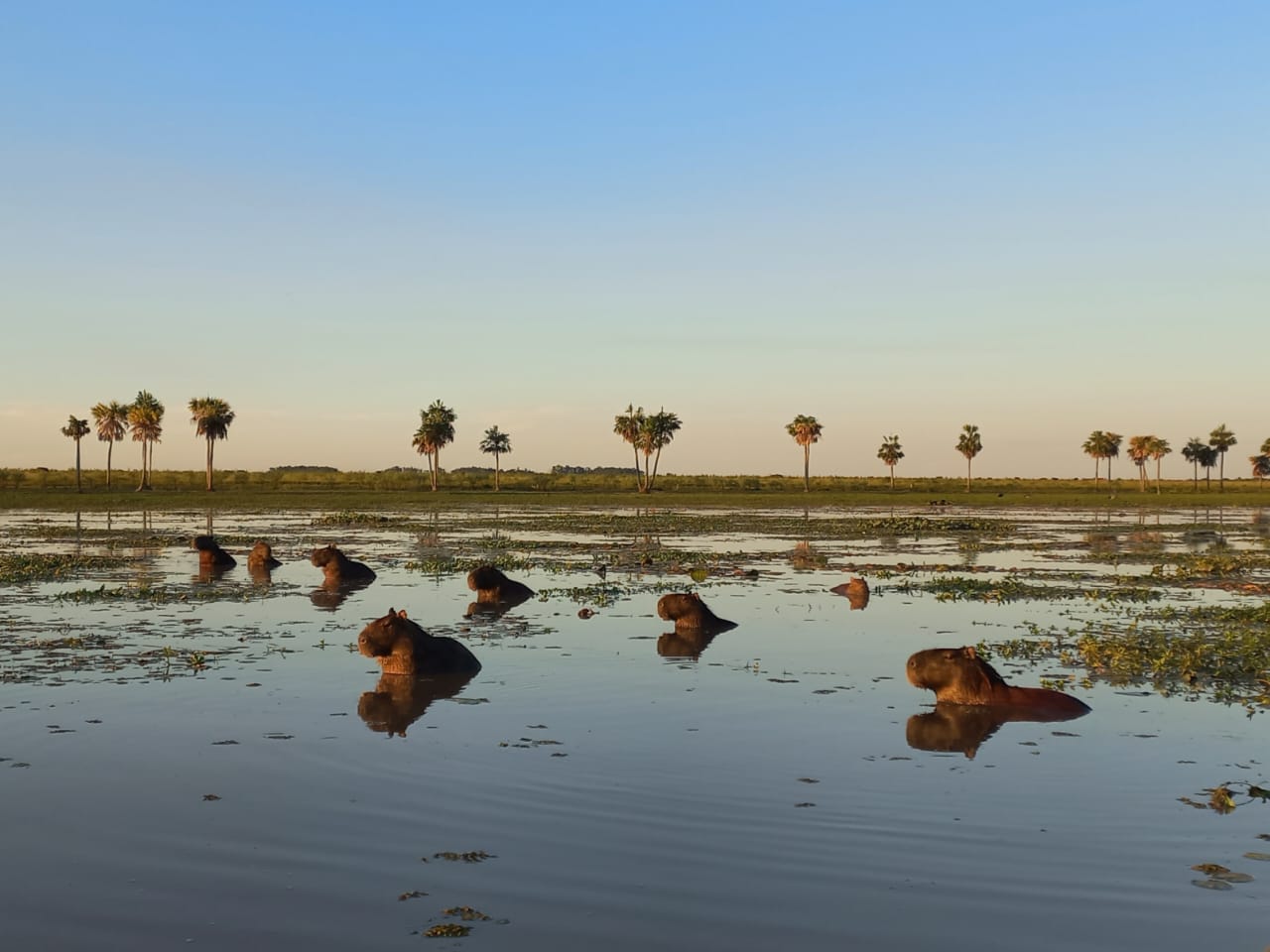
- Capybara. The world's largest rodent, up to 65 kilos, and the emblem of the place. Practically guaranteed year-round at the Laguna Iberá and Galarza portals, in groups of ten to twenty along the banks, grazing at dawn and dusk. They are so untroubled by boats that they sometimes approach them.
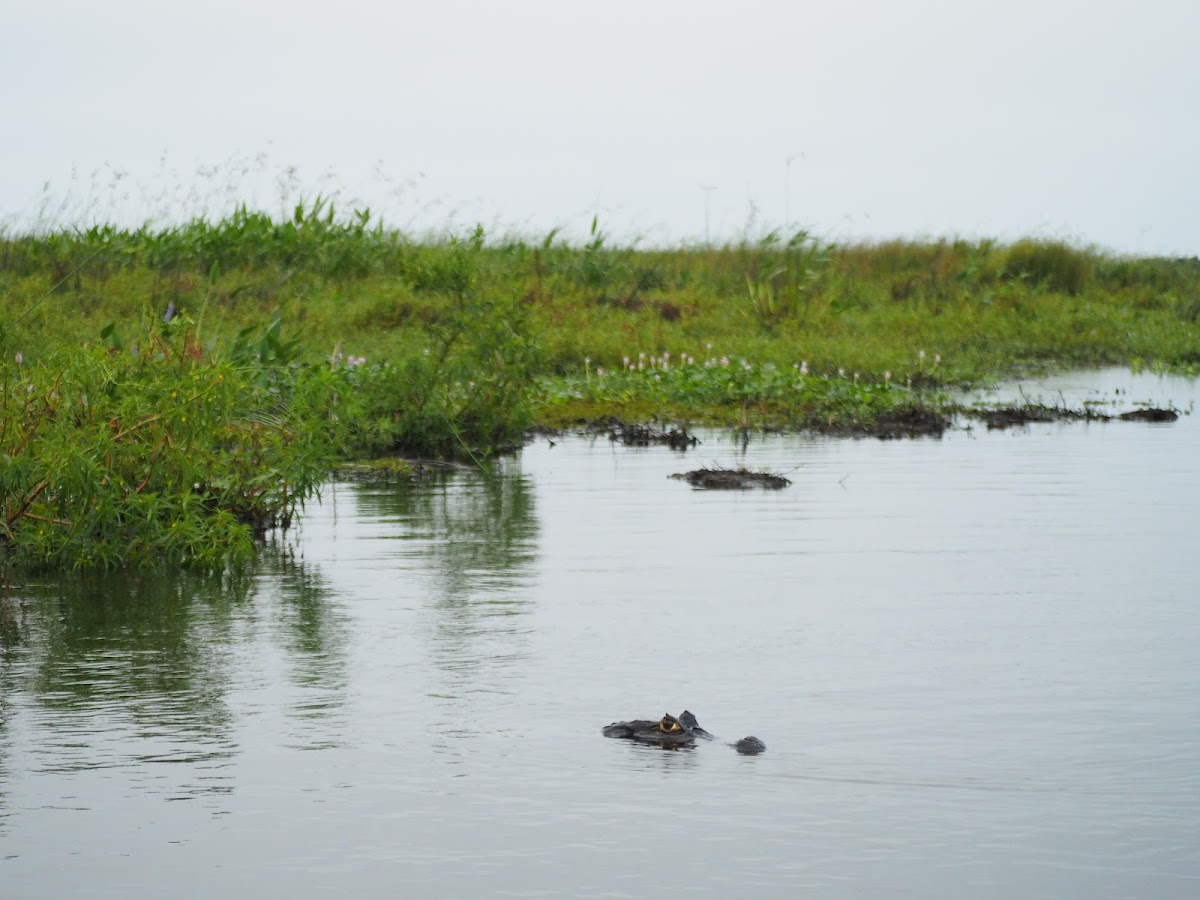
- Caiman. Two species share the wetland: the broad-snouted caiman (Caiman latirostris) and the yacare caiman (Caiman yacare). On any sunny day the edges of the floating vegetation mats hold dozens, visible from the boat at a few metres.
- Southern Lapwing. The noisy sentinel of the Argentine countryside, in every corner of every portal. Its call is the soundtrack of the trip.
- Guira Cuckoo. Shaggy orange crest, always in loud gangs, and almost indifferent to people. One of the easiest birds here to photograph.
- Wattled Jacana. The lily-trotter, walking on floating water hyacinth leaves on absurdly long toes. Probably the single most photographed bird in Iberá.
- Neotropic Cormorant and Ringed Kingfisher. Both unavoidable on any boat or kayak trip, the kingfisher dropping onto the water from a perch.
- Snail Kite. A raptor that eats almost nothing but apple snails, with a bill shaped for the job. Portal Laguna Iberá holds groups of dozens.
Very likely: two or three days should do it
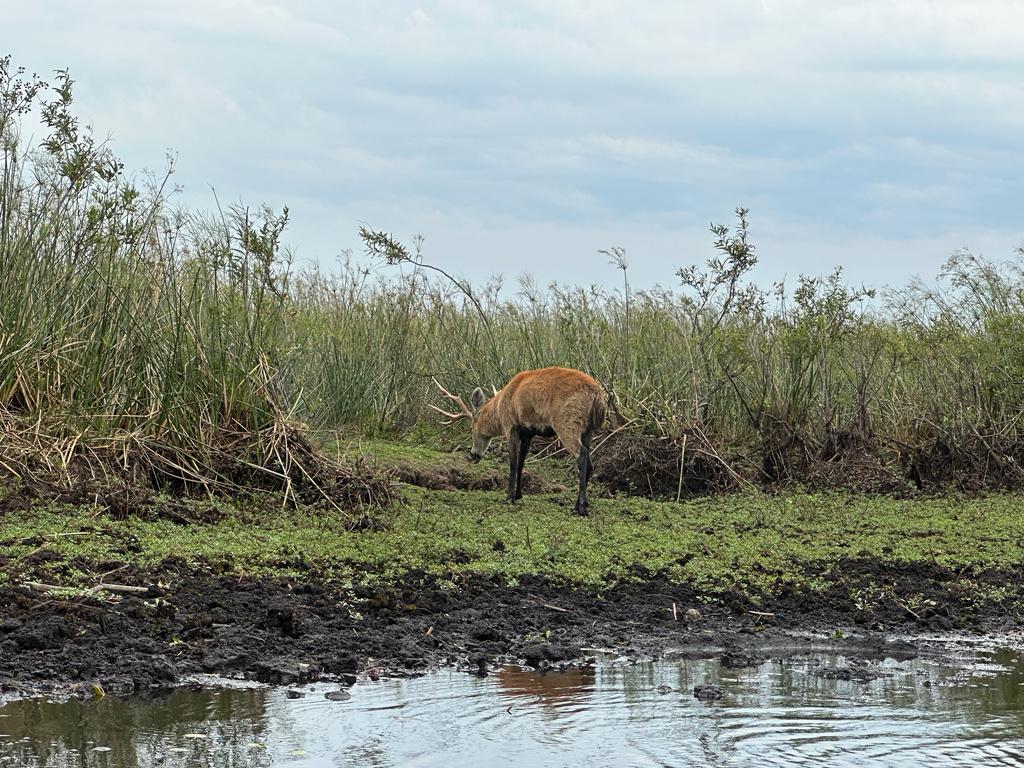
- Marsh Deer. The largest deer in South America, up to 150 kilos, with splayed toes for walking on flooded ground. Near Threatened in Argentina since the 2026 reassessment, an upgrade credited largely to its recovery in Iberá itself. Look at dawn along the wetland edges at the Uguay, San Nicolás and Laguna Iberá portals.
- Black Howler Monkey. You will hear them before you see them: the males' dawn chorus carries more than a kilometre and a half. Males are jet black, females and juveniles golden.
- Greater Rhea. South America's largest bird, flightless, capable of 60 km/h across open grassland. The male incubates the eggs of several females and raises the chicks alone.
- Jabiru. The tallest flying bird in the wetland, with a wingspan approaching 2.8 metres. Best in the dry season, when shrinking water concentrates the fish.
- Cocoi Heron, Wood Stork, Southern Screamer. All common along the lagoon edges. The screamer is another one you hear first.
Takes some luck
- Maned Wolf. Argentina's only native wolf, and neither wolf nor fox but the sole member of its genus. Dawn and dusk in grassland and woodland edges, best at the Carambola and Mburucuyá portals.
- Giant Anteater. Reintroduced from 2007 and now over 200 strong across seven population nuclei, but spread thin across a very large area.
- Red-and-Green Macaw. Reliable at the Cambyretá portal, where the population reintroduced in 2015 is established, with a second nucleus started at Yerbalito in 2026, and far less so anywhere else.
- Neotropical Otter. Curious rather than shy, and known for surfacing with a snort to inspect boats. Early morning in clear channels is the moment.
- Crab-eating Fox. Mostly after dark, trotting along the verges of the park roads and around the campsites.
Rare, and nobody can promise them
The jaguar, the giant otter and the ocelot. All three are present, all three are part of the reintroduction programme, and none of them can be booked. At least 50 jaguars range across a reserve of roughly 1.3 million hectares; the giant otters were released as a single family in June 2025. People who work here every day go years between jaguar sightings. Treat any of these as a windfall, never as a plan, and read the honest odds before you build a trip around one.
Why the animals let you so close
This is the part visitors from Africa or the Amazon comment on most. The wildlife in Iberá is not tame, but it is unafraid, and there is a straightforward reason: hunting stopped here decades ago across a very large protected area, and several generations of animals have grown up without being shot at. Add boats that move slowly on water the animals treat as home ground, and you get sightings at distances that feel wrong.
It also means the responsibility runs the other way. Keep your voice down, let the boat drift rather than chase, and do not feed anything.
The best hour is the first one. Take the 6 am or 7 am departure rather than a mid-morning slot, in any season. Almost every species on this page is listed as most active at dawn or dusk, and it is not marketing: it is when the animals move, the light is good and the water is still.
How to see more of it
- Go out at dawn and again in the late afternoon, and treat the middle of the day as downtime.
- Book a night excursion. Foxes, crab-eating raccoons, owls and, very occasionally, larger cats are night animals. It is the outing people most often skip and most often rate highest: see what else there is to do.
- Choose the portal for the species. Cambyretá for macaws and grassland birds, Laguna Iberá and Galarza for capybaras and caimans, Uguay and San Nicolás for marsh deer, Carambola and Mburucuyá for maned wolf.
- Come in the southern winter if you can. Low water concentrates everything near the remaining lagoons. See when to come.
- Hire a local guide. They know where individual animals have been in the last week, which no guidebook can tell you.
Frequently asked questions
What animals will I see in the Iberá Wetlands?
Capybaras and caimans are close to guaranteed, along with a long list of waterbirds. Marsh deer, howler monkeys, rheas and jabirus are very likely over two or three days. Maned wolves, giant anteaters and otters take luck.
Are there capybaras in Iberá?
Yes, in large numbers and year-round. The Laguna Iberá and Galarza portals are the most reliable, at dawn and dusk along the shore.
Is it safe to be that close to caimans?
Yes, from a boat and on the marked trails, keeping a sensible distance. The caimans here are habituated to boats and pay them no attention. Never approach on foot or feed them.
How many bird species are in Iberá?
More than 350 species have been recorded in the park, including grassland specialities that are nearly gone elsewhere in Argentina.
Do I need a guide to see wildlife in Iberá?
Not to see capybaras and caimans, which you will find on any excursion. For marsh deer, the maned wolf and the specialist birds, a local guide makes a large difference.
What is the best portal for wildlife?
Laguna Iberá at Carlos Pellegrini gives the highest volume of easy sightings from the boat. Cambyretá is the one for macaws and grassland birds, and San Nicolás for the dry Chaco species.
Iberá Experience is the free guide app to the Ibera Wetlands. It shows you which of the ten gateway portals to choose, where to stay, and who runs the boat safaris, birding walks and transfers, with direct contact for each one. No sign-up, and it works straight from your browser. Start at iberaexperience.com.
Sources, last checked July 2026: species identification, abundance, best viewing times and portal distribution (Iberá Experience species encyclopedia, built on field data and cross-checked against eBird and IUCN); bird species total and reintroduction figures (Rewilding Argentina); jaguar and giant otter status as described in our jaguar and rewilding articles. Wildlife sightings are never guaranteed.
Start planning your Iberá trip
Free, no download and no sign-up: the app that gathers all 10 access portals and more than 400 local providers of the wetlands.
Open Iberá Experience