Mburucuyá National Park, in the northwest of Corrientes province and inside the great Iberá depression, the same rain-fed basin that holds the marshes, is a different kind of visit from a boat trip on the Iberá lagoons: a quiet park of palm savanna, grassland, marsh and woodland that you explore on foot, by bike or from the car, with more than 300 bird species on its list and a visitor center set in the old house of the ranch that became the park.
It was the first national park in the province of Corrientes, and it is run by Argentina's National Parks Administration (Administración de Parques Nacionales, APN). This guide covers what makes it special, the trails and the wildlife, plus the practical details a visitor from abroad needs: distances, roads, money and what to bring.
A park that began as a gift
Mburucuyá exists because of a couple. Troels Myndel Pedersen, born in Denmark in 1916, earned a doctorate in law at the University of Copenhagen in 1942, married Nina Johanne Sinding and settled with her in Corrientes in the mid-1940s. There he turned an early interest in natural history into serious botany and became, in the words of his obituary in the botanical journal Darwiniana, a self-taught taxonomist of the first rank. The same obituary recalls that he refused to cut down the palms on his estancia (a large cattle ranch), which exasperated the ranch managers and pleased the cattle, who had the shade.
The couple had no children, and they gave their land to the Argentine nation for a national park, a donation made official in 1991. Pedersen also compiled the park's inventory of 1,300 plant species. He died in February 2000, and the following year Law 25.447 created Mburucuyá National Park on the old Santa Teresa and Santa María estancias. Today it protects 17,086 hectares (about 42,000 acres).
The name comes from Guaraní: mburucuyá is the passionflower (Passiflora caerulea), a climbing vine with a large, violet-fringed flower and a sweet orange fruit that birds seek out, and it grows in the park.
Palm savanna, marsh and woodland
The park belongs to the Esteros del Iberá ecoregion and sits in the Iberá depression, a basin fed mainly by rain. What makes it so rich is that it also holds species from three neighboring ecoregions: the Espinal, the Humid Chaco and the Paraná forest. On the ground that becomes a mosaic you can read from the trails:
- Open savanna in the center of the park: grassland studded with yatay palms and small groves of laurel and timbó trees. This is where the threatened grassland birds live.
- Cañadas to the north, the Fragosa and the Portillo: broad, shallow, marshy drainage lines.
- The Santa Lucía marsh to the south, with the plants of land that floods.
- Higher ground between the cañadas, where quebracho and algarrobo woodland grows.
- Round lagoons, shaped by wind working on the sandy soil, which gather herons, swallows and grebes.
The yatay palm (Butia yatay) is the park's signature. It can grow to 20 meters (about 65 feet), and its groves have been shrinking across Argentina through the removal of adult palms and changes in land use. When researchers from INTA and CONICET studied the species in Corrientes in 2019, they noted that yatay palm groves were protected in only two national parks: El Palmar, in Entre Ríos, and Mburucuyá.
The climate is humid subtropical, with an average annual temperature of 21°C (70°F) and about 1,200 mm (47 inches) of rain a year.
Birds: the main reason to come
The park's bird list runs to more than 300 species; the checklist it published in 2017 counts 312. For visiting birders the headline is the grassland guild, and one bird above all.
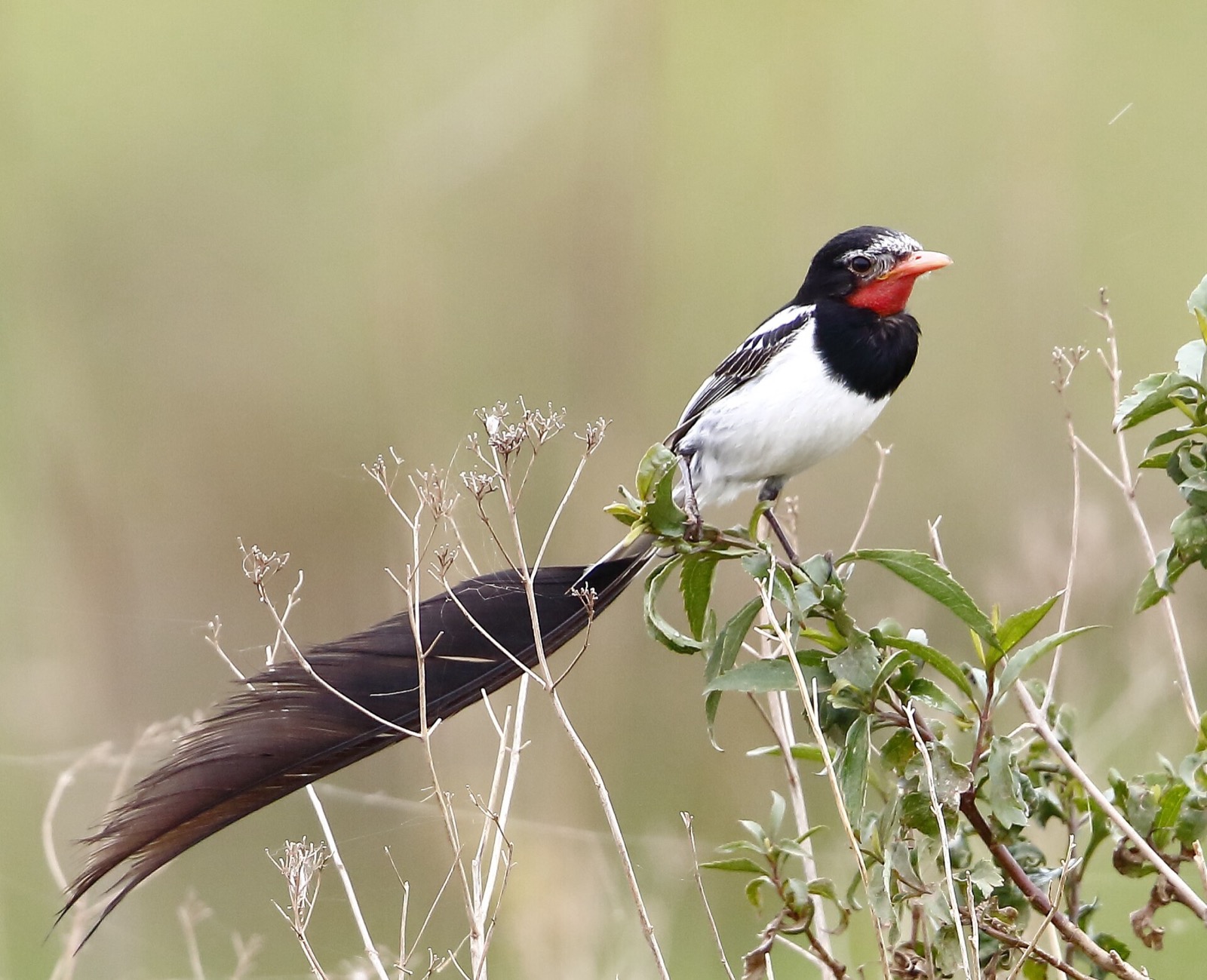
Strange-tailed Tyrant (Alectrurus risora), the yetapá de collar. The male is black and white, with two extremely long tail feathers that flutter in flight, and in the breeding season (July to December) his white throat loses its feathers and shows bare, orange-red skin. It hunts insects in flight or on the ground among the grasses. It is listed as Endangered in Argentina (the 2017 national categorization by the Environment Ministry and Aves Argentinas) and as Vulnerable worldwide on the IUCN Red List. In Formosa province, researchers from Aves Argentinas and the University of Buenos Aires found it nesting from mid-September to mid-January, the austral spring and early summer.
Other birds marked as threatened on the park list: the Black-and-white Monjita, six species of capuchino seedeaters (small finch-like birds of tall grass), the Scarlet-headed Blackbird and the Greater Rhea. The list also includes the Iberá Seedeater, although the record it cites, from 2015, leaves the identification open.
Around the marshes and the round lagoons, look for the Southern Screamer (Chauna torquata), a heavy bird with a crested head, a black collar and a powerful call; Roseate Spoonbills; three storks, the Maguari Stork, the Wood Stork and the Jabiru; and herons from the big Cocoi Heron and the Great Egret down to the Black-crowned Night Heron.
Close to the visitor center, the park itself suggests watching for the Toco Toucan, the Cream-backed Woodpecker, Purplish Jays, the Chopi Blackbird, the Wattled Jacana and the Pied-billed Grebe, among many others.
Two things worth knowing before you go. The park's checklist states that using recordings (playback) to attract birds is prohibited inside the national park. And the staff at the visitor center can tell you about the most representative species, with a photographic guide to consult there; bring your own binoculars and field guide, as the park recommends.
Species profiles in the app: Strange-tailed Tyrant and Southern Screamer. For the grassland specialties across the whole region, read the Iberá birding field guide.
Mammals, caimans and a fish that breathes air
According to the park, capybaras, crab-eating foxes, gray brockets (a small deer) and crab-eating raccoons are among the mammals seen most often. Two threatened species live here as well: the maned wolf, a long-legged wild canid, and the marsh deer. The pampas fox is also confirmed in the park's species records.
The park has two emblems. One is the Yacare caiman (Caiman yacare), one of the largest reptiles in Argentina; the other is the passionflower that gives the park its name. The broad-snouted caiman has been photographed in the park as well.
Two oddities complete the picture: the South American lungfish (Lepidosiren paradoxa), which breathes air and can survive droughts, and a small frog that the park describes as endemic to the region, named after the park's donor: Pedersen's frog (listed by the park as Argenteohyla siemersi pederseni), which lives in the woodland of the drier parts of the park.
Trails, hours and the visitor center
The park is open every day from 7:30 am to 8 pm. The trails close earlier: at 6 pm from May 1 to September 30, and at 7 pm from October 1 to April 30.
- Yatay trail (Sendero Yatay): 6.6 km (4.1 miles) round trip, about 3 hours, medium difficulty with a lot of sun exposure. The longest trail, and it can be walked or cycled. It crosses grassland and woodland and ends near the Santa Lucía marsh, where about a hundred old yatay palms stand.
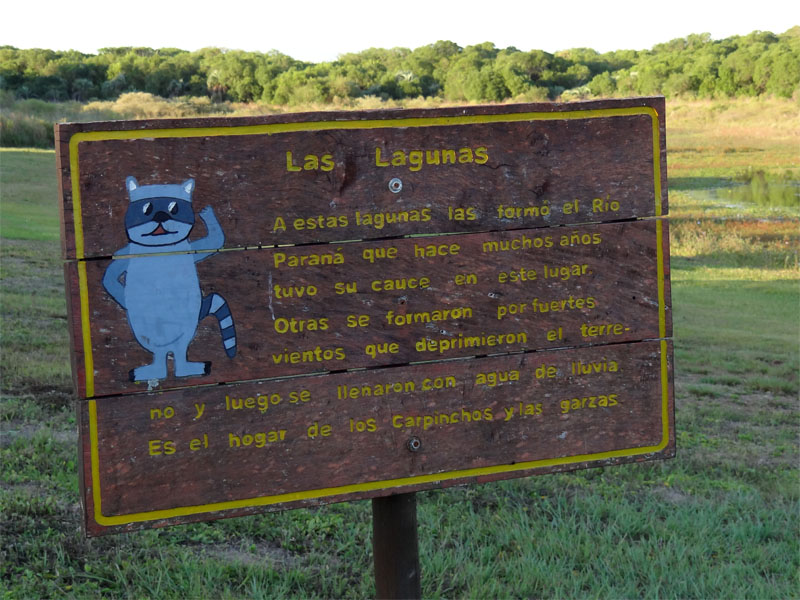
- Che Roga trail: 4.4 km (2.7 miles) round trip, about 2.5 hours, medium difficulty. Young yatay palm groves, woodland and large lagoons, with interpretive signs. It crosses Provincial Route 86, so watch for traffic.
- Tapé Porá historic trail: 1 km (0.6 miles) round trip, about 1 hour, easy. Signs tell the stories of the people who worked on the Santa Teresa and Santa María estancias.
- Troels Myndel Pedersen botanical trail: 1 km (0.6 miles) round trip, about 1 hour, easy, and accessible for visitors with reduced mobility. It honors the couple's half-century of conservation work.
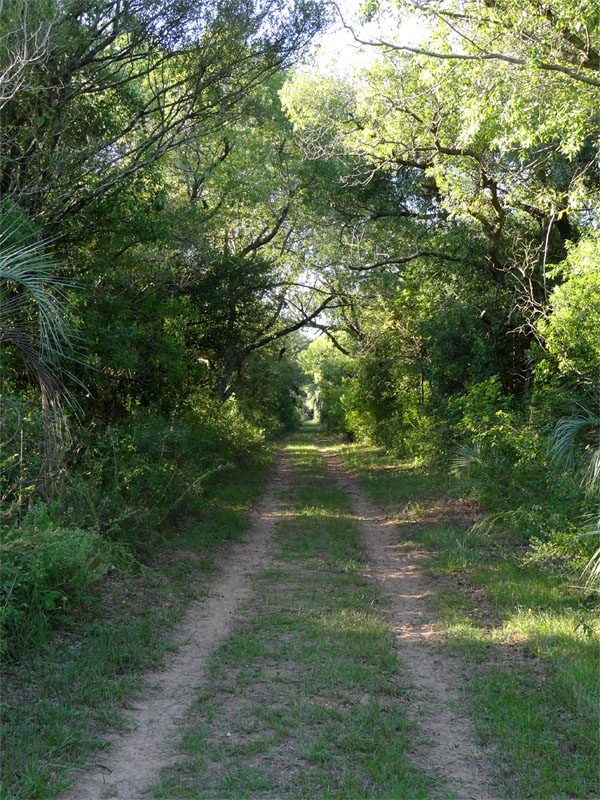
Provincial Route 86 runs through the park for 17 km (10.6 miles). It is not an official excursion, but the park notes that you can enjoy it from your vehicle, driving with care.
The Estancia Santa Teresa Visitor Center, in the historic main house where the Pedersens lived, works as the information point and keeps the same hours as the park. Beside it are the park's only car park and a free camping and picnic area with a shared quincho (a covered barbecue shelter), toilets, showers, space for camper vans and a small shop that sells water, snacks, drinks and toiletries. There are no cooked meals, so bring your food. Campers must register when they enter the park.
You can visit independently or with a licensed guide. To arrange a guided visit, the park recommends writing ahead to [email protected]. Local guides based in the town, including birding guides, are listed in the Mburucuyá guides section of the app.
Arrive when the gates open at 7:30 am and start with the Yatay trail. It is the longest walk and the most exposed to the sun, so the cooler early hours make a real difference. The park asks visitors to carry at least 2 liters (about half a gallon) of water per person per day.
Beyond the park: the town of Mburucuyá
The town of Mburucuyá is 25 km (about 16 miles) from the visitor center, and it is where you sleep, eat and fill the tank. It is also known as the cradle of chamamé, the folk music and close-embrace dance of Corrientes that UNESCO inscribed as intangible cultural heritage in 2020: the town has a Chamamé Museum, and every February it hosts the Festival Nacional del Auténtico Chamamé Tradicional, a festival with more than 50 years of history.
Outdoors in and around town, all mentioned by the park itself:
- The Cañada Fragosa wetland, with a trail, a viewpoint and a pier.
- Horseback and carriage rides run by local families, and bike rental.
- Canoe outings "a botador" (the canoe is pushed along with a long pole), run by the municipality at the Paso Aguirre municipal campground, on Provincial Route 6 by the Santa Lucía river and marsh, 22 km (14 miles) from the park.
For a bed, the park's website mentions cabins, guesthouses, studio apartments and apart-hotels in the nearby towns. The app gathers lodging in Mburucuyá with direct contact for each place.
How to get to Mburucuyá National Park
By car from Corrientes city. The park recommends going in through the town of Mburucuyá. From Corrientes, take National Routes 12 and 118 to Saladas, Provincial Route 13 to Mburucuyá, then Provincial Routes 6 and 86 to the park: about 175 km (109 miles) in all. The last 25 km from town are unpaved: 13 km (8 miles) of ripio (gravel) and 12 km (7.5 miles) of sand and dirt. Road conditions vary, so the park suggests checking by email ([email protected]) before you set off. Cars can be rented in Corrientes.
By air. The nearest airport is Corrientes (Doctor Fernando Piragine Niveyro International Airport), about 180 km (112 miles) from the park, with regular flights to and from Argentina's main cities. Resistencia airport, in the neighboring city of Resistencia (Chaco province), is an alternative.
By bus. Long-distance buses reach Corrientes from all over the country, and buses leave Corrientes for Mburucuyá every day. From Buenos Aires (Retiro bus terminal) a local company runs direct services to Mburucuyá, or you can change at Saladas. No public transport reaches the park itself: from town you need your own vehicle or a remís, the local car-and-driver taxi. The app lists transfers based in Mburucuyá.
By bike. Cycling from town is possible if you are fit: 25 km each way on gravel and sand, with no shops on the way.
For the long road from Buenos Aires and the rest of the region, see how to reach the Iberá from Buenos Aires.
Practical notes for international visitors
- Money. Argentina uses the peso. Mburucuyá has Banco de Corrientes ATMs on the Red Link network, but the park warns that they are in heavy demand at weekends, so carry a backup. The nearest Banco Nación branch is in Saladas, 50 km (31 miles) away.
- Fuel. There is a branded filling station in Mburucuyá. Fill up there: there is nothing on the road to the park.
- Water. Drinking water is available only at the visitor center. Do not drink from streams or marshes.
- Phone signal. Coverage in the park ranges from poor to none, and there is no public wifi. Download your maps before you go.
- What to pack. Light clothing plus a warm layer (days are hot and the temperature swing can be large at some times of year), a rain jacket in any season, sunscreen, a hat, a basic first-aid kit, food and bags to carry out your trash.
- Fees and conditions. Entry and camping are free, according to the park's official rates page. The national park authority has already set an entry fee for Mburucuyá but will only start charging it once access controls are in place, so check that page before you travel.
When to go
The park describes itself as a year-round destination with a changeable climate: rain, drought and extreme temperatures can turn up in any season, so it suggests checking with the park and with Argentina's national weather service (Servicio Meteorológico Nacional) before you travel. Its biodiversity page names February to July as the most favorable season for a visit.
Birders have a different calendar. The male Strange-tailed Tyrant shows his bare orange-red throat from July to December, and in Formosa the species nests from mid-September to mid-January, so for the tyrant in breeding dress, plan on the second half of the year. Walkers who prefer cooler days will lean toward the winter months, when the trails close earlier. Our season-by-season guide covers the wider Iberá.
Mburucuyá and the rest of the Iberá
It is easy to assume that Mburucuyá is one more gate into Iberá National Park, but it is a national park of its own. It was created in 2001, 17 years before Iberá National Park (2018), whose four portals are Cambyretá, San Nicolás, Carambola and Laguna Iberá. Iberá National Park and the provincial park of the same name together make up the Gran Parque Iberá, more than 700,000 hectares in all.
In practice, Mburucuyá pairs well with a lagoon portal: walk the palm savanna here for the grassland birds, then head to Portal Laguna Iberá, in Carlos Pellegrini, or Portal Galarza for boat trips on the big lagoons.
Frequently asked questions
How far is Mburucuyá National Park from Corrientes?
About 175 km (109 miles) by road, through Saladas and the town of Mburucuyá. The last 25 km from town are gravel and sand.
Do I need a guide?
No. The trails can be walked independently during opening hours. A licensed guide, arranged in advance through the park or found in the app, adds local knowledge, especially for birding.
Can I see the Strange-tailed Tyrant at Mburucuyá?
The park names it among the threatened grassland birds that live there. No sighting is ever guaranteed, and a local birding guide who knows where the birds are that season improves your chances.
Is there food in the park?
Only a small shop at the visitor center with water, snacks and drinks; there are no cooked meals. Eat in the town of Mburucuyá.
Iberá Experience is the free guide app to the Iberá Wetlands. The Mburucuyá portal page brings together the park, local guides, lodging and transfers, with direct contact for each one. No download and no sign-up.
Sources, checked October 2026: Administración de Parques Nacionales, Mburucuyá National Park pages (home, fact sheet, biodiversity, activities, services, accommodation, hours and access, overview, cultural heritage, rates) and the park bird checklist (2017); APN fact sheet and map page for Iberá National Park; Sistema de Información de Biodiversidad (SIB), species records for the park and conservation categories of the Strange-tailed Tyrant; Kiesling and Guaglianone, obituary of T. M. Pedersen, Darwiniana 38 (2000); INTA and CONICET, study of the yatay palm in Corrientes (7 May 2019); COA Tangará Posadas and Aves Argentinas, profile of the Strange-tailed Tyrant (February 2020); Zermoglio, Di Giacomo, Di Giacomo and Castelo, Ornitología Neotropical 27 (2016), on its breeding season in Formosa; Government of Corrientes, launch of the 2026 chamamé festival (2 January 2026); UNESCO Intangible Cultural Heritage, Chamamé (2020).
Photos: cover (yatay palm grove), Che Roga trail sign and Yatay trail, all in Mburucuyá National Park, by Tencho, CC BY-SA 3.0; Strange-tailed Tyrant by Hector Bottai, CC BY-SA 4.0. All via Wikimedia Commons.
Start planning your Iberá trip
Free and no sign-up, on the web and on Google Play: the app that gathers all 10 access portals and more than 500 local providers of the wetlands.
Open Iberá Experience