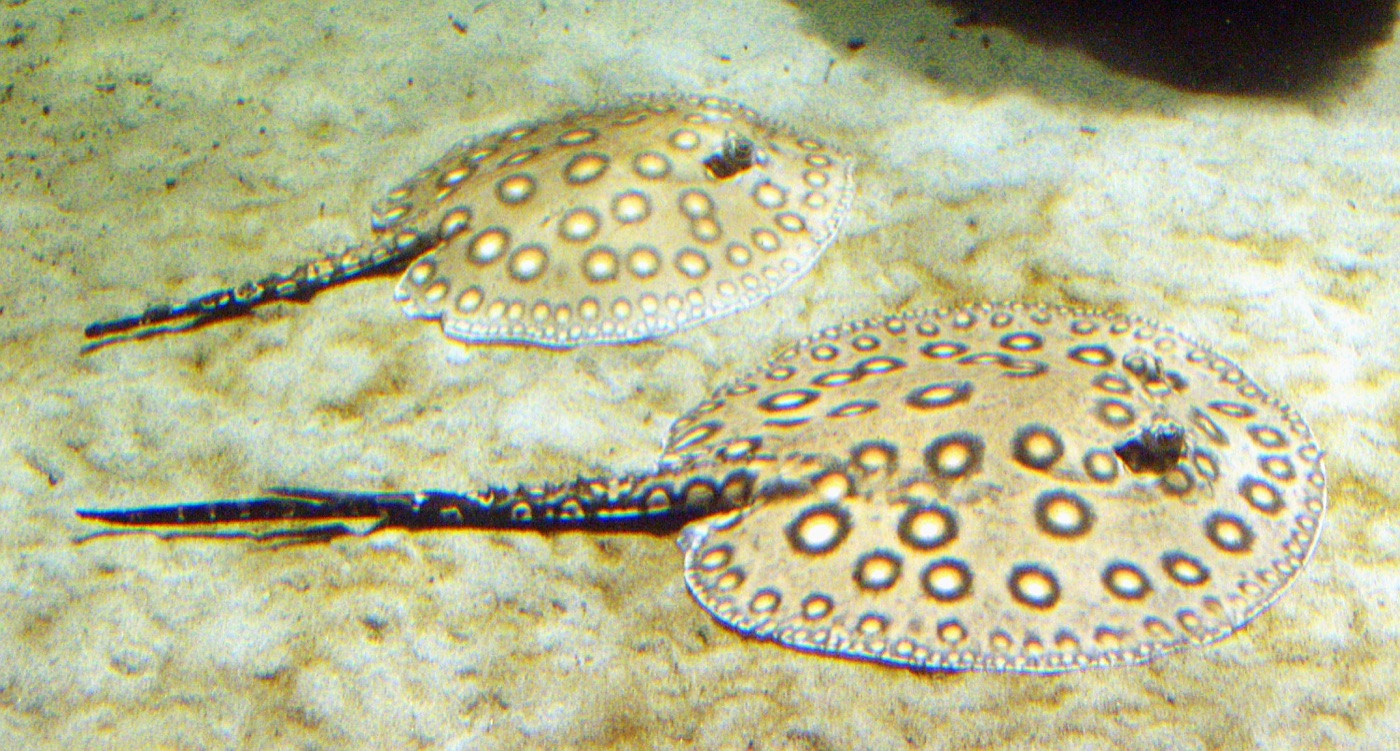
A body completely modified into the shape of a flat, circular disc, adapted to live pressed against the bottom, with ochre and brown spots or reticulations that give it perfect camouflage in sand or mud. Its tail carries one or two serrated bony stingers connected to venom glands, used exclusively for defense if it is stepped on accidentally. One of the most common and widespread river stingrays of the Paraná basin. The guides always recommend walking through the water "sweeping" the bottom with your feet to scare them off. Disc diameter: 30 to 50 cm. Weight: 2 to 6 kg.
Behaviour
It spends most of the time half-covered in sand or mud on low beaches and quiet shores, leaving out only its eyes and spiracles to breathe. A benthic hunter: aquatic snails, insect larvae, crayfish and small fish.
How and when to see it
Year-round, very visible on sunny summer days on the clean sandbanks of the channels. Its silhouette outlined against the white bottom is unmistakable.
Where to see it in the Iberá
The gateways of the Great Iberá Park where ocellate river stingray has confirmed presence:
Tours to see it
Verified providers operating at the gateways where ocellate river stingray lives. You contact them directly on WhatsApp from the app.
- Esteros Ñe’é
Experiences with local storytelling and a cultural take on the marshes.★ 5.0 - Gaucho Argentino
Horseback journeys across a network of refuges in Iberá. Multi-day rides with overnight…★ 5.0 - Irupé Excursiones
Guided hiking. Guided visit to museums, historic sites, chapels and trails of the town…★ 5.0 - Reserva Estero Camba Trapo
Private nature reserve of Ecoposada del Estero, on the Camba Trapo road. One of the…★ 5.0
Species profile
- Common nameOcellate river stingray
- Scientific namePotamotrygon motoro
- GroupFish
- StatusNo data
Other species of the Iberá
Discover all the wildlife of the Iberá
More than 250 species with photos, profiles and the gateways where you can see them. Map, providers and trip planner. Free, no download needed.
Open Iberá Experience