The Big Five was never a wildlife list. It was a hunting list. Big-game hunters coined it at the end of the nineteenth century for the five animals that were hardest and most dangerous to kill on foot: lion, leopard, elephant, rhinoceros and African buffalo. Tourism inherited the phrase a century later and turned it into the most famous checklist in travel.
South America never produced an equivalent. There was no comparable safari industry to invent one, and the continent's large animals are, with one obvious exception, not dangerous to a person on foot. But if you were going to build the list anywhere south of Panama, you would build it in the Iberá Wetlands of northern Argentina, which is where the continent's flagship species are being put back one at a time.
This article is for the traveller who has done an African safari, or dreams of one, and wants to know what a South American version actually involves. The short answer: the animals are smaller, the odds are inverted, and you will be much closer to them.
South America's five, in one paragraph each
Jaguar. The largest cat in the Americas, Critically Endangered in Argentina, and locally extinct in Iberá for decades until Rewilding Argentina brought it back through a breeding and release programme centred on San Alonso island. At least 50 animals now range free across the reserve.
Giant anteater. An animal that eats up to 35,000 ants a day and does not own a single tooth. Also reintroduced, also once gone from the region, and now walking the grasslands again.
Marsh deer. The largest deer in South America, up to 150 kilos, with splayed toes that let it walk through flooded ground where no other deer goes. It is Near Threatened in Argentina according to SAREM 2025 (previously Vulnerable) and Vulnerable worldwide (IUCN); in Corrientes it is a Natural Monument. This one never left.
Maned wolf. Neither wolf nor fox but the only living member of its genus, on stilt legs built for seeing over tall grass. Listed as Threatened in Argentina's legal categorisation (2021; the 2019 SAREM scientific assessment rates it Vulnerable), Near Threatened globally, and almost entirely nocturnal.
Caiman. Two species share these marshes, the yacare caiman and the broad-snouted caiman, and on any sunny afternoon you will count dozens along the water's edge. In the 1970s and 1980s they were hunted hard for their hides. The reserve was created in 1983, several of those hunters became the first park rangers, and Colonia Carlos Pellegrini, the village at the main gate, now lives from showing the animals to visitors.
That is the list. For what each one looks like in the field, when to look and how likely you really are to find it, we wrote a separate guide to the wildlife you will actually see in Iberá.
The differences that matter
You will not be in a vehicle
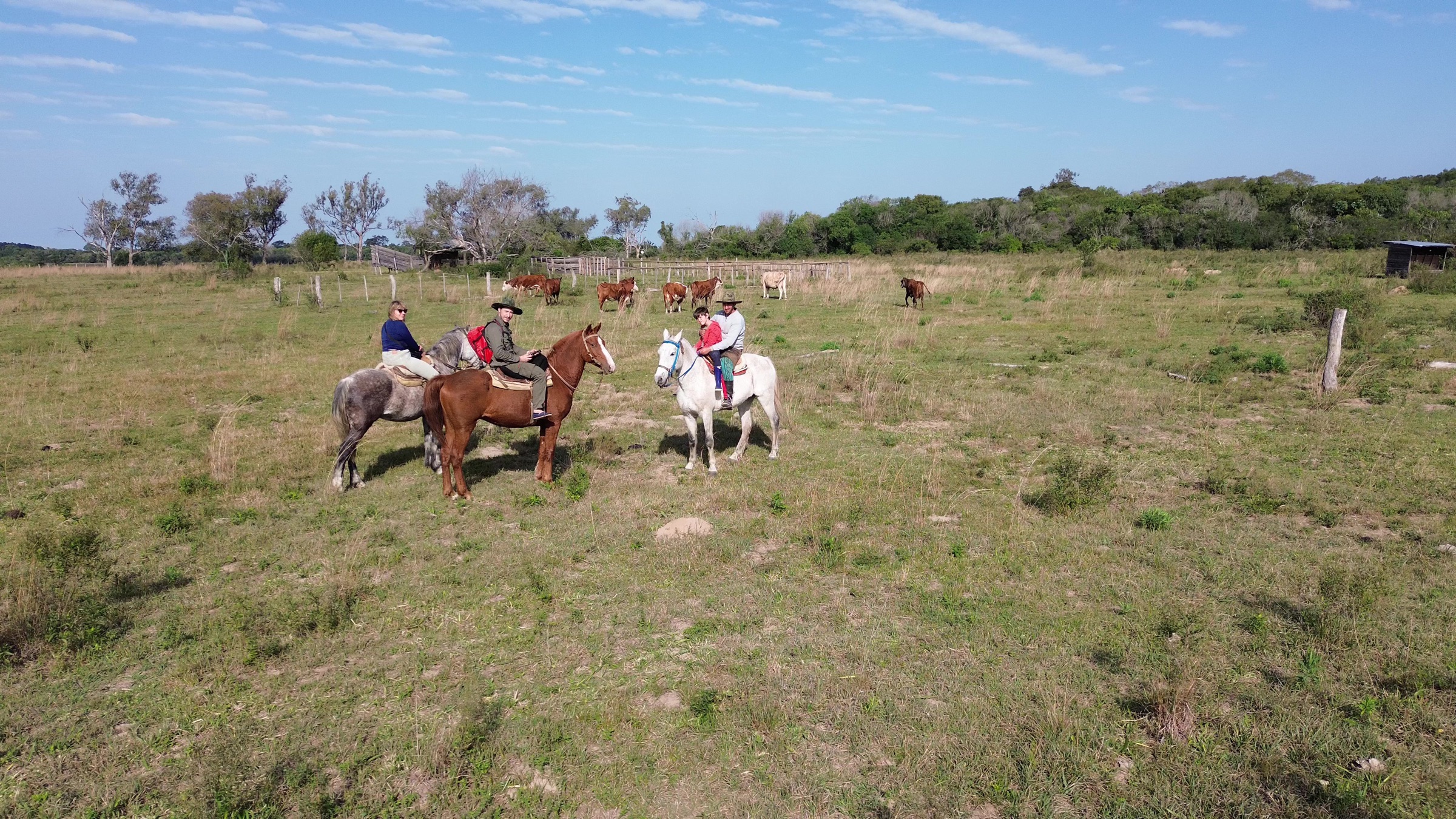
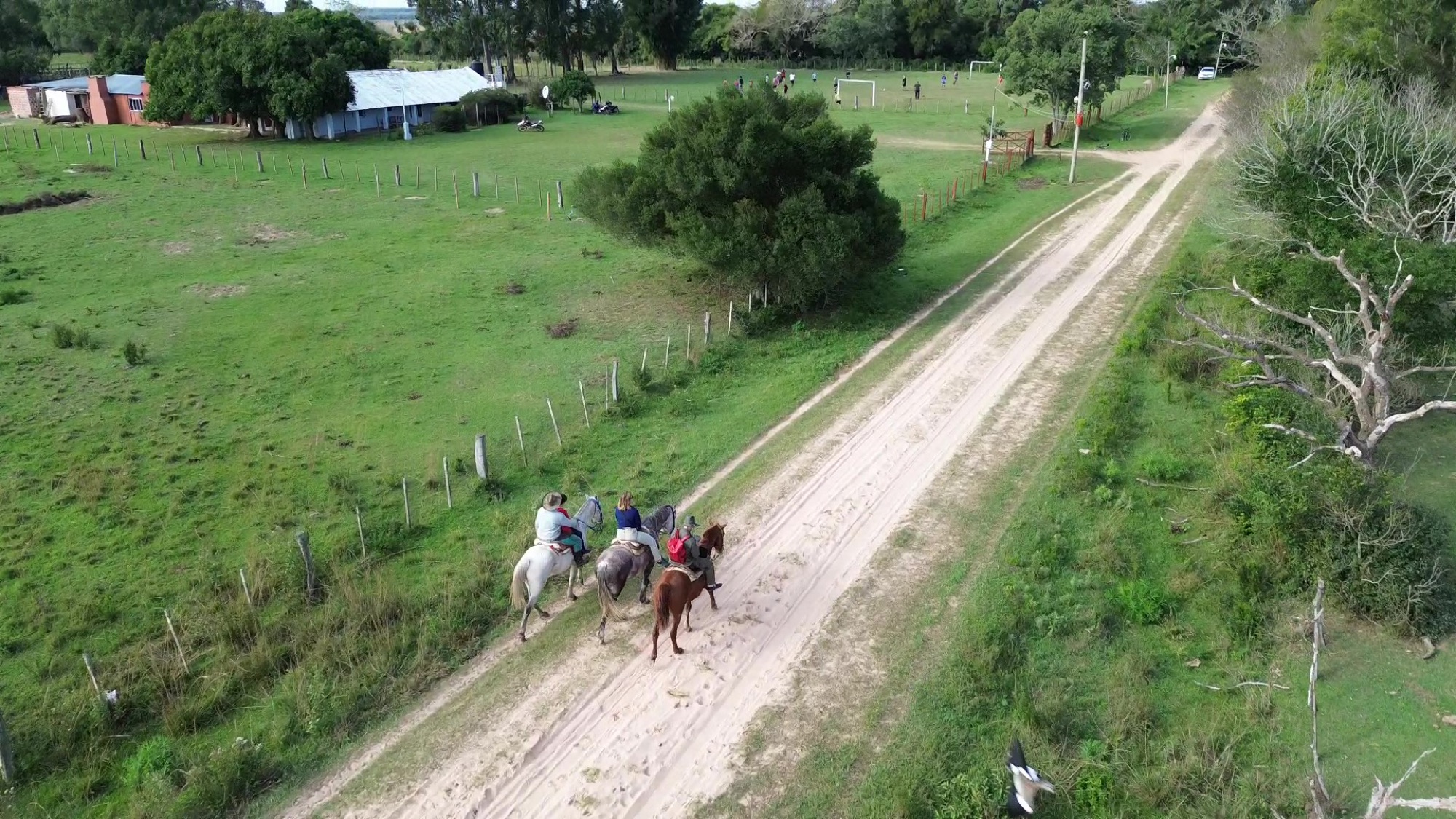
The African template is a 4x4 at dawn, a radio network between vehicles and a lodge behind an electric fence. Iberá runs on water. The standard excursion is a small boat through channels and lagoons, and the alternatives are a kayak, a canoe poled from the stern, a horse, or your own feet on a boardwalk. There are ten access portals around the wetland, most of them at the end of a dirt or sand road, and several of them have no shop and no drinking water.
That changes what you see and how. Animals that would bolt from an engine on a plain simply carry on eating while a boat drifts past at walking pace.
The odds are the other way around
On a good African itinerary, the big cats are often the reliable part and the rare species are the ones nobody promises. Iberá inverts that completely. The jaguar is the lottery: some 50 animals across roughly 1.3 million hectares, and people who work here every day go years between sightings. Read the honest odds before you build a trip around one.
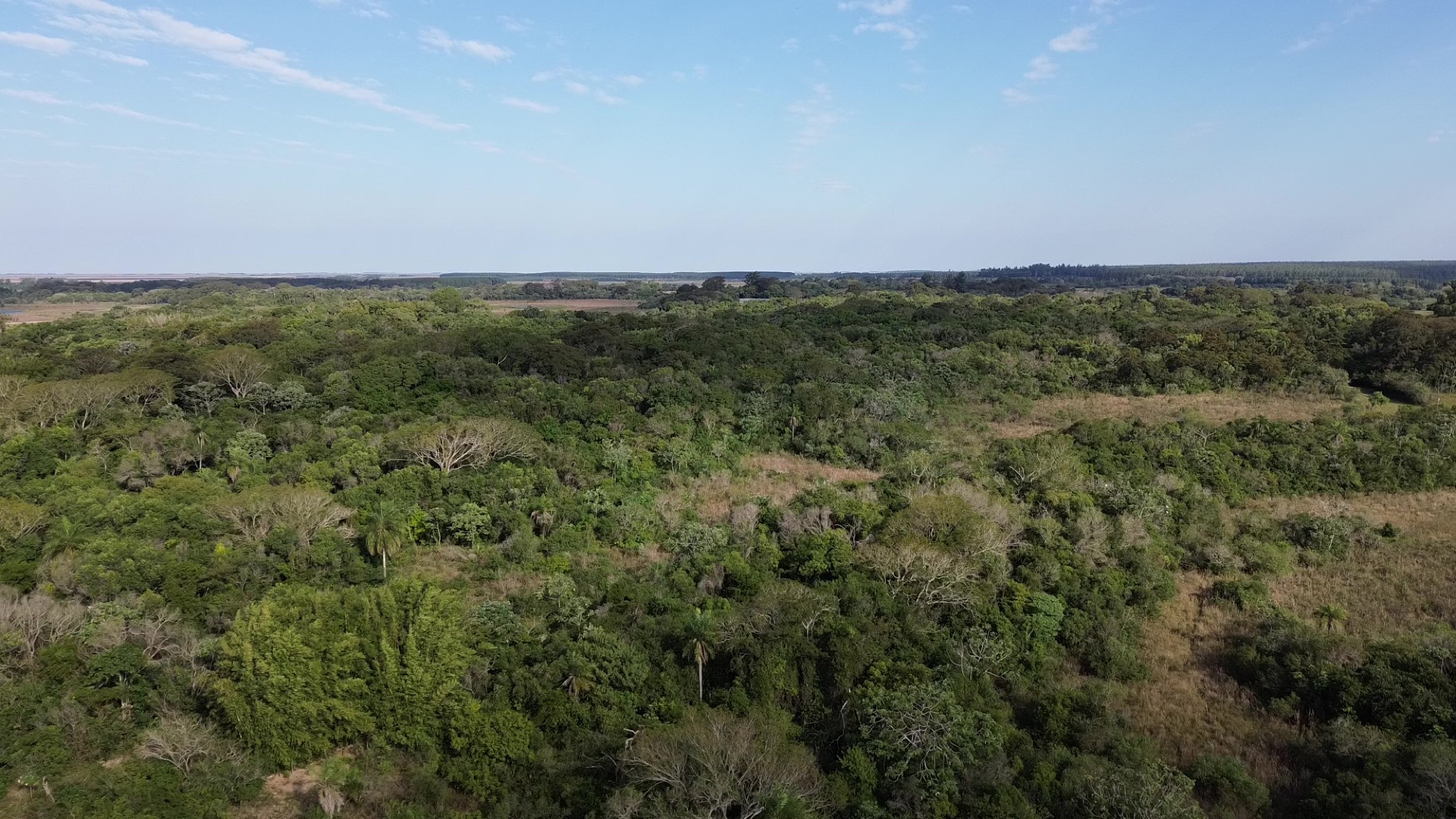
What is guaranteed is the supporting cast, and guaranteed is not a word we use lightly. Capybaras in family groups on every bank, caimans by the dozen, marsh deer at dawn, and a bird list of more than 350 species. The trip does not hinge on one animal appearing.
The distances are absurd
Hunting stopped across a very large protected area decades ago, and several generations of animals have grown up without being shot at. Combine that with boats on water the animals treat as home ground and you get sightings at a few metres, without a long lens and without a hide. Visitors who have done Africa or the Amazon tend to comment on this before anything else.
The responsibility runs the other way, of course. Keep your voice down, let the boat drift rather than chase, and never feed anything.
The list is about return, not danger
This is the real difference. Africa's five were chosen for what they could do to a hunter. Two of Iberá's five are here because someone decided to bring back species that had been wiped out, and the giant otter, the pampas deer and the red-and-green macaw are on the same programme. The story you are buying a ticket to is a restoration in progress, not a trophy cabinet, and you can read how it started in the Iberá rewilding story.
What Iberá is not
Be clear with yourself about this before booking.
- There are no big herds. No wildebeest crossings, no elephant families, no plains full of grazers. The wetland's drama is smaller and closer.
- There is no predator theatre. Kills are almost never witnessed here. The jaguar is mostly nocturnal, solitary and thin on the ground.
- There is no luxury-lodge circuit. A handful of comfortable lodges exist, mostly around Colonia Carlos Pellegrini, but the standard is a family-run posada, a campsite or a room in a village of a thousand people.
- It is not a one-stop destination. Getting here takes a full travel day from Buenos Aires, and there is more than one way in.
If any of that is a dealbreaker, the honest answer is that your safari is in Africa. If none of it is, keep reading.
Who this trip is for
You will love Iberá if you like wildlife at close range more than wildlife at scale, if you would rather see five species properly than tick twenty from a distance, if birds interest you at all, and if the idea of a place being repaired is part of what you want from a trip.
You will be disappointed if your mental image is the opening sequence of a nature documentary, or if you need the sighting to be guaranteed.
If you are weighing South American options against each other rather than against Africa, we also compared Iberá with the Pantanal, which is the continent's other great wetland and the better bet if seeing a jaguar is non-negotiable.
Practicalities
- When. The southern winter, June to August, is the wildlife window: the rains ease from April, the water drops and the animals concentrate. Detail in the best time to visit.
- How long. Three nights is the honest answer and two is the floor. Full reasoning in how many days you need.
- What it costs. Far less than an African safari, and less than most people expect, because there is no all-inclusive lodge model here. See the cost breakdown.
- Who takes you out. Local guides and boat operators, portal by portal. They are all in our free app, with contact details and no booking fee.
Frequently asked questions
Is there really a safari in Argentina?
Yes, though nobody local calls it that. In the Iberá Wetlands the standard wildlife excursion is a boat trip at dawn or dusk, with kayaks, canoes, horses and walking trails as the alternatives. What you will not find is a fleet of 4x4s.
What are South America's Big Five?
There is no official list. The five flagship species of the Iberá Wetlands are the jaguar, the giant anteater, the marsh deer, the maned wolf and the caiman. The first two were locally extinct and were reintroduced.
Can you see a jaguar in Iberá?
It is possible and it is rare. At least 50 animals range across roughly 1.3 million hectares of reserve. Treat a sighting as a windfall, never as the reason for the trip.
Is Iberá better than an African safari?
It is a different product, not a better one. Africa wins on scale, on big herds and on reliable big-cat sightings. Iberá wins on how close you get, on how few other visitors there are, and on being somewhere a lost ecosystem is being reassembled while you watch.
Iberá Experience is a free app covering all ten portals of the Iberá Wetlands: the wildlife, the guides, the lodges and the practical detail, in one place and with no booking fee. Open it before you plan the trip.
Photo credits: marsh deer in the shallows, Matías Rebak. The other three photographs are the author's own.
Start planning your Iberá trip
Free, no download and no sign-up: the app that gathers all 10 access portals and more than 500 local providers of the wetlands.
Open Iberá Experience