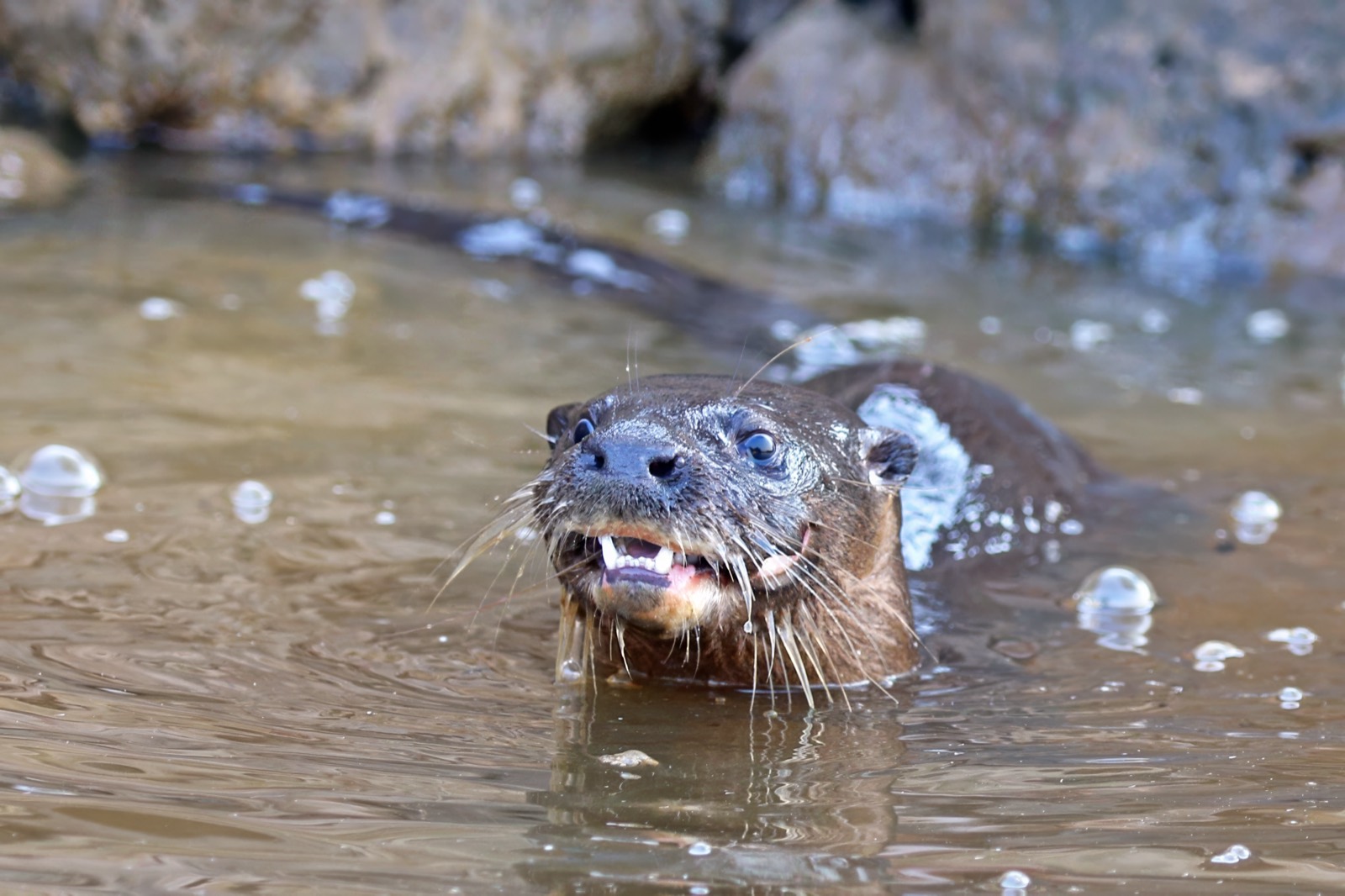
Extremely hydrodynamic body, with dense waterproof fur, short legs with webbed toes and a robust tail used as a rudder. It should not be confused with the coypu (a herbivorous rodent) or the giant otter. Near Threatened at the national level (SAREM) due to historical hunting and the degradation of watercourses. It is a Natural Monument in Corrientes. Total length: 90 to 130 cm. Weight: 5 to 12 kg.
Behaviour
Solitary or in small family groups. A strict and relentless carnivore: fish, crustaceans (crayfish), frogs and molluscs. Mostly diurnal and crepuscular in habit. It builds burrows in the edges of levees or in cavities among the roots of riverside trees.
How and when to see it
Year-round, swimming in a zigzagging fashion in clear channels and open lagoons. Best in the early morning, when they are seen fishing or basking on floating logs.
Where to see it in the Iberá
The gateways of the Great Iberá Park where neotropical otter has confirmed presence:
Tours to see it
Verified providers operating at the gateways where neotropical otter lives. You contact them directly on WhatsApp from the app.
- Esteros Ñe’é
Experiences with local storytelling and a cultural take on the marshes.★ 5.0 - Gaucho Argentino
Horseback journeys across a network of refuges in Iberá. Multi-day rides with overnight…★ 5.0 - Irupé Excursiones
Guided hiking. Guided visit to museums, historic sites, chapels and trails of the town…★ 5.0 - Reserva Estero Camba Trapo
Private nature reserve of Ecoposada del Estero, on the Camba Trapo road. One of the…★ 5.0
Species profile
- Common nameNeotropical Otter
- Scientific nameLontra longicaudis
- GroupMammal
- StatusNative
Other species of the Iberá
Discover all the wildlife of the Iberá
More than 250 species with photos, profiles and the gateways where you can see them. Map, providers and trip planner. Free, no download needed.
Open Iberá Experience