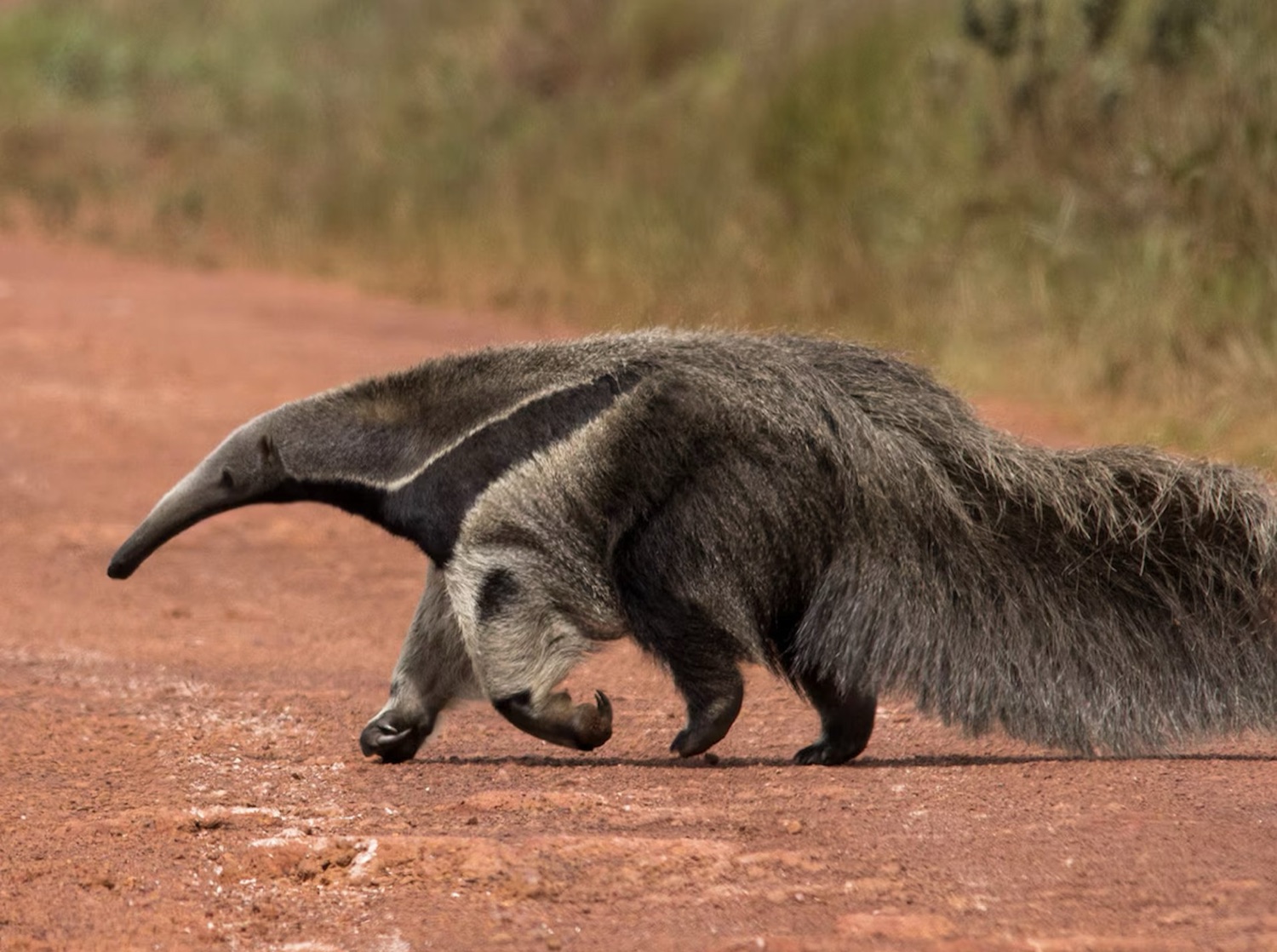
Its front claws break open termite mounds as hard as concrete. The female carries her young on her back for the first year, its coat perfectly mimicking the mother's. Today there are about 200 in the Iberá, in nuclei such as Rincón del Socorro, San Alonso, Carambola and San Nicolás.
Behaviour
Solitary, active day and night. Travels up to 10 km a day searching for ant and termite colonies. Rests in depressions it digs out in dense vegetation.
How and when to see it
Mornings and afternoons in the grasslands, where it looks for ant and termite nests.
Where to see it in the Iberá
The gateways of the Great Iberá Park where giant anteater has confirmed presence:
Tours to see it
Verified providers operating at the gateways where giant anteater lives. You contact them directly on WhatsApp from the app.
- Esteros Ñe’é
Experiences with local storytelling and a cultural take on the marshes.★ 5.0 - Gaucho Argentino
Horseback journeys across a network of refuges in Iberá. Multi-day rides with overnight…★ 5.0 - Irupé Excursiones
Guided hiking. Guided visit to museums, historic sites, chapels and trails of the town…★ 5.0 - Reserva Estero Camba Trapo
Private nature reserve of Ecoposada del Estero, on the Camba Trapo road. One of the…★ 5.0
Species profile
- Common nameGiant Anteater
- Scientific nameMyrmecophaga tridactyla
- GroupMammal
- StatusReintroduced
- ConservationVulnerable in Argentina (national conservation status: SAREM, 2025).
- Natural MonumentDeclared a Natural Monument of Corrientes Province (Law 6330, 2014).
Conservation: national status published by the SIB (Argentine National Parks).
Other species of the Iberá
Discover all the wildlife of the Iberá
More than 250 species with photos, profiles and the gateways where you can see them. Map, providers and trip planner. Free, on the web and on Google Play.
Open Iberá Experience