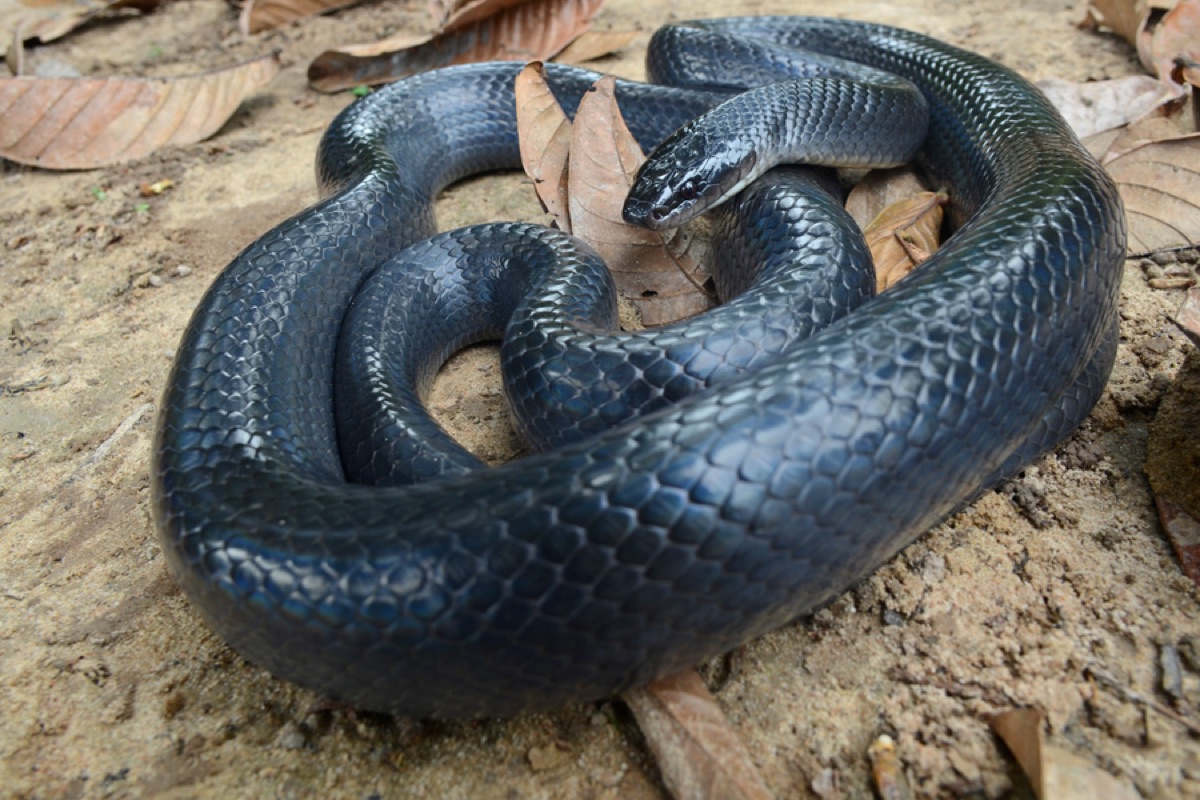
Adults are black with a bluish sheen; juveniles are red with a black head and a pale collar, so different they look like another species. Its fame is deserved: it hunts venomous snakes by constriction, which is why country people respect it and leave it alone.
Behaviour
Nocturnal and reserved. It moves slowly across forest floor and grassland in search of snakes, rodents and lizards.
How and when to see it
Warm nights in spring and summer. By day, with luck, crossing a dirt road early in the morning.
Where to see it in the Iberá
The gateways of the Great Iberá Park where mussurana has confirmed presence:
Tours to see it
Verified providers operating at the gateways where mussurana lives. You contact them directly on WhatsApp from the app.
- Jurassic Plant - Night Tour
The only carnivorous-plant garden in Argentina and a pioneer in Latin America. A guided…★ 5.0 - Guyra Wild Guides - Birding
Birdwatching tour and photo safari with specialized ornithologist guides. Yamil and…★ 5.0 - SKYVY - Astrotourism
Astrotourism in Loreto, 17 km from the San Antonio portal. Night-sky observation with a…★ 5.0 - Navegando Ituzaingó
Private sailboat rides on the Paraná with captain Mario: sunrise, morning and sunset…★ 5.0
Species profile
- Common nameMussurana
- Scientific nameClelia clelia
- GroupReptile
- StatusNative
Other species of the Iberá
Discover all the wildlife of the Iberá
More than 250 species with photos, profiles and the gateways where you can see them. Map, providers and trip planner. Free, no download needed.
Open Iberá Experience