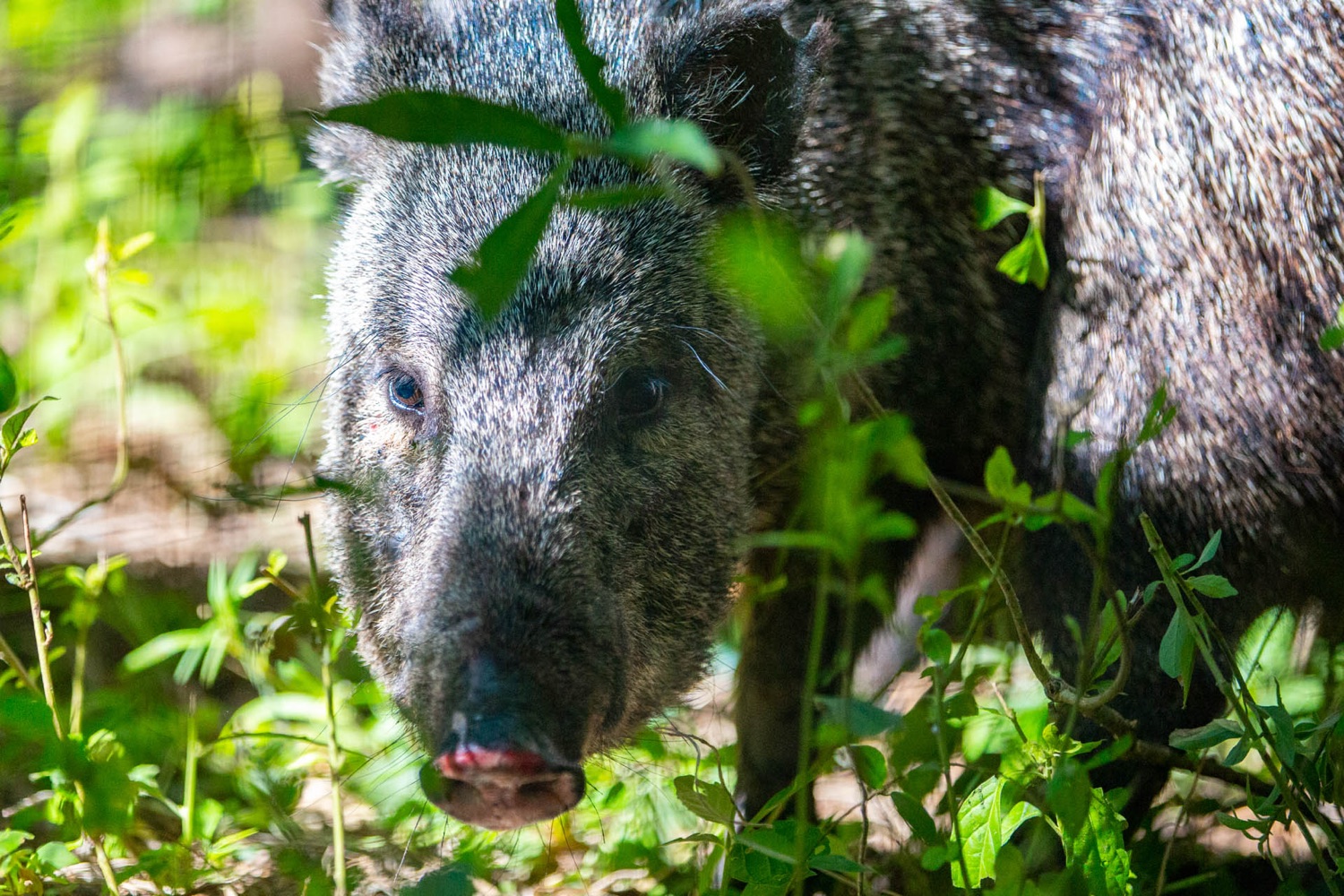
It lives in groups of 5 to 15 and produces a distinctive tooth-clacking sound when it feels threatened. The white band on its neck identifies it instantly in the woodland.
Behaviour
Gregarious, active mainly by day. Uses dorsal glands to mark its territory and communicate with the group. Can be aggressive if cornered.
How and when to see it
Mornings and afternoons at the edges of the woodland. Portals San Nicolás and Carambola.
Where to see it in the Iberá
The gateways of the Great Iberá Park where collared peccary has confirmed presence:
Tours to see it
Verified providers operating at the gateways where collared peccary lives. You contact them directly on WhatsApp from the app.
- Esteros Ñe’é
Experiences with local storytelling and a cultural take on the marshes.★ 5.0 - Gaucho Argentino
Horseback journeys across a network of refuges in Iberá. Multi-day rides with overnight…★ 5.0 - Irupé Excursiones
Guided hiking. Guided visit to museums, historic sites, chapels and trails of the town…★ 5.0 - Reserva Estero Camba Trapo
Private nature reserve of Ecoposada del Estero, on the Camba Trapo road. One of the…★ 5.0
Species profile
- Common nameCollared Peccary
- Scientific nameDicotyles tajacu
- GroupMammal
- StatusReintroduced
Other species of the Iberá
Discover all the wildlife of the Iberá
More than 250 species with photos, profiles and the gateways where you can see them. Map, providers and trip planner. Free, no download needed.
Open Iberá Experience