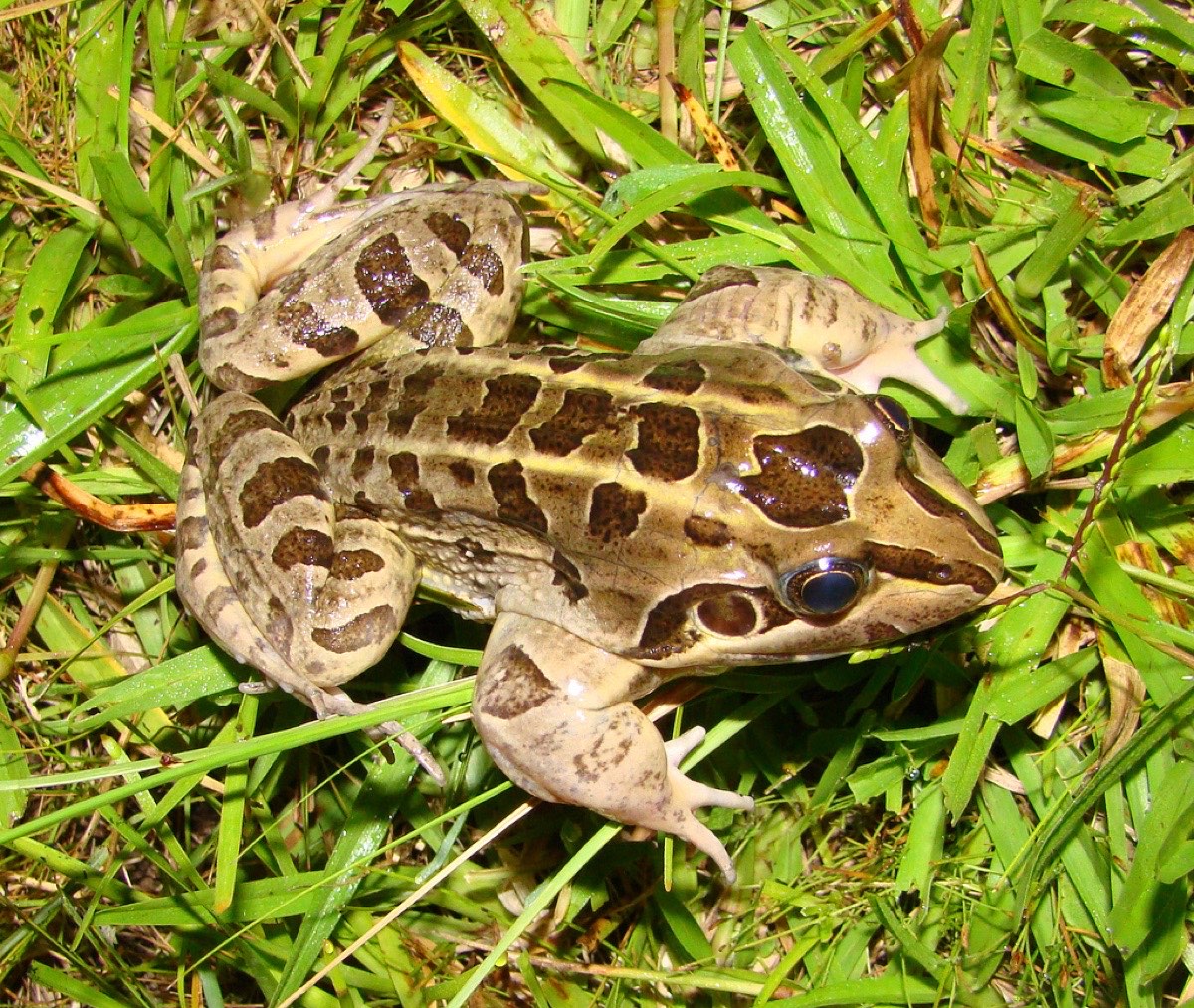
It can top ten centimetres and is a voracious hunter: insects, other frogs and even chicks end up in its mouth. It lays its eggs in foam nests whipped up with its legs at the water's edge, where the tadpoles stay protected.
Behaviour
Nocturnal. By day it buries itself or hides under damp vegetation; at night it hunts along the edges of marshes and puddles.
How and when to see it
Warm nights from October to March, especially after rain. You hear it, and cross paths with it, at any water edge.
Where to see it in the Iberá
The gateways of the Great Iberá Park where wrestler frog has confirmed presence:
Tours to see it
Verified providers operating at the gateways where wrestler frog lives. You contact them directly on WhatsApp from the app.
- Esteros Ñe’é
Experiences with local storytelling and a cultural take on the marshes.★ 5.0 - Jurassic Plant - Night Tour
The only carnivorous-plant garden in Argentina and a pioneer in Latin America. A guided…★ 5.0 - Guyra Wild Guides - Birding
Birdwatching tour and photo safari with specialized ornithologist guides. Yamil and…★ 5.0 - SKYVY - Astrotourism
Astrotourism in Loreto, 17 km from the San Antonio portal. Night-sky observation with a…★ 5.0
Species profile
- Common nameWrestler Frog
- Scientific nameLeptodactylus luctator
- GroupAmphibian
- StatusNative
Other species of the Iberá
Discover all the wildlife of the Iberá
More than 250 species with photos, profiles and the gateways where you can see them. Map, providers and trip planner. Free, no download needed.
Open Iberá Experience