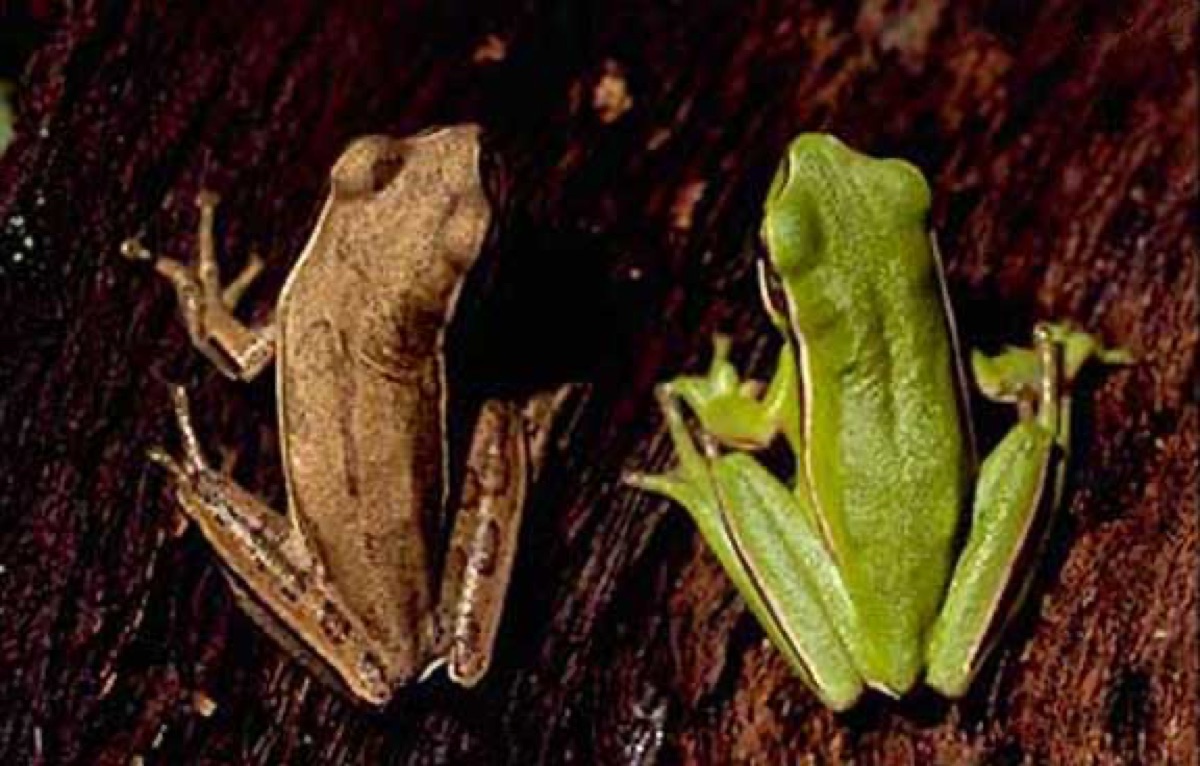
Its back ranges from emerald green to chestnut, and the same individual changes shade: in the breeding season males turn yellow and females apple green. While almost every frog goes quiet in the cold, this one keeps calling in mid July, making its chorus the year-round soundtrack.
Behaviour
Nocturnal and a climber: adhesive discs on its toes take it up rushes, shrubs and windows. By day it sleeps stuck to a leaf.
How and when to see it
All year round, one of the few tree frogs that do not rest even in winter. At night near any vegetation at the water's edge.
Where to see it in the Iberá
The gateways of the Great Iberá Park where montevideo tree frog has confirmed presence:
Tours to see it
Verified providers operating at the gateways where montevideo tree frog lives. You contact them directly on WhatsApp from the app.
- Esteros Ñe’é
Experiences with local storytelling and a cultural take on the marshes.★ 5.0 - Reserva Estero Camba Trapo
Private nature reserve of Ecoposada del Estero, on the Camba Trapo road. One of the…★ 5.0 - Excursiones Yetapá (Eduardo Alegre)
Excursions in the Iberá based in San Miguel, run by licensed guide Eduardo (Gualo)…★ 5.0 - Cabalgata Cintia
Horseback rides around Carlos Pellegrini.★ 5.0
Species profile
- Common nameMontevideo Tree Frog
- Scientific nameBoana pulchella
- GroupAmphibian
- StatusNative
Other species of the Iberá
Discover all the wildlife of the Iberá
More than 250 species with photos, profiles and the gateways where you can see them. Map, providers and trip planner. Free, on the web and on Google Play.
Open Iberá Experience