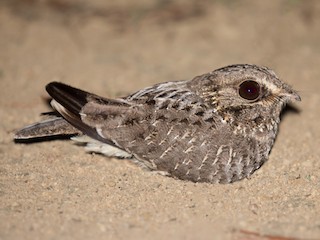
One of the most singular nightjars in South America and a rarity even for ornithologists. The male has black wings with a broad white patch on the primaries, a pattern completely different from that of any other nightjar. The body plumage is brown with the cryptic markings usual in the family. The female is more cryptic and brown-winged. It measures 18 to 20 cm. Endangered in Argentina due to the loss of its specific habitat: wet grasslands and marshes.
Behaviour
Nocturnal and elusive. It inhabits the wetlands with tall, damp grasslands, a very specific habitat that sets it apart from the other nightjars. It comes out to hunt at nightfall over the wetland. Its song is little known. The Iberá is one of the few places where it can be observed with relative regularity.
How and when to see it
At nightfall in the wetlands with tall grasslands. Portals Laguna Iberá, Uguay and Capivari are the best sites to find it.
Where to see it in the Iberá
The gateways of the Great Iberá Park where sickle-winged nightjar has confirmed presence:
Tours to see it
Verified providers operating at the gateways where sickle-winged nightjar lives. You contact them directly on WhatsApp from the app.
- Esteros Ñe’é
Experiences with local storytelling and a cultural take on the marshes.★ 5.0 - Reserva Estero Camba Trapo
Private nature reserve of Ecoposada del Estero, on the Camba Trapo road. One of the…★ 5.0 - Cabalgata Cintia
Horseback rides around Carlos Pellegrini.★ 5.0 - Iberá Spirit
Travel agency specializing in the Esteros del Iberá for 10 years. Packages, excursions…★ 5.0
Species profile
- Common nameSickle-winged Nightjar
- Scientific nameEleothreptus anomalus
- GroupBird
- StatusNative
Other species of the Iberá
Discover all the wildlife of the Iberá
More than 250 species with photos, profiles and the gateways where you can see them. Map, providers and trip planner. Free, no download needed.
Open Iberá Experience