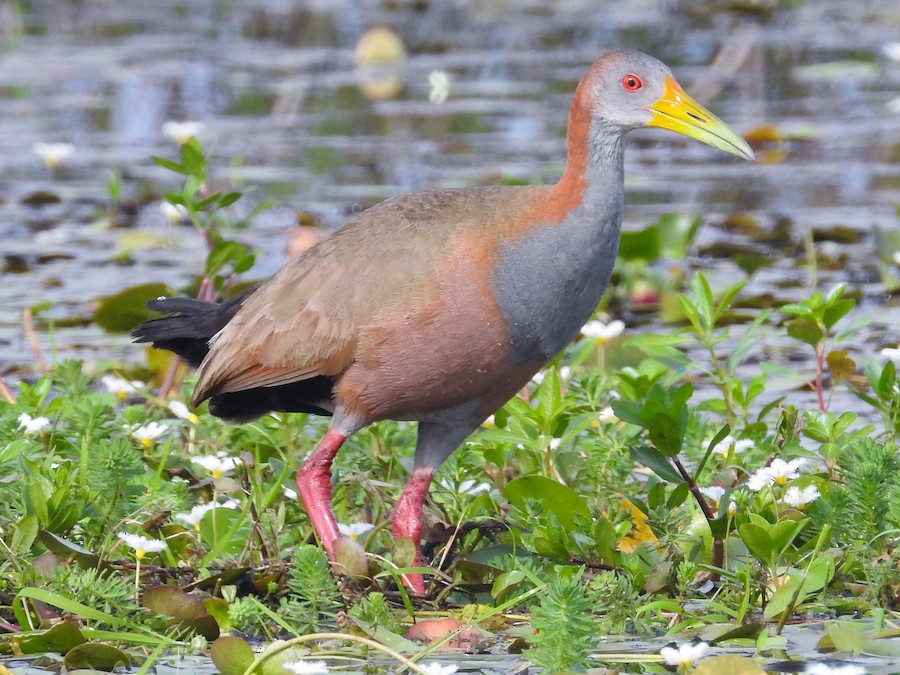
The largest rail on the continent and one of the most vocal waterbirds of the Iberá. The face and throat are bluish-gray, the nape reddish-chestnut, the breast chestnut, the belly black and the legs a very striking red. The bill is robust and yellow-green. The forehead is feathered, without a frontal shield (unlike the coots). It measures 41 to 45 cm. Its size, combined with the habit of calling at dawn and dusk with a piercing two-note cry that echoes across the whole marsh, makes it perfectly detectable although hard to see amid the vegetation.
Behaviour
An omnivore of the wetland: the seeds of aquatic plants, insects, small frogs, snails and crabs. It walks over the water hyacinths and emergent vegetation on large feet that spread its weight. It builds its nest on aquatic plants in the heart of the reed bed.
How and when to see it
Dawn and dusk. Boat outings at dusk with a flashlight often reveal several individuals walking over the water hyacinths.
Where to see it in the Iberá
The gateways of the Great Iberá Park where giant wood-rail has confirmed presence:
Tours to see it
Verified providers operating at the gateways where giant wood-rail lives. You contact them directly on WhatsApp from the app.
- Esteros Ñe’é
Experiences with local storytelling and a cultural take on the marshes.★ 5.0 - Gaucho Argentino
Horseback journeys across a network of refuges in Iberá. Multi-day rides with overnight…★ 5.0 - Irupé Excursiones
Guided hiking. Guided visit to museums, historic sites, chapels and trails of the town…★ 5.0 - Reserva Estero Camba Trapo
Private nature reserve of Ecoposada del Estero, on the Camba Trapo road. One of the…★ 5.0
Species profile
- Common nameGiant Wood-Rail
- Scientific nameAramides ypecaha
- GroupBird
- StatusNative
Other species of the Iberá
Discover all the wildlife of the Iberá
More than 250 species with photos, profiles and the gateways where you can see them. Map, providers and trip planner. Free, no download needed.
Open Iberá Experience