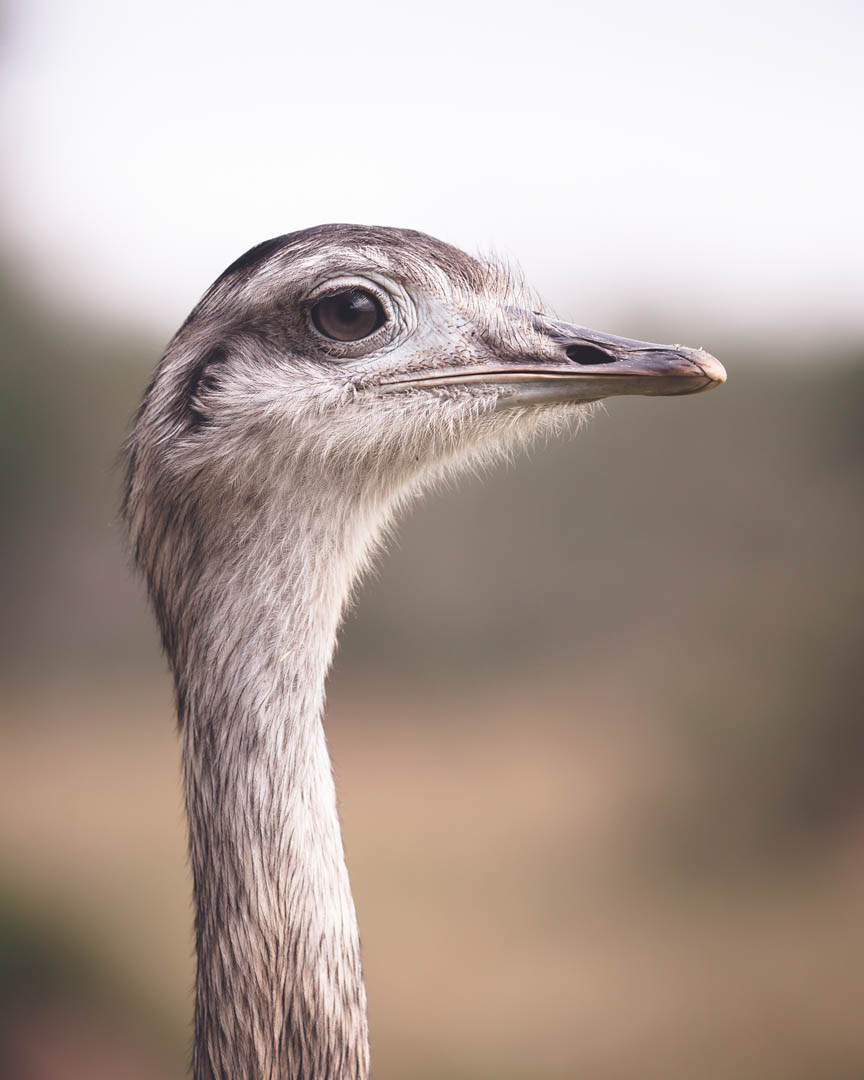
The largest bird in South America and the tallest on the continent. A subspecies of northern Argentina. Although it cannot fly, it is an extraordinary runner that can reach 60 km/h, using its large outstretched wings as a rudder to keep its balance when turning at high speed. Threatened nationally due to the alteration of natural grasslands; in Iberá it has stable, protected populations. Height: 1.30 to 1.50 m. Weight: 20 to 35 kg.
Behaviour
Markedly gregarious outside the breeding season. Diurnal and extremely alert. Omnivorous: shoots, seeds, fruit, leaves, insects and small reptiles or amphibians. The male builds the nest, incubates the eggs of several females and raises the chicks entirely on his own. The "charitos" following dad in single file are one of the most endearing scenes in the Iberá.
How and when to see it
Active all day, most common on cool mornings and at dusk. Prefers open areas where its excellent eyesight spots threats from afar.
Where to see it in the Iberá
The gateways of the Great Iberá Park where greater rhea has confirmed presence:
Tours to see it
Verified providers operating at the gateways where greater rhea lives. You contact them directly on WhatsApp from the app.
- Jurassic Plant - Night Tour
The only carnivorous-plant garden in Argentina and a pioneer in Latin America. A guided…★ 5.0 - Guyra Wild Guides - Birding
Birdwatching tour and photo safari with specialized ornithologist guides. Yamil and…★ 5.0 - SKYVY - Astrotourism
Astrotourism in Loreto, 17 km from the San Antonio portal. Night-sky observation with a…★ 5.0 - Raíz del Monte
Private nature reserve in Loreto. Trails through the native woodland, wildlife watching…★ 5.0
Species profile
- Common nameGreater Rhea
- Scientific nameRhea americana albescens
- GroupBird
- StatusNative
Other species of the Iberá
Discover all the wildlife of the Iberá
More than 250 species with photos, profiles and the gateways where you can see them. Map, providers and trip planner. Free, no download needed.
Open Iberá Experience