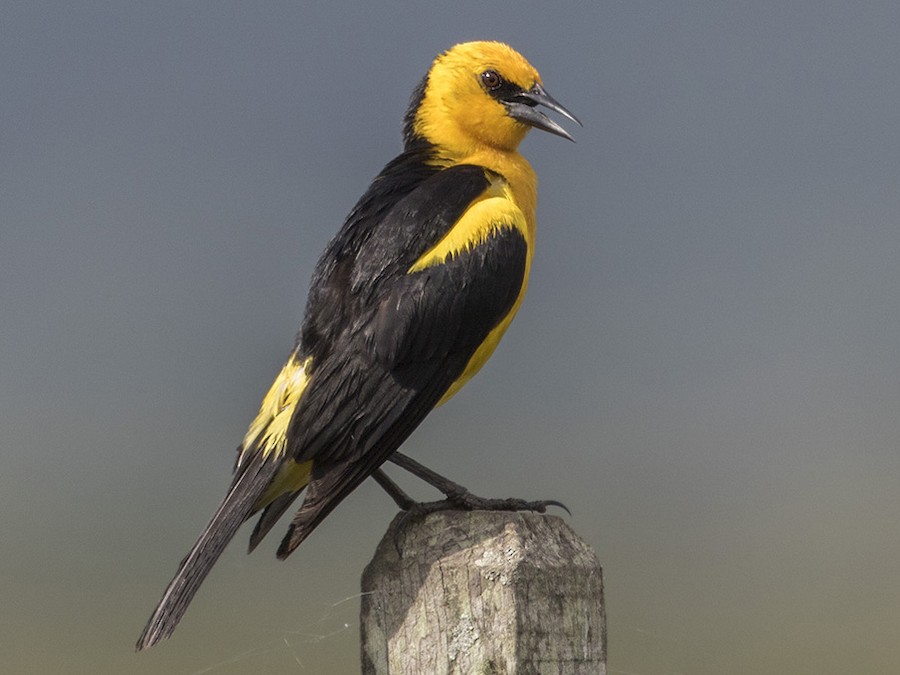
An icterid of 18 to 20 cm, the male black with a very intense bright yellow head, neck, breast and belly, and black wings and tail. The female has more subdued plumage, olive with a yellowish belly and dark streaks. Classified as Endangered in Argentina: its populations have declined drastically due to the conversion of natural grasslands to croplands. Iberá is one of the most important refuges for the species in South America.
Behaviour
It inhabits the wet grasslands and the tall-grass marshes of the Iberá. It lives in groups of 5 to 30 individuals that form mixed flocks with other grassland species. It feeds on seeds and insects on the grassland floor. The male sings from high perches in the tall-grass marsh.
How and when to see it
Year-round. The breeding season in spring and summer is the best time to see them. Portal Uguay and Laguna Iberá in the wet grasslands.
Where to see it in the Iberá
The gateways of the Great Iberá Park where saffron-cowled blackbird has confirmed presence:
Tours to see it
Verified providers operating at the gateways where saffron-cowled blackbird lives. You contact them directly on WhatsApp from the app.
- Esteros Ñe’é
Experiences with local storytelling and a cultural take on the marshes.★ 5.0 - Gaucho Argentino
Horseback journeys across a network of refuges in Iberá. Multi-day rides with overnight…★ 5.0 - Irupé Excursiones
Guided hiking. Guided visit to museums, historic sites, chapels and trails of the town…★ 5.0 - Reserva Estero Camba Trapo
Private nature reserve of Ecoposada del Estero, on the Camba Trapo road. One of the…★ 5.0
Species profile
- Common nameSaffron-cowled Blackbird
- Scientific nameXanthopsar flavus
- GroupBird
- StatusNative
Other species of the Iberá
Discover all the wildlife of the Iberá
More than 250 species with photos, profiles and the gateways where you can see them. Map, providers and trip planner. Free, no download needed.
Open Iberá Experience