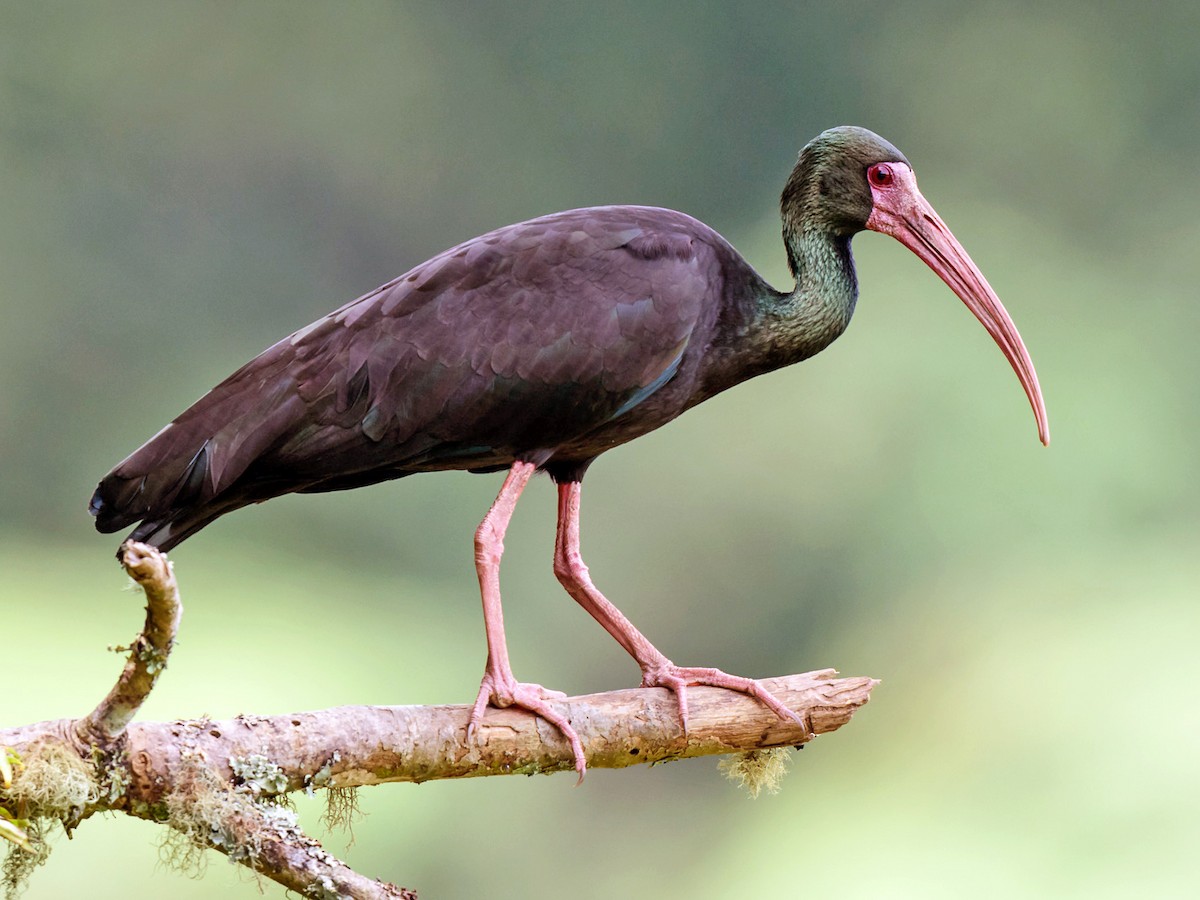
An ibis with entirely black plumage with bronzy or greenish sheen. Its most striking feature is the bare orange-red face, which gives it its name. Its bill is pink or reddish, curved and medium-sized. Its legs are pink. Juveniles have duller plumage and a less showy face. It measures 45 to 55 cm. Very gregarious: it moves in flocks of dozens or even hundreds of birds over wet grasslands and lagoon edges.
Behaviour
It forages in tight groups, walking quickly over flooded grasslands, wetlands and lagoon edges, using its curved bill to probe the mud for earthworms, larvae, river crabs, small frogs and insects. It roosts in colonies in trees or in marsh vegetation.
How and when to see it
Year round. The large flocks over damp grasslands are unmistakable. Particularly abundant in winter.
Where to see it in the Iberá
The gateways of the Great Iberá Park where bare-faced ibis has confirmed presence:
Tours to see it
Verified providers operating at the gateways where bare-faced ibis lives. You contact them directly on WhatsApp from the app.
- Esteros Ñe’é
Experiences with local storytelling and a cultural take on the marshes.★ 5.0 - Gaucho Argentino
Horseback journeys across a network of refuges in Iberá. Multi-day rides with overnight…★ 5.0 - Jurassic Plant - Night Tour
The only carnivorous-plant garden in Argentina and a pioneer in Latin America. A guided…★ 5.0 - Irupé Excursiones
Guided hiking. Guided visit to museums, historic sites, chapels and trails of the town…★ 5.0
Species profile
- Common nameBare-faced Ibis
- Scientific namePhimosus infuscatus
- GroupBird
- StatusNative
Other species of the Iberá
Discover all the wildlife of the Iberá
More than 250 species with photos, profiles and the gateways where you can see them. Map, providers and trip planner. Free, no download needed.
Open Iberá Experience