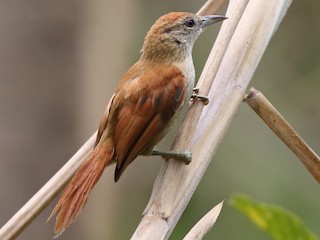
A small furnariid of 14 to 16 cm with the back, wings and crown a very characteristic bright reddish cinnamon. The throat and belly are whitish. The tail is long and often raised. The bill is thin and slightly curved. It lives exclusively in the rush beds, cattail beds and emergent vegetation of the marshes and lagoon shores. Its Spanish name refers to the reddish-cinnamon color of the plumage.
Behaviour
Very active and agile among the stems of the reeds and cattails. It moves from stem to stem low over the water, looking for aquatic insects, spiders and small larvae. Its song is a series of fast, descending notes very characteristic of the reed beds of the Iberá. It nests within the reed bed, building a spherical nest of plant fibers.
How and when to see it
Year round in any reed or cattail bed. Easily detected by its song and its movement among the stems. Portal Laguna Iberá and Galarza are the best sites.
Where to see it in the Iberá
The gateways of the Great Iberá Park where yellow-chinned spinetail has confirmed presence:
Tours to see it
Verified providers operating at the gateways where yellow-chinned spinetail lives. You contact them directly on WhatsApp from the app.
- Esteros Ñe’é
Experiences with local storytelling and a cultural take on the marshes.★ 5.0 - Gaucho Argentino
Horseback journeys across a network of refuges in Iberá. Multi-day rides with overnight…★ 5.0 - Irupé Excursiones
Guided hiking. Guided visit to museums, historic sites, chapels and trails of the town…★ 5.0 - Reserva Estero Camba Trapo
Private nature reserve of Ecoposada del Estero, on the Camba Trapo road. One of the…★ 5.0
Species profile
- Common nameYellow-chinned Spinetail
- Scientific nameCerthiaxis cinnamomeus
- GroupBird
- StatusNative
Other species of the Iberá
Discover all the wildlife of the Iberá
More than 250 species with photos, profiles and the gateways where you can see them. Map, providers and trip planner. Free, no download needed.
Open Iberá Experience