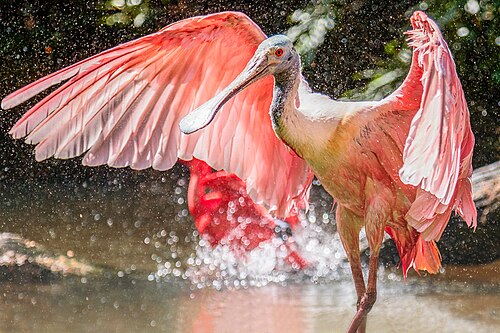
One of the most visually striking birds in South America. White plumage with an intense pink body, especially vivid on the wings and back; the pink color comes from the carotenoids of the crustaceans it consumes. Its bald greenish-gray head and its flattened spoon-shaped bill make it absolutely unmistakable. In the breeding season it develops more saturated tones and a red patch on the wing bend. It measures 70 to 85 cm. Least Concern, with stable populations.
Behaviour
It forages in groups in shallow water, sweeping its bill from side to side with a characteristic motion to filter small fish, shrimp, crabs and insect larvae. Very sensitive to water color: it chooses the clearest water to feed.
How and when to see it
Year round. The flocks resting on sandy shores in the light of dusk are one of the most photogenic scenes in the marshes. Portals Laguna Iberá and Galarza hold the largest groups.
Where to see it in the Iberá
The gateways of the Great Iberá Park where roseate spoonbill has confirmed presence:
Tours to see it
Verified providers operating at the gateways where roseate spoonbill lives. You contact them directly on WhatsApp from the app.
- Esteros Ñe’é
Experiences with local storytelling and a cultural take on the marshes.★ 5.0 - Gaucho Argentino
Horseback journeys across a network of refuges in Iberá. Multi-day rides with overnight…★ 5.0 - Irupé Excursiones
Guided hiking. Guided visit to museums, historic sites, chapels and trails of the town…★ 5.0 - Reserva Estero Camba Trapo
Private nature reserve of Ecoposada del Estero, on the Camba Trapo road. One of the…★ 5.0
Species profile
- Common nameRoseate Spoonbill
- Scientific namePlatalea ajaja
- GroupBird
- StatusNative
Other species of the Iberá
Discover all the wildlife of the Iberá
More than 250 species with photos, profiles and the gateways where you can see them. Map, providers and trip planner. Free, no download needed.
Open Iberá Experience