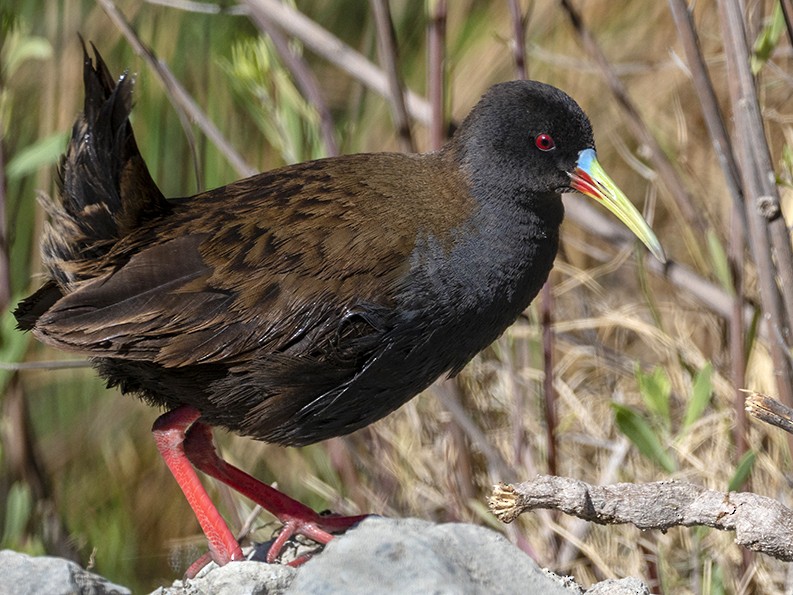
A robust rail with olive-brown upperparts and leaden-grey underparts (hence its name Plumbeous Rail). The most visible diagnostic feature is the bill: greenish with a light-blue and red base (hence "painted bill"). The legs are reddish. The forehead is feathered, without the horny frontal shield of the coots. It measures about 30 cm. One of the hardest rails to observe in the Iberá: it moves with extreme caution within the densest cattail and reedbeds and rarely comes out into open spaces.
Behaviour
An omnivore of dense wetlands: insects, earthworms, the seeds of marsh plants and small aquatic invertebrates. It walks stealthily over the floating vegetation. Its call is a sequence of high, descending notes given mainly at night or at dawn.
How and when to see it
Very difficult to spot. The most effective method is to listen for the call at dawn and then search patiently with binoculars along the edges of the reed beds.
Where to see it in the Iberá
The gateways of the Great Iberá Park where plumbeous rail has confirmed presence:
Tours to see it
Verified providers operating at the gateways where plumbeous rail lives. You contact them directly on WhatsApp from the app.
- Esteros Ñe’é
Experiences with local storytelling and a cultural take on the marshes.★ 5.0 - Gaucho Argentino
Horseback journeys across a network of refuges in Iberá. Multi-day rides with overnight…★ 5.0 - Irupé Excursiones
Guided hiking. Guided visit to museums, historic sites, chapels and trails of the town…★ 5.0 - Reserva Estero Camba Trapo
Private nature reserve of Ecoposada del Estero, on the Camba Trapo road. One of the…★ 5.0
Species profile
- Common namePlumbeous Rail
- Scientific namePardirallus sanguinolentus
- GroupBird
- StatusNative
Other species of the Iberá
Discover all the wildlife of the Iberá
More than 250 species with photos, profiles and the gateways where you can see them. Map, providers and trip planner. Free, no download needed.
Open Iberá Experience