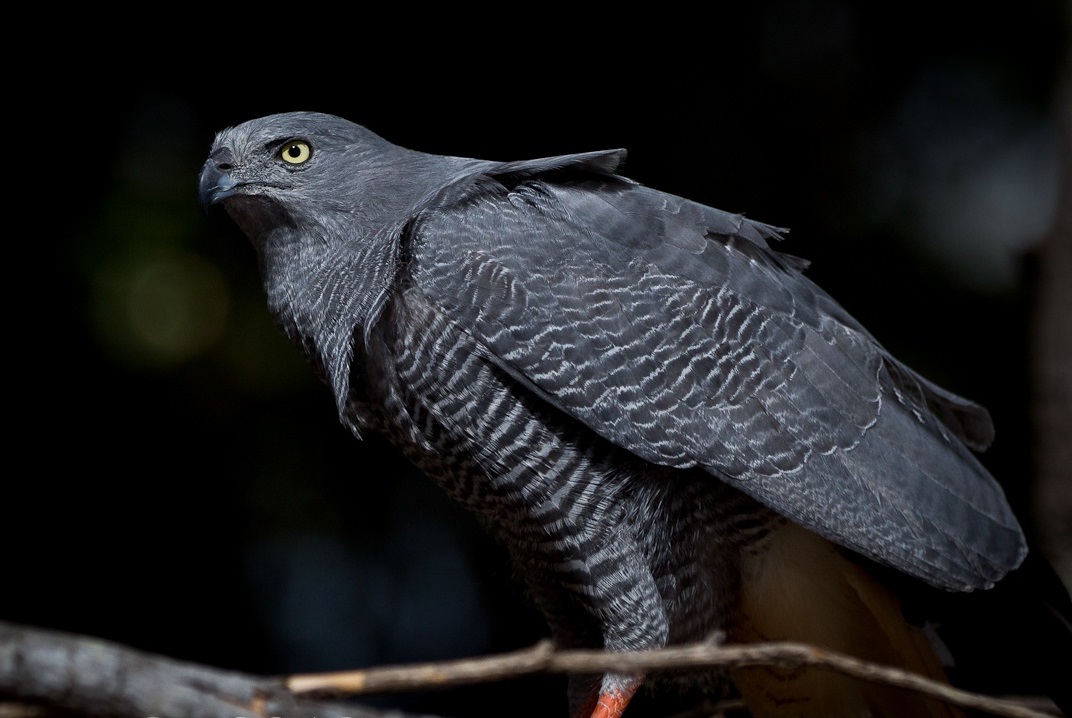
A medium-sized raptor of 41 to 51 cm with uniformly slate-gray plumage and a black tail barred with white. The legs are long and slender, bright red-orange, adapted for reaching into cavities and crevices. The bill is black and hooked. The eyes are orange. Its flight is light and graceful with the legs hanging visibly. It inhabits gallery forest and riverside woodland near water. The long legs give it its name and serve to extract prey from crevices.
Behaviour
Solitary and relatively active during the day. It moves along the branches and trunks of the forest with its long legs, inserting them into the crevices, holes and cavities to extract crayfish, lizards, frogs and small snakes. It can also walk along the ground at the water's edge. The song is a high-pitched whistle.
How and when to see it
Year-round in the portals with gallery forest and riverbanks. Uncommon and requiring a trained eye. Portal Galarza and San Antonio are the best sites.
Where to see it in the Iberá
The gateways of the Great Iberá Park where crane hawk has confirmed presence:
Tours to see it
Verified providers operating at the gateways where crane hawk lives. You contact them directly on WhatsApp from the app.
- Esteros Ñe’é
Experiences with local storytelling and a cultural take on the marshes.★ 5.0 - Gaucho Argentino
Horseback journeys across a network of refuges in Iberá. Multi-day rides with overnight…★ 5.0 - Jurassic Plant - Night Tour
The only carnivorous-plant garden in Argentina and a pioneer in Latin America. A guided…★ 5.0 - Irupé Excursiones
Guided hiking. Guided visit to museums, historic sites, chapels and trails of the town…★ 5.0
Species profile
- Common nameCrane Hawk
- Scientific nameGeranospiza caerulescens
- GroupBird
- StatusNative
Other species of the Iberá
Discover all the wildlife of the Iberá
More than 250 species with photos, profiles and the gateways where you can see them. Map, providers and trip planner. Free, no download needed.
Open Iberá Experience