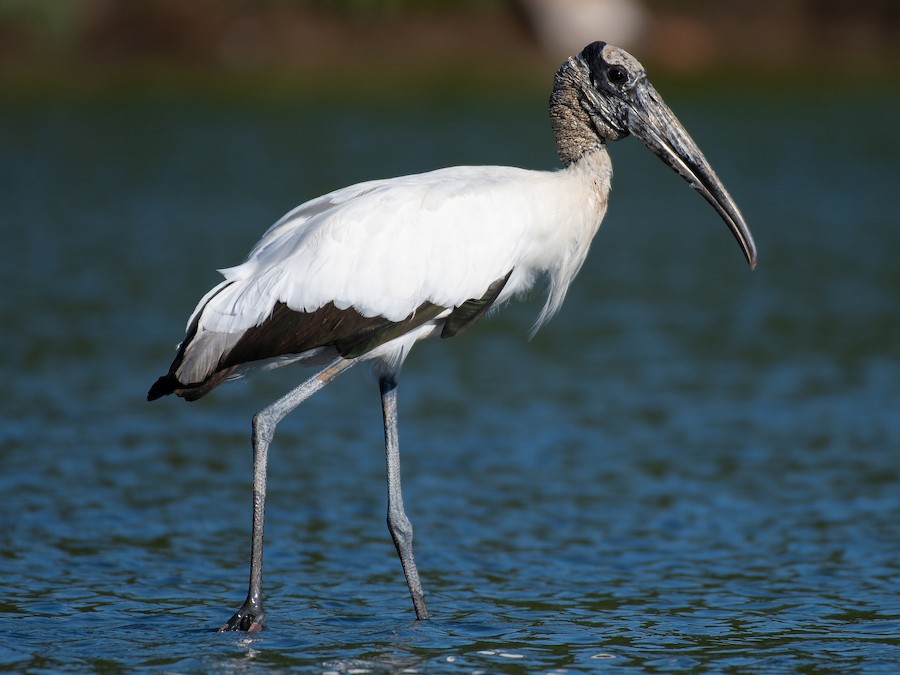
A large stork very different from the Jabiru: a bald head with dark grayish skin, a long neck with white feathers and a pure white body that contrasts with the black flight feathers and tail. Its bill is long, robust and slightly curved downward. In flight the black and white contrast of the wings is spectacular. Unlike the Jabiru, the Wood Stork is very gregarious and is frequently seen in groups of dozens of birds soaring in circles over the wetlands. It measures 90 to 100 cm in height with a wingspan of 180 cm.
Behaviour
Gregarious and social. It fishes by wading in flocks through shallow water, using its long bill to probe the mud by touch for fish, frogs and eels. It nests in colonies in tall trees, often alongside herons and spoonbills.
How and when to see it
Year round, with greater presence between November and March. Visible from boats and viewpoints at all the portals with lagoons.
Where to see it in the Iberá
The gateways of the Great Iberá Park where wood stork has confirmed presence:
Tours to see it
Verified providers operating at the gateways where wood stork lives. You contact them directly on WhatsApp from the app.
- Esteros Ñe’é
Experiences with local storytelling and a cultural take on the marshes.★ 5.0 - Gaucho Argentino
Horseback journeys across a network of refuges in Iberá. Multi-day rides with overnight…★ 5.0 - Irupé Excursiones
Guided hiking. Guided visit to museums, historic sites, chapels and trails of the town…★ 5.0 - Reserva Estero Camba Trapo
Private nature reserve of Ecoposada del Estero, on the Camba Trapo road. One of the…★ 5.0
Species profile
- Common nameWood Stork
- Scientific nameMycteria americana
- GroupBird
- StatusNative
Other species of the Iberá
Discover all the wildlife of the Iberá
More than 250 species with photos, profiles and the gateways where you can see them. Map, providers and trip planner. Free, no download needed.
Open Iberá Experience