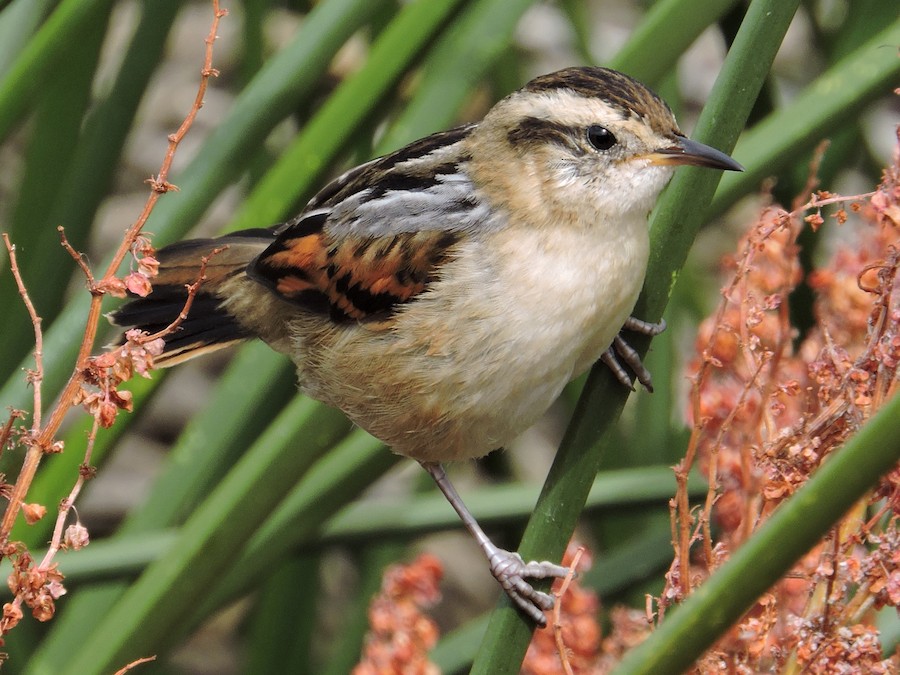
A small furnariid of 13 to 15 cm fully adapted to life in the cattail and rush beds. The plumage is brown with longitudinal black streaks above, a whitish throat and breast and a very visible white supercilium. The bill is short and slightly curved. The tail is short. It inhabits exclusively the dense rush and cattail beds where the ground is permanently flooded. Unlike the Yellow-chinned Spinetail, it is more cryptic and inconspicuous in its movements.
Behaviour
Very discreet and hard to see. It moves stealthily among the base of the stems just centimeters above the water, looking for aquatic insects. Its song is a dry, mechanical rattle, like a ratchet or two pebbles knocking together, heard from within the reed bed without the bird being visible. It builds a spherical nest tied to several cattail stems.
How and when to see it
Year round. Easily heard in the reed beds of all the portals but hard to see. Navigating very slowly by kayak along the edge of the cattail bed is the best way to see it.
Where to see it in the Iberá
The gateways of the Great Iberá Park where wren-like rushbird has confirmed presence:
Tours to see it
Verified providers operating at the gateways where wren-like rushbird lives. You contact them directly on WhatsApp from the app.
- Esteros Ñe’é
Experiences with local storytelling and a cultural take on the marshes.★ 5.0 - Gaucho Argentino
Horseback journeys across a network of refuges in Iberá. Multi-day rides with overnight…★ 5.0 - Irupé Excursiones
Guided hiking. Guided visit to museums, historic sites, chapels and trails of the town…★ 5.0 - Reserva Estero Camba Trapo
Private nature reserve of Ecoposada del Estero, on the Camba Trapo road. One of the…★ 5.0
Species profile
- Common nameWren-like Rushbird
- Scientific namePhleocryptes melanops
- GroupBird
- StatusNative
Other species of the Iberá
Discover all the wildlife of the Iberá
More than 250 species with photos, profiles and the gateways where you can see them. Map, providers and trip planner. Free, no download needed.
Open Iberá Experience