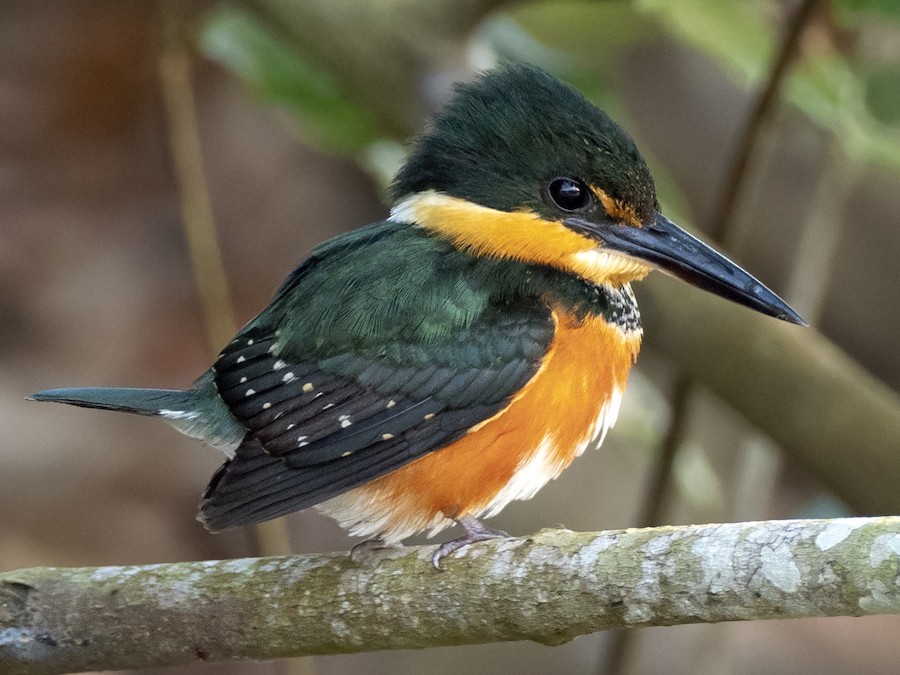
The smallest of the four kingfishers of the Iberá and one of the smallest in the world: just 13 to 14 cm. The back is bronze-green with a metallic sheen. The neck and breast are reddish-chestnut in the male, with a green band in females. The belly is white. The bill is relatively long for its size. It inhabits the densest, darkest strip of vegetation along the narrow channels, where the aquatic plants and rushes almost cover the surface of the water.
Behaviour
Solitary and extremely elusive. It moves just centimeters above the water among the emergent vegetation. Very hard to detect because of its small size and its preference for the most enclosed microhabitats. Its call is a faint, high "tit." It nests in tunnels it digs in the soft banks of the soil.
How and when to see it
Year round but rarely seen. Requires very slow, silent navigation along narrow channels with dense vegetation. It can be looked for at Portal Laguna Iberá and Capivari.
Where to see it in the Iberá
The gateways of the Great Iberá Park where american pygmy kingfisher has confirmed presence:
Tours to see it
Verified providers operating at the gateways where american pygmy kingfisher lives. You contact them directly on WhatsApp from the app.
- Esteros Ñe’é
Experiences with local storytelling and a cultural take on the marshes.★ 5.0 - Reserva Estero Camba Trapo
Private nature reserve of Ecoposada del Estero, on the Camba Trapo road. One of the…★ 5.0 - Cabalgata Cintia
Horseback rides around Carlos Pellegrini.★ 5.0 - Iberá Spirit
Travel agency specializing in the Esteros del Iberá for 10 years. Packages, excursions…★ 5.0
Species profile
- Common nameAmerican Pygmy Kingfisher
- Scientific nameChloroceryle aenea
- GroupBird
- StatusNative
Other species of the Iberá
Discover all the wildlife of the Iberá
More than 250 species with photos, profiles and the gateways where you can see them. Map, providers and trip planner. Free, no download needed.
Open Iberá Experience