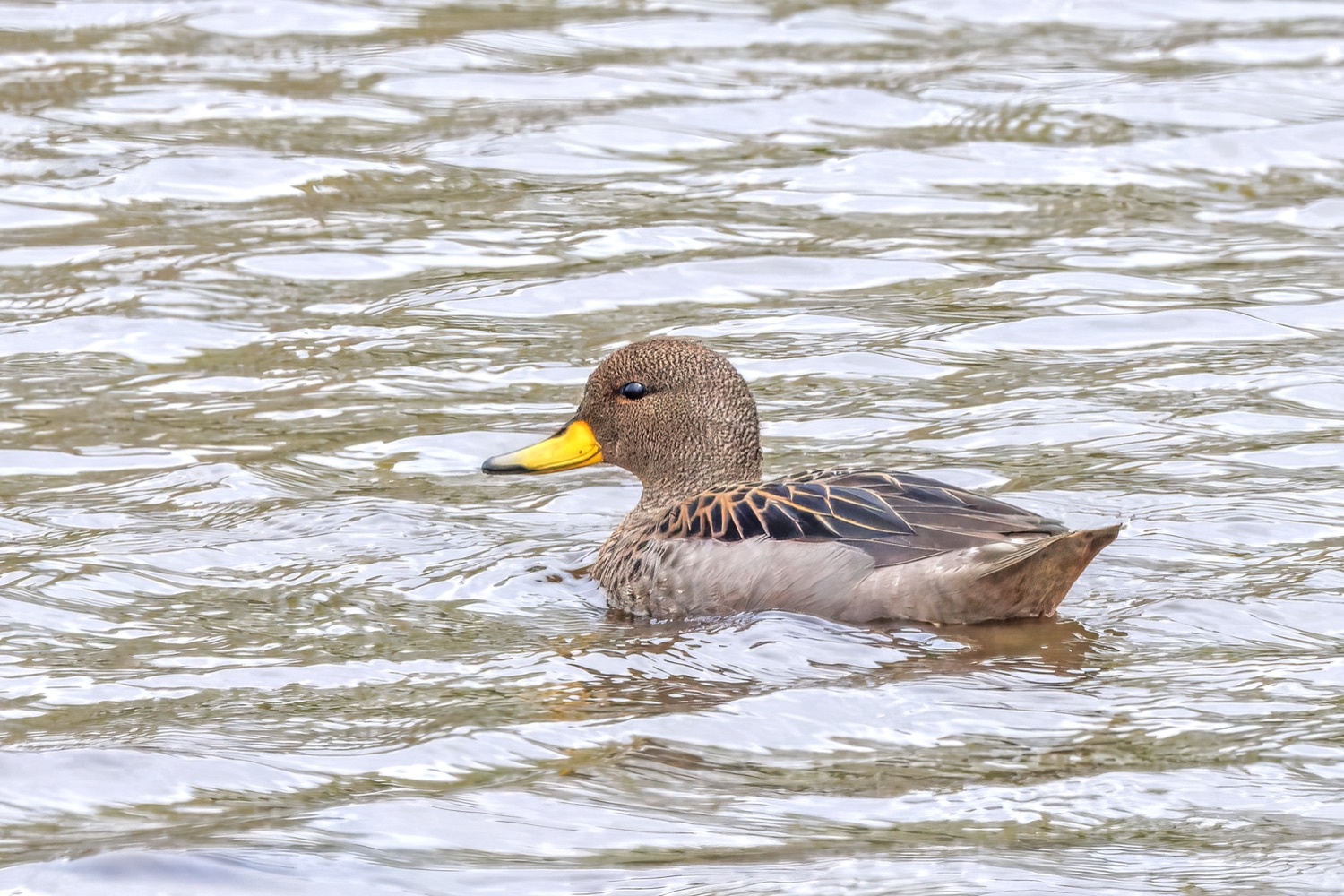
The smallest duck of Iberá: 37 to 43 cm. The plumage is brown with dark spots that are larger than the fine speckling of the Silver Teal. The bill is bright yellow in the male, duller in the female. The wing speculum is bright green with a white border. The sides of the head are pale brown. The tail is short. It inhabits lagoons, streams and marshes with emergent vegetation. It prefers areas with dense aquatic vegetation where it can hide.
Behaviour
Social but discreet. It swims in small groups at the edges of the aquatic vegetation. It feeds by filtering the water and gathering aquatic vegetation at the surface. It also grazes at the shores. The bright yellow bill is the most striking trait, and easy to see from a boat.
How and when to see it
Year-round in the marshes and lagoons with vegetation. Kayak excursions allow it to be observed up close in the dense vegetation.
Where to see it in the Iberá
The gateways of the Great Iberá Park where yellow-billed teal has confirmed presence:
Tours to see it
Verified providers operating at the gateways where yellow-billed teal lives. You contact them directly on WhatsApp from the app.
- Esteros Ñe’é
Experiences with local storytelling and a cultural take on the marshes.★ 5.0 - Gaucho Argentino
Horseback journeys across a network of refuges in Iberá. Multi-day rides with overnight…★ 5.0 - Irupé Excursiones
Guided hiking. Guided visit to museums, historic sites, chapels and trails of the town…★ 5.0 - Reserva Estero Camba Trapo
Private nature reserve of Ecoposada del Estero, on the Camba Trapo road. One of the…★ 5.0
Species profile
- Common nameYellow-billed Teal
- Scientific nameAnas flavirostris
- GroupBird
- StatusNative
Other species of the Iberá
Discover all the wildlife of the Iberá
More than 250 species with photos, profiles and the gateways where you can see them. Map, providers and trip planner. Free, no download needed.
Open Iberá Experience