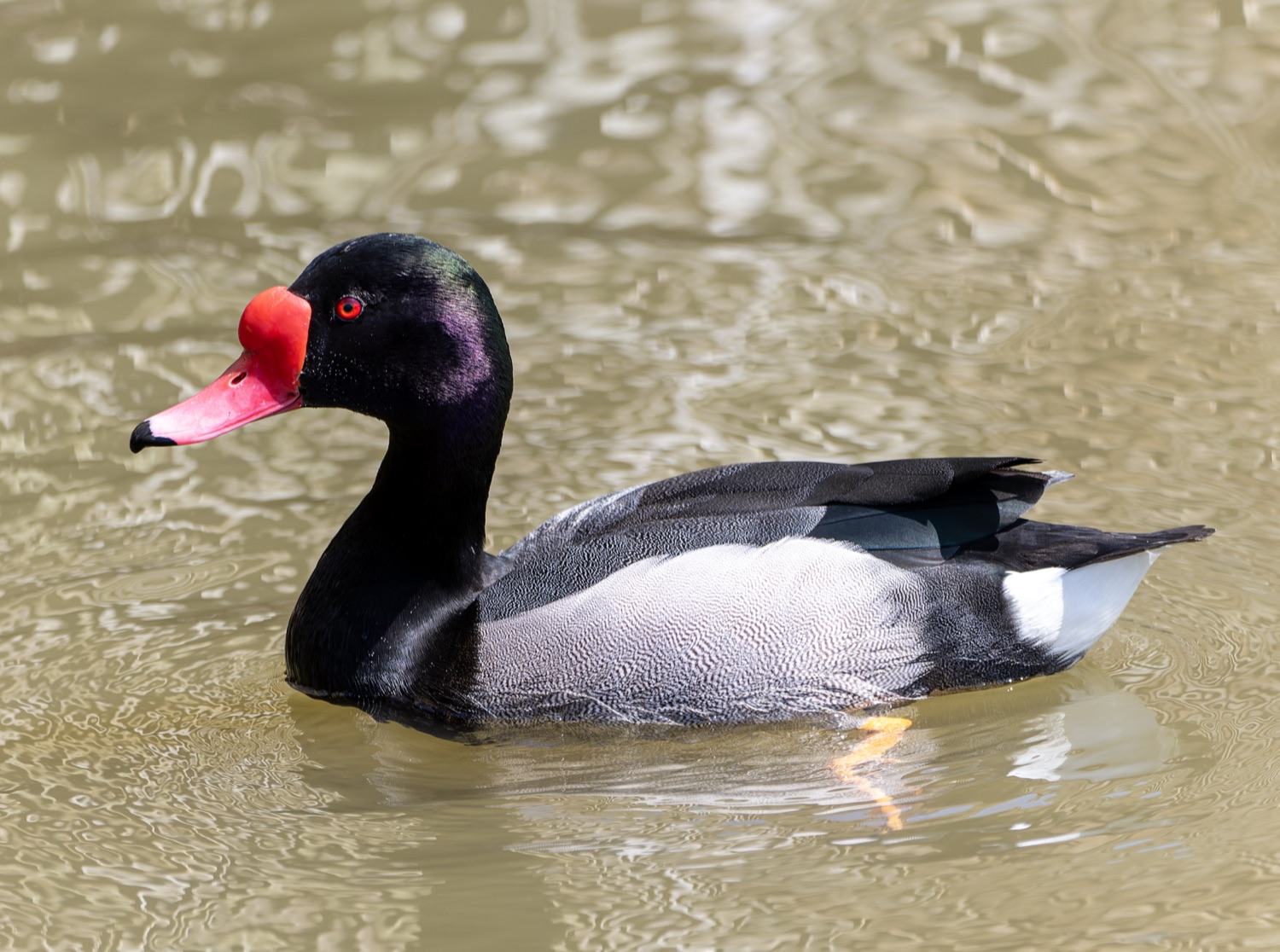
A large, striking diving duck. The adult male has a black head and neck with green and purplish sheen, a bright red bill with a small basal knob and a black body with gray flanks and a white area beneath the tail. The female is brown with a duller bill. Males in eclipse plumage resemble the females. It measures 52 to 57 cm. Although it is classified with the diving ducks, in practice it rarely dives: it feeds at the surface and by upending (tail up) in shallow water. A common species heavily hunted for sport, without being threatened (Least Concern, IUCN).
Behaviour
It feeds mostly in shallow water, dabbling at the surface and upending to reach aquatic plants, seeds and invertebrates. It rarely dives and also feeds on land. It often mixes with whistling ducks on open lagoons.
How and when to see it
Year round, with greater presence in autumn and winter. Portals Laguna Iberá and Galarza, on the deeper lagoons.
Where to see it in the Iberá
The gateways of the Great Iberá Park where rosy-billed pochard has confirmed presence:
Tours to see it
Verified providers operating at the gateways where rosy-billed pochard lives. You contact them directly on WhatsApp from the app.
- Esteros Ñe’é
Experiences with local storytelling and a cultural take on the marshes.★ 5.0 - Reserva Estero Camba Trapo
Private nature reserve of Ecoposada del Estero, on the Camba Trapo road. One of the…★ 5.0 - Excursiones Yetapá (Eduardo Alegre)
Excursions in the Iberá based in San Miguel, run by licensed guide Eduardo (Gualo)…★ 5.0 - Cabalgata Cintia
Horseback rides around Carlos Pellegrini.★ 5.0
Species profile
- Common nameRosy-billed Pochard
- Scientific nameNetta peposaca
- GroupBird
- StatusNative
Other species of the Iberá
Discover all the wildlife of the Iberá
More than 250 species with photos, profiles and the gateways where you can see them. Map, providers and trip planner. Free, no download needed.
Open Iberá Experience