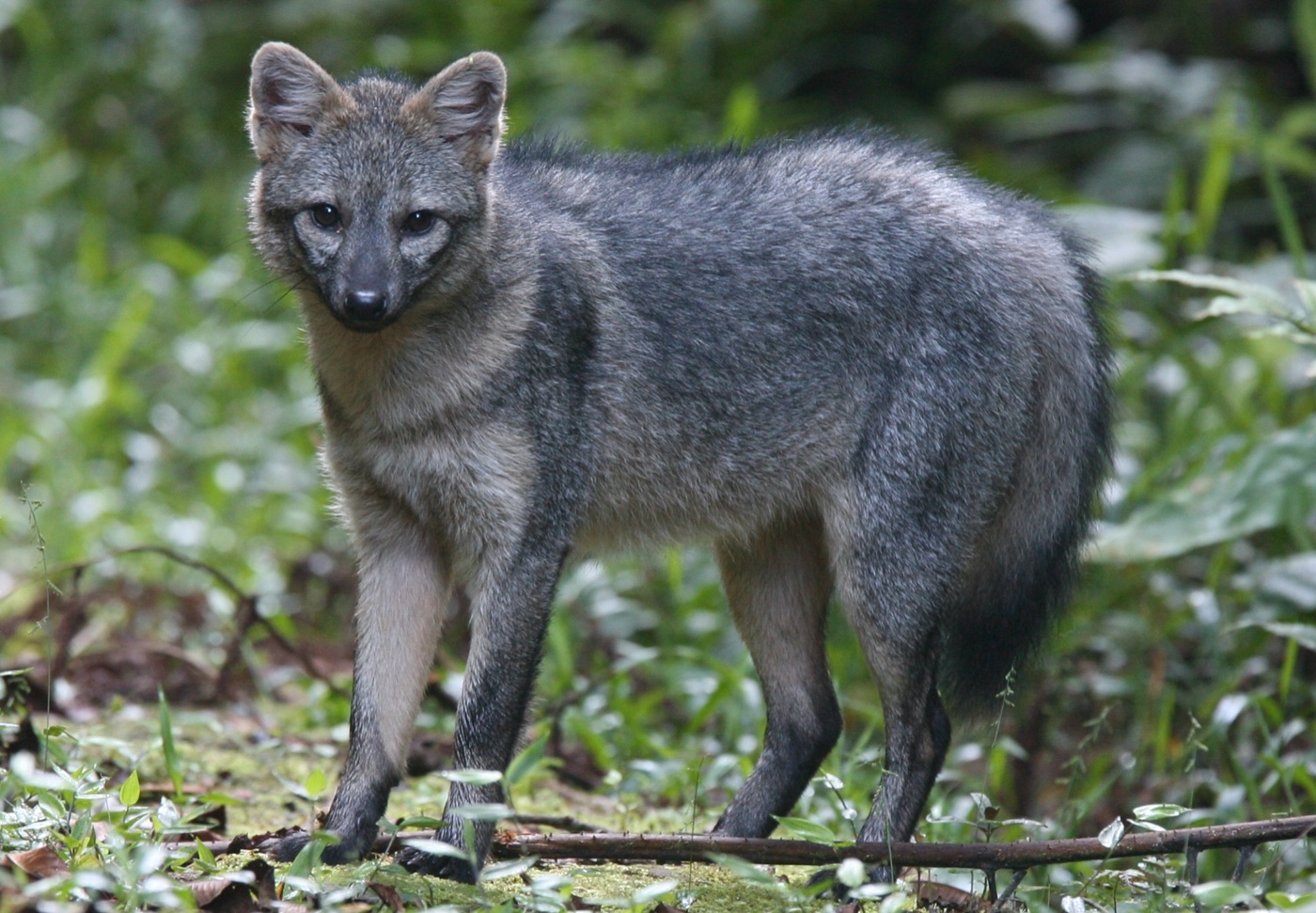
Also known locally as zorro patas negras (black-legged fox). Thick fur of a washed grayish tone with yellowish tints, a black line running along the back to the tip of the tail. Unlike the Pampas gray fox, it prefers more closed environments, forest edges and thickets. It is an extremely adaptable species, stable and with healthy populations throughout the region. Body length: 60 to 70 cm plus about 30 cm of tail. Weight: 5 to 8 kg.
Behaviour
A born opportunist and omnivore: its English name, "crab-eating", comes from its fondness for crayfish in the rainy season, but it eats everything from small rodents, birds and lizards to wild fruit and insects. Mainly crepuscular and nocturnal in habit, though it is easy to see by day.
How and when to see it
Year-round. At dusk and at night is when they are most active, roaming the verges of the access roads or the surroundings of the campsites.
Where to see it in the Iberá
The gateways of the Great Iberá Park where crab-eating fox has confirmed presence:
Tours to see it
Verified providers operating at the gateways where crab-eating fox lives. You contact them directly on WhatsApp from the app.
- Esteros Ñe’é
Experiences with local storytelling and a cultural take on the marshes.★ 5.0 - Gaucho Argentino
Horseback journeys across a network of refuges in Iberá. Multi-day rides with overnight…★ 5.0 - Jurassic Plant - Night Tour
The only carnivorous-plant garden in Argentina and a pioneer in Latin America. A guided…★ 5.0 - Irupé Excursiones
Guided hiking. Guided visit to museums, historic sites, chapels and trails of the town…★ 5.0
Species profile
- Common nameCrab-eating Fox
- Scientific nameCerdocyon thous
- GroupMammal
- StatusNative
Other species of the Iberá
Discover all the wildlife of the Iberá
More than 250 species with photos, profiles and the gateways where you can see them. Map, providers and trip planner. Free, no download needed.
Open Iberá Experience