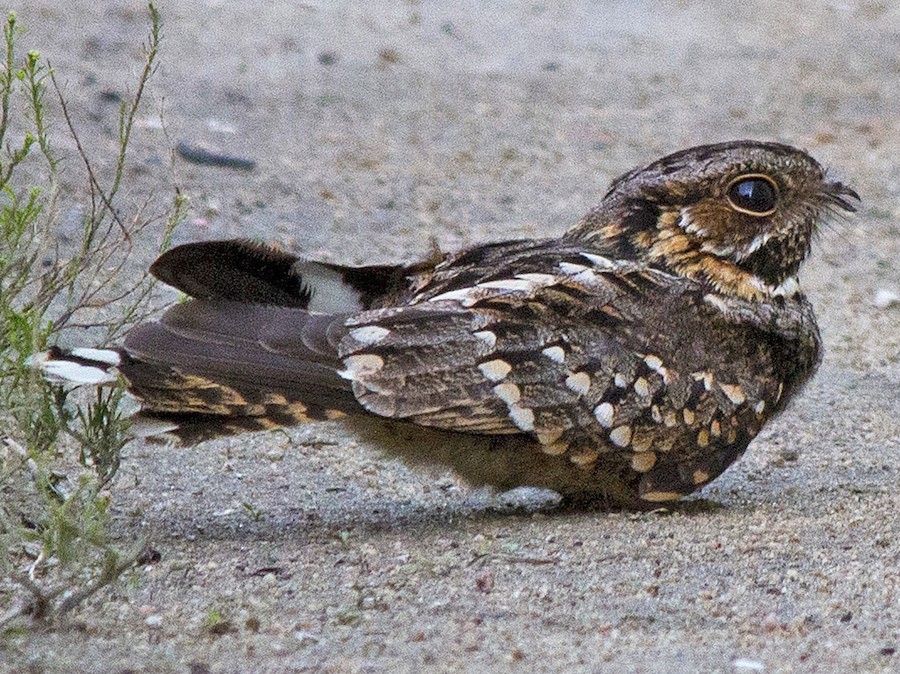
The smallest of the nightjars of the Iberá. Cryptic plumage in finely intermixed brown, black, white and ocher tones that make it invisible on the ground among the leaf litter or on a branch. The male has white spots on the throat and wings that it uses in display. The bill is very short but the mouth opens enormously. It measures 19 to 21 cm. Unlike the Scissor-tailed Nightjar, the tail is short and rounded.
Behaviour
Nocturnal and crepuscular. It rests during the day on the ground or on low branches where it is practically invisible. It comes out to hunt at nightfall: it flies silently catching insects in the air. At night it sings from the ground a sequence of fast notes, "tu-tu-tu-tu" or similar. Its eyes have a reflective tapetum that glows red when lit by a light source.
How and when to see it
Nocturnal. At night, with a flashlight on dirt tracks, it is possible to see the red glow of its eyes before making out the bird. Its song at nightfall is the easiest way to detect it.
Where to see it in the Iberá
The gateways of the Great Iberá Park where little nightjar has confirmed presence:
Tours to see it
Verified providers operating at the gateways where little nightjar lives. You contact them directly on WhatsApp from the app.
- Esteros Ñe’é
Experiences with local storytelling and a cultural take on the marshes.★ 5.0 - Reserva Estero Camba Trapo
Private nature reserve of Ecoposada del Estero, on the Camba Trapo road. One of the…★ 5.0 - Excursiones Yetapá (Eduardo Alegre)
Excursions in the Iberá based in San Miguel, run by licensed guide Eduardo (Gualo)…★ 5.0 - Cabalgata Cintia
Horseback rides around Carlos Pellegrini.★ 5.0
Species profile
- Common nameLittle Nightjar
- Scientific nameSetopagis parvula
- GroupBird
- StatusNative
Other species of the Iberá
Discover all the wildlife of the Iberá
More than 250 species with photos, profiles and the gateways where you can see them. Map, providers and trip planner. Free, no download needed.
Open Iberá Experience