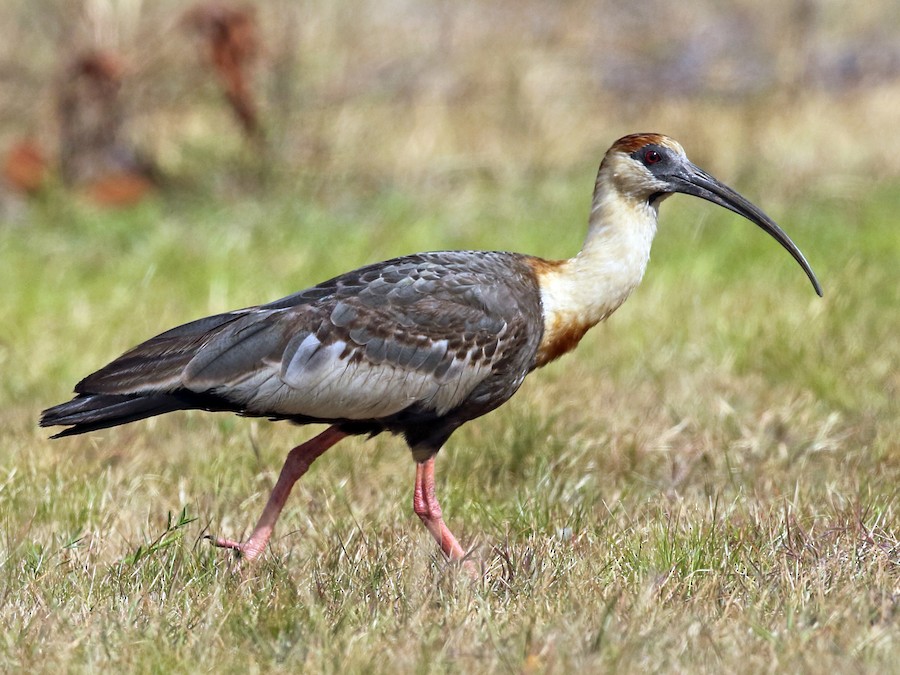
The largest of the ibises of Iberá. Plumage with a striking orange-ochre neck and breast, a pearl-gray back, black wings with a white panel visible in flight and a whitish belly. The long, blackish, strongly downcurved bill is the diagnostic feature of the group. Its eyes are an intense red. The bare facial skin is grayish. It measures 72 to 80 cm.
Behaviour
It moves in pairs or small groups, walking slowly through short grasslands and savannas in search of invertebrates, earthworms, larvae and insects, which it detects by using its bill as a probe in the soil. Very noisy: it gives a harsh, resonant cry that alerts other animals to its presence.
How and when to see it
Year round in dry grasslands and savannas. Frequent along the access roads to the southern and western portals of the Iberá.
Where to see it in the Iberá
The gateways of the Great Iberá Park where buff-necked ibis has confirmed presence:
Tours to see it
Verified providers operating at the gateways where buff-necked ibis lives. You contact them directly on WhatsApp from the app.
- Esteros Ñe’é
Experiences with local storytelling and a cultural take on the marshes.★ 5.0 - Jurassic Plant - Night Tour
The only carnivorous-plant garden in Argentina and a pioneer in Latin America. A guided…★ 5.0 - Guyra Wild Guides - Birding
Birdwatching tour and photo safari with specialized ornithologist guides. Yamil and…★ 5.0 - SKYVY - Astrotourism
Astrotourism in Loreto, 17 km from the San Antonio portal. Night-sky observation with a…★ 5.0
Species profile
- Common nameBuff-necked Ibis
- Scientific nameTheristicus caudatus
- GroupBird
- StatusNative
Other species of the Iberá
Discover all the wildlife of the Iberá
More than 250 species with photos, profiles and the gateways where you can see them. Map, providers and trip planner. Free, no download needed.
Open Iberá Experience