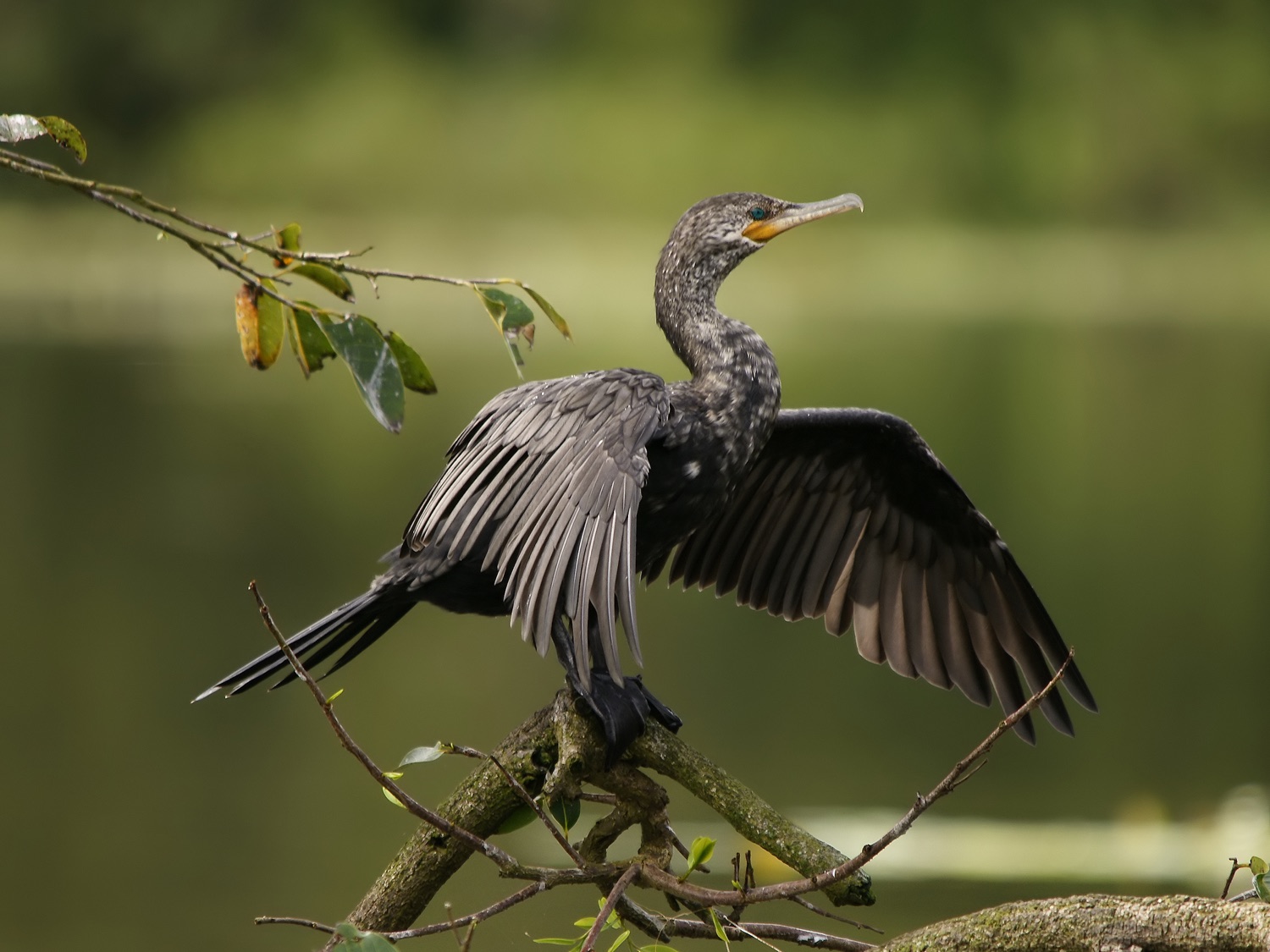
The Neotropic cormorant, also called biguá in Guaraní. A black body with slight greenish sheen, a bare yellowish throat and bright turquoise-green eyes. In breeding plumage it develops white flecks on the head and flanks. A long, stiff tail that it uses as a rudder underwater. It measures 68 to 79 cm. It is distinguished from the Imperial Cormorant by its smaller size and distribution. Least Concern, with stable, abundant populations.
Behaviour
An expert diver that actively pursues fish underwater, propelling itself with both feet. Like the anhinga, its plumage does not fully repel water, which forces it to spend long spells with its wings spread to dry. It nests in dense colonies, often shared with herons and spoonbills, in trees that emerge from the water.
How and when to see it
Year round in any lagoon, channel or open body of water. Impossible to miss on any boat or kayak excursion.
Where to see it in the Iberá
The gateways of the Great Iberá Park where neotropic cormorant has confirmed presence:
Tours to see it
Verified providers operating at the gateways where neotropic cormorant lives. You contact them directly on WhatsApp from the app.
- Esteros Ñe’é
Experiences with local storytelling and a cultural take on the marshes.★ 5.0 - Gaucho Argentino
Horseback journeys across a network of refuges in Iberá. Multi-day rides with overnight…★ 5.0 - Irupé Excursiones
Guided hiking. Guided visit to museums, historic sites, chapels and trails of the town…★ 5.0 - Navegando Ituzaingó
Private sailboat rides on the Paraná with captain Mario: sunrise, morning and sunset…★ 5.0
Species profile
- Common nameNeotropic Cormorant
- Scientific nameNannopterum brasilianum
- GroupBird
- StatusNative
Other species of the Iberá
Discover all the wildlife of the Iberá
More than 250 species with photos, profiles and the gateways where you can see them. Map, providers and trip planner. Free, no download needed.
Open Iberá Experience