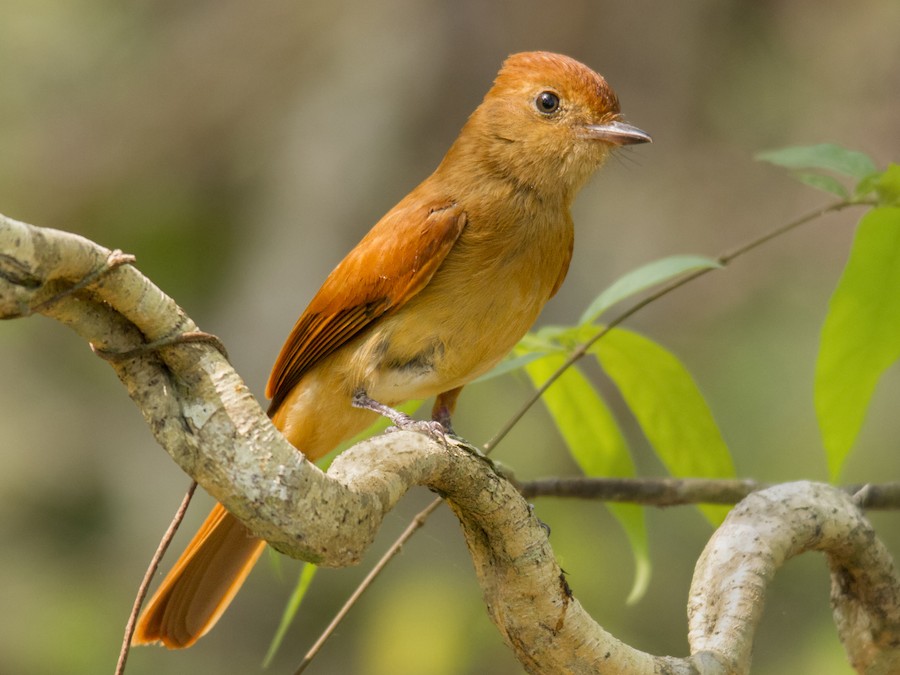
A tyrant flycatcher of 17 to 18 cm with plumage entirely in cinnamon and chestnut tones without striking marks or contrasts. The back is chestnut-cinnamon. The belly is paler, a pale cinnamon tone. The crown is slightly darker. The bill is short and black. The tail is chestnut. The uniform plumage makes it hard to see among the vegetation, but its song is very characteristic. It inhabits the dry Chaco woodland and the Espinal scrub.
Behaviour
Solitary. It moves among the mid-level branches of the woodland searching for insects in the foliage. The song is a very distinctive series of ascending notes, "burli-burli-burrr" or similar. A partial migrant: more abundant in spring and summer when it breeds in the Iberá.
How and when to see it
Spring and summer. It is detected mainly by its song in the Chaco woodland. Portal San Nicolás and Mburucuyá are the best sites.
Where to see it in the Iberá
The gateways of the Great Iberá Park where rufous casiornis has confirmed presence:
Tours to see it
Verified providers operating at the gateways where rufous casiornis lives. You contact them directly on WhatsApp from the app.
- Gaucho Argentino
Horseback journeys across a network of refuges in Iberá. Multi-day rides with overnight…★ 5.0 - Jurassic Plant - Night Tour
The only carnivorous-plant garden in Argentina and a pioneer in Latin America. A guided…★ 5.0 - Irupé Excursiones
Guided hiking. Guided visit to museums, historic sites, chapels and trails of the town…★ 5.0 - Guyra Wild Guides - Birding
Birdwatching tour and photo safari with specialized ornithologist guides. Yamil and…★ 5.0
Species profile
- Common nameRufous Casiornis
- Scientific nameCasiornis rufus
- GroupBird
- StatusNative
Other species of the Iberá
Discover all the wildlife of the Iberá
More than 250 species with photos, profiles and the gateways where you can see them. Map, providers and trip planner. Free, no download needed.
Open Iberá Experience