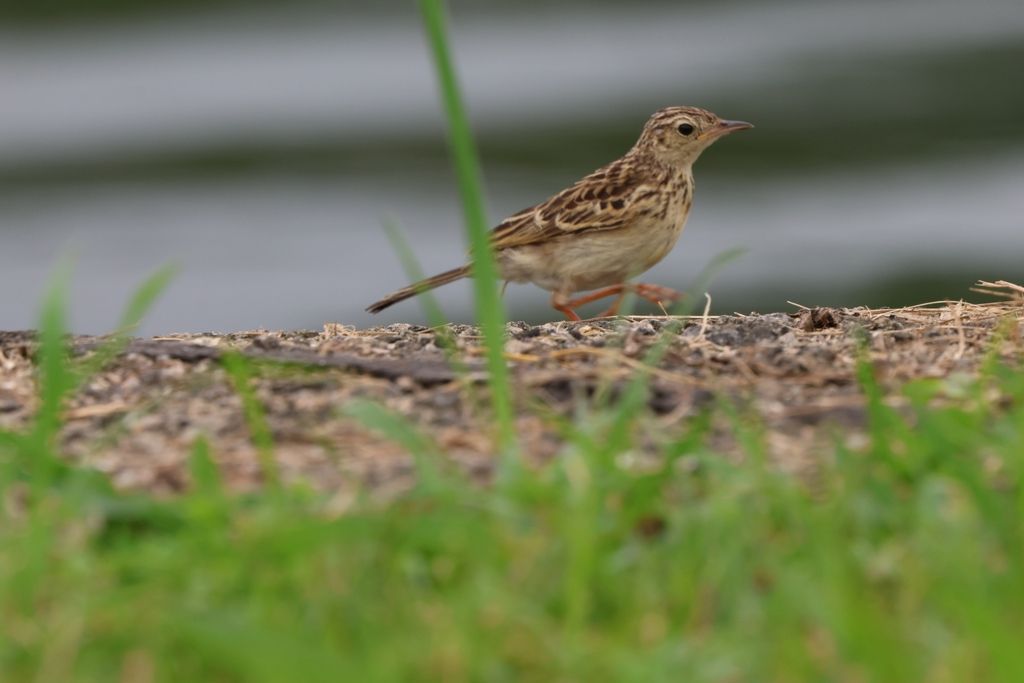
Small motacillid of 12 to 14 cm with brownish-olive plumage on the back marked with dark streaks. The supercilium is pale. The belly and breast are pale yellow with longitudinal brown streaks on the breast. The legs are long. The bill is fine. It inhabits humid grasslands, the edges of marshes with short grass and floodable fields. The yellowish coloration of the belly distinguishes it from other pipits of Iberá.
Behaviour
Entirely terrestrial when feeding: it walks along the ground with elegant steps and the body upright. It bobs its tail down and up as it walks. It feeds on insects and seeds on the ground. The male sings during vertical ascending flights over the grassland. The song is a series of repeated, varied notes.
How and when to see it
Year-round in the wet grasslands. Best detected when the males sing in flight over the grassland. Portal San Nicolás and the Uguay area.
Where to see it in the Iberá
The gateways of the Great Iberá Park where yellowish pipit has confirmed presence:
Tours to see it
Verified providers operating at the gateways where yellowish pipit lives. You contact them directly on WhatsApp from the app.
- Esteros Ñe’é
Experiences with local storytelling and a cultural take on the marshes.★ 5.0 - Reserva Estero Camba Trapo
Private nature reserve of Ecoposada del Estero, on the Camba Trapo road. One of the…★ 5.0 - Excursiones Yetapá (Eduardo Alegre)
Excursions in the Iberá based in San Miguel, run by licensed guide Eduardo (Gualo)…★ 5.0 - Cabalgata Cintia
Horseback rides around Carlos Pellegrini.★ 5.0
Species profile
- Common nameYellowish Pipit
- Scientific nameAnthus chii
- GroupBird
- StatusNative
Other species of the Iberá
Discover all the wildlife of the Iberá
More than 250 species with photos, profiles and the gateways where you can see them. Map, providers and trip planner. Free, no download needed.
Open Iberá Experience