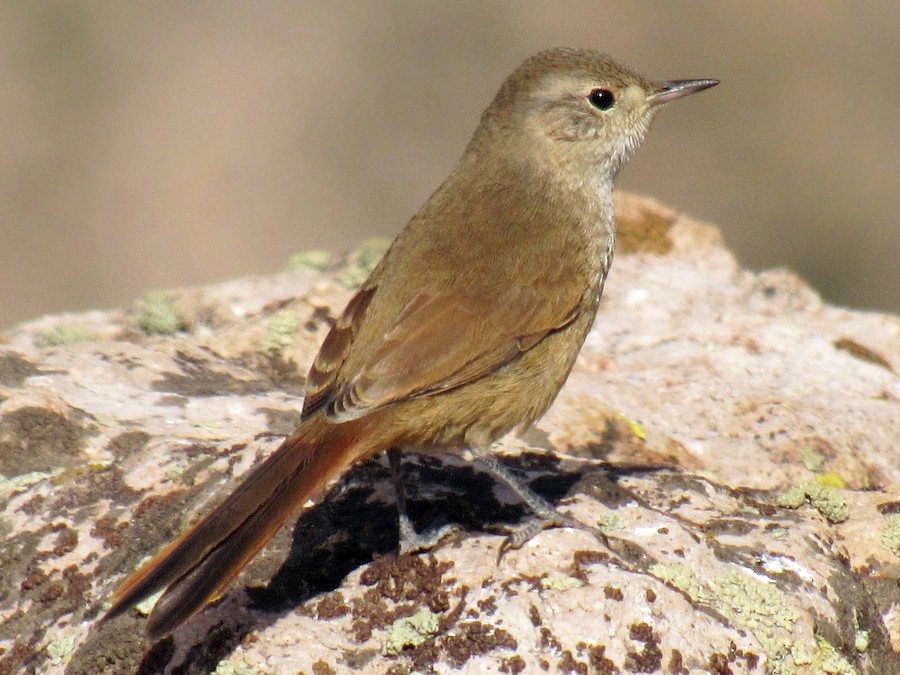
A furnariid of 14 to 16 cm whose most striking feature is a very long, lanceolate, pointed tail that it holds erect or slightly drooping as it moves through the grass. The plumage is brown with darker streaks above and paler below. The throat has a distinctive reddish or cinnamon patch (sometimes with fine dark streaks), similar to that of the Short-billed Canastero. It inhabits the tall grasslands and dry tussock grasslands of the interior of the Iberá, away from the water. Harder to see than the woodland canasteros because of its habitat in the tall grass.
Behaviour
Terrestrial and discreet. It walks among the grasses looking for insects and seeds. The long tail sticks up above the grass as it walks. Its song is a series of high notes or a chirr. Easier to detect when the wind flattens the grass or in grazed grasslands that allow you to see farther.
How and when to see it
A visitor of the cold months (autumn and winter) in the tall grasslands and reed beds. Portal San Nicolás and the grassland areas of Mburucuyá are the best sites.
Where to see it in the Iberá
The gateways of the Great Iberá Park where sharp-billed canastero has confirmed presence:
Tours to see it
Verified providers operating at the gateways where sharp-billed canastero lives. You contact them directly on WhatsApp from the app.
- Excursiones Yetapá (Eduardo Alegre)
Excursions in the Iberá based in San Miguel, run by licensed guide Eduardo (Gualo)…★ 5.0 - La Tata en Yvera
Excursions and sport fishing in the Iberá Wetlands, based in San Miguel, the access town…★ 4.9 - Aguas del Iberá - Fishing
Sport-fishing outing on the Corriente River with local guides. Golden dorado, surubí…★ 4.9 - Travesía Río Corriente - Kayak
Kayak journeys on the Corriente River from Chavarría. Routes through the meanders and…★ 4.9
Species profile
- Common nameSharp-billed Canastero
- Scientific nameAsthenes pyrrholeuca
- GroupBird
- StatusNative
Other species of the Iberá
Discover all the wildlife of the Iberá
More than 250 species with photos, profiles and the gateways where you can see them. Map, providers and trip planner. Free, no download needed.
Open Iberá Experience