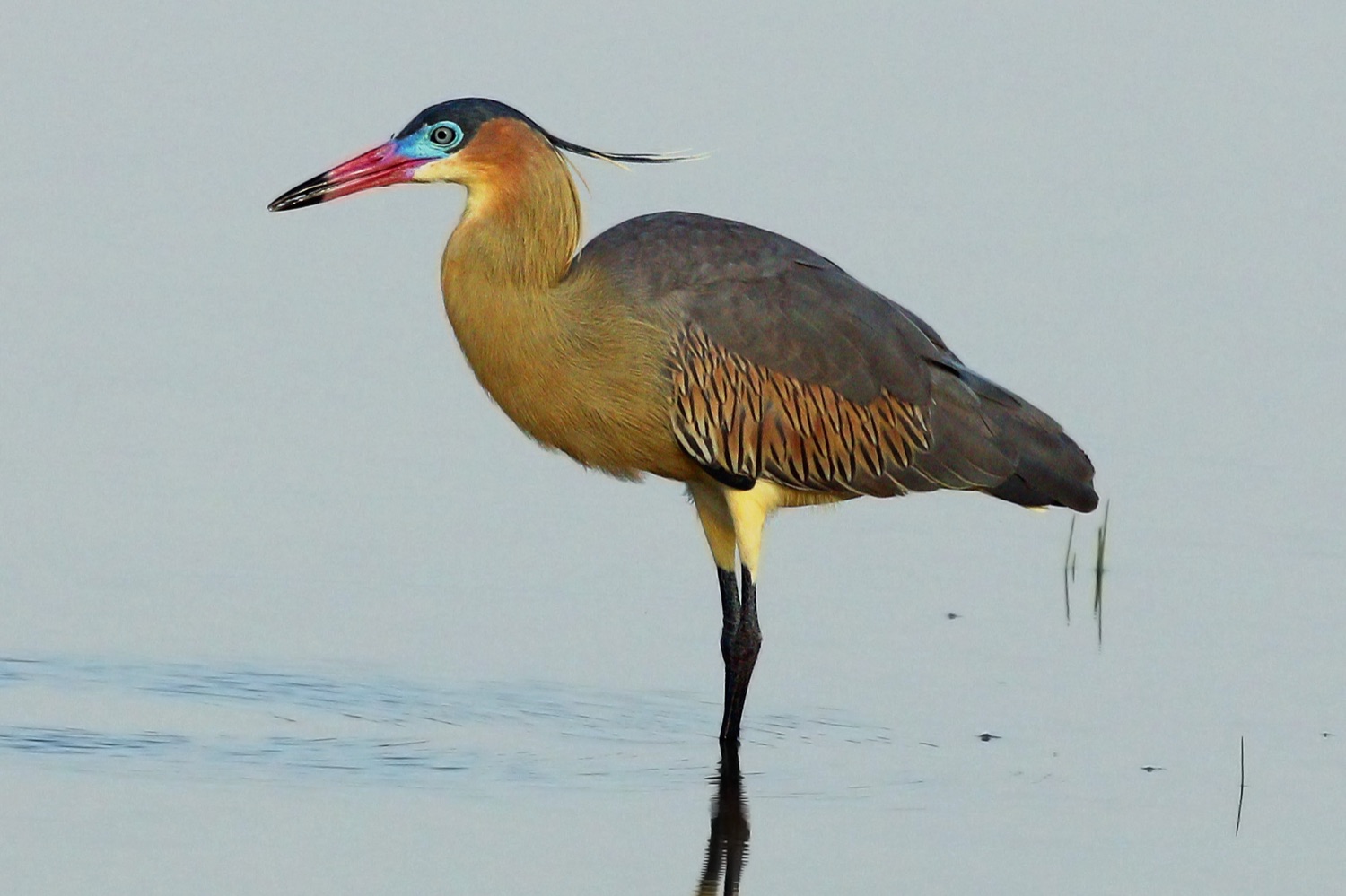
An atypical and singularly beautiful heron. Unlike its relatives, it prefers dry grasslands and open savannas far from water. Overall soft pearl-gray plumage with a cream-beige neck and breast with white and reddish-chestnut ornamental plumes in the breeding season. The bare facial skin around the eyes turns an intense turquoise-blue during the breeding season. Its bill is pink with a black tip. It measures 50 to 55 cm. Its common name refers to its call: a sharp, penetrating whistle.
Behaviour
Solitary or in pairs. It walks slowly through short grasslands, roadsides and savannas in search of large insects, small lizards, frogs and small rodents. It does not wade in the water like most herons. Very tolerant of human presence in little-disturbed areas.
How and when to see it
Year round. Easiest to spot in short grasslands at dawn and dusk. Frequent along the sides of the internal vehicle tracks.
Where to see it in the Iberá
The gateways of the Great Iberá Park where whistling heron has confirmed presence:
Tours to see it
Verified providers operating at the gateways where whistling heron lives. You contact them directly on WhatsApp from the app.
- Esteros Ñe’é
Experiences with local storytelling and a cultural take on the marshes.★ 5.0 - Jurassic Plant - Night Tour
The only carnivorous-plant garden in Argentina and a pioneer in Latin America. A guided…★ 5.0 - Guyra Wild Guides - Birding
Birdwatching tour and photo safari with specialized ornithologist guides. Yamil and…★ 5.0 - SKYVY - Astrotourism
Astrotourism in Loreto, 17 km from the San Antonio portal. Night-sky observation with a…★ 5.0
Species profile
- Common nameWhistling Heron
- Scientific nameSyrigma sibilatrix
- GroupBird
- StatusNative
Other species of the Iberá
Discover all the wildlife of the Iberá
More than 250 species with photos, profiles and the gateways where you can see them. Map, providers and trip planner. Free, no download needed.
Open Iberá Experience