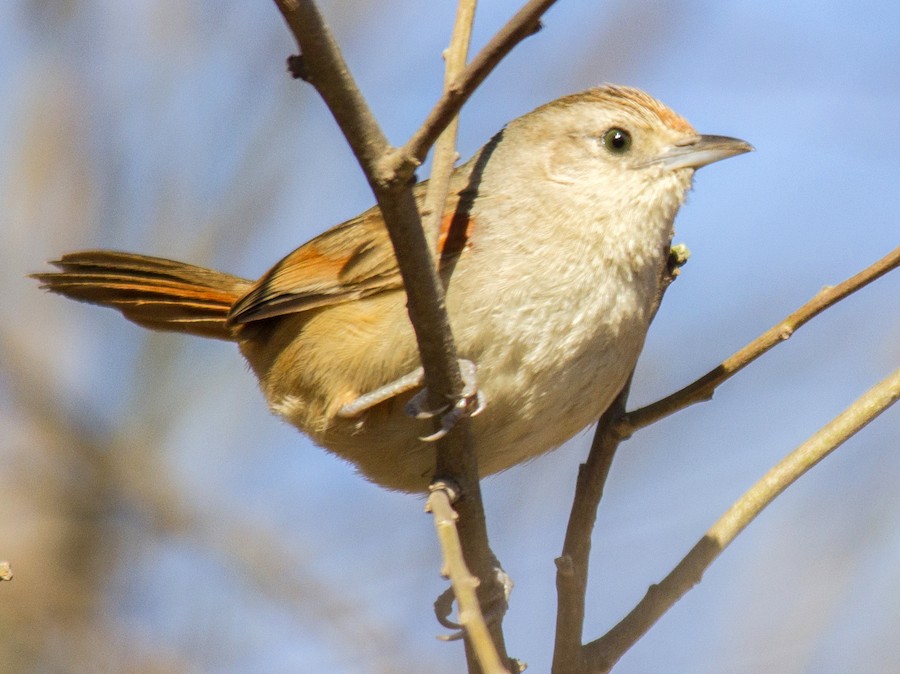
The smallest of the spinetails of Iberá: 13 to 14 cm. Uniform brown plumage on the back and whitish on the belly, with the crown barely more rufous. The tail is brown. The bill is short. It inhabits the dry Chaco woodland with low trees and thorny shrubs. Its nests are smaller than those of the larger spinetail and are built in low shrubs of the dry woodland.
Behaviour
Solitary and discreet. It moves among the low and middle branches of the thorny woodland. Its song is a whistle or series of high notes that gives the species its name (sibilatrix). It feeds on insects and larvae on the branches and bark. The stick nest in the thorny shrubs is the easiest way to detect its presence.
How and when to see it
Year round in the dry woodland. Portal San Nicolás and the dry zone of Mburucuyá.
Where to see it in the Iberá
The gateways of the Great Iberá Park where little thornbird has confirmed presence:
Tours to see it
Verified providers operating at the gateways where little thornbird lives. You contact them directly on WhatsApp from the app.
- Gaucho Argentino
Horseback journeys across a network of refuges in Iberá. Multi-day rides with overnight…★ 5.0 - Irupé Excursiones
Guided hiking. Guided visit to museums, historic sites, chapels and trails of the town…★ 5.0 - Salvaje Iberá
Hiking, cycling, photo safari, wildlife watching, long day outings and kayak journeys…★ 5.0 - Excursiones Yetapá (Eduardo Alegre)
Excursions in the Iberá based in San Miguel, run by licensed guide Eduardo (Gualo)…★ 5.0
Species profile
- Common nameLittle Thornbird
- Scientific namePhacellodomus sibilatrix
- GroupBird
- StatusNative
Other species of the Iberá
Discover all the wildlife of the Iberá
More than 250 species with photos, profiles and the gateways where you can see them. Map, providers and trip planner. Free, no download needed.
Open Iberá Experience