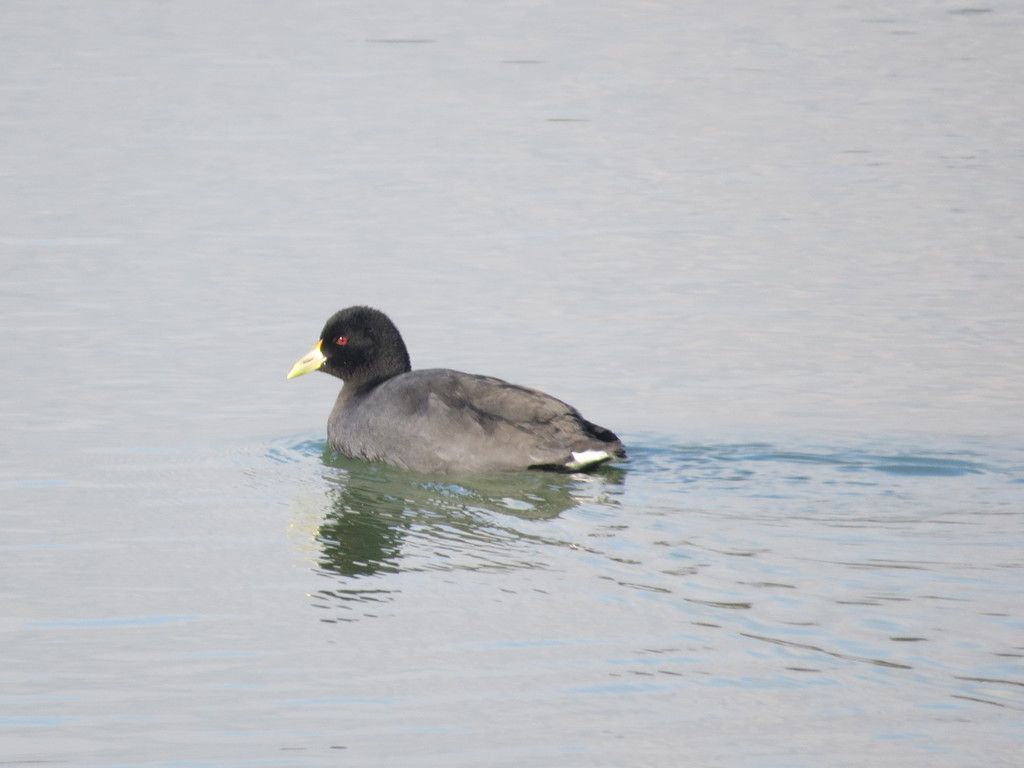
The smallest and most common of the coots of the Iberá: 36 to 43 cm. Black head and neck over a dark slate-gray body, with a yellow bill and a yellow-orange frontal shield (a protrusion on the forehead). The toes have horny lobes along the sides that act as fins for swimming. The combination of yellow bill and forehead on a black body is the most visible diagnostic feature. It inhabits lagoons, marshes, channels and any body of water with emergent vegetation.
Behaviour
Very gregarious and noisy. It swims in groups of 10 to 200 individuals in the lagoons and marshes, diving to extract submerged aquatic plants. It also grazes at the shores. Territorial and aggressive toward other coots: the fights are frequent and spectacular. The call is a continuous series of clucks and harsh cries.
How and when to see it
Year-round in absolutely every body of water of the Iberá. One of the most abundant birds of the wetland. Easy to see on any boat excursion.
Where to see it in the Iberá
The gateways of the Great Iberá Park where white-winged coot has confirmed presence:
Tours to see it
Verified providers operating at the gateways where white-winged coot lives. You contact them directly on WhatsApp from the app.
- Esteros Ñe’é
Experiences with local storytelling and a cultural take on the marshes.★ 5.0 - Gaucho Argentino
Horseback journeys across a network of refuges in Iberá. Multi-day rides with overnight…★ 5.0 - Irupé Excursiones
Guided hiking. Guided visit to museums, historic sites, chapels and trails of the town…★ 5.0 - Navegando Ituzaingó
Private sailboat rides on the Paraná with captain Mario: sunrise, morning and sunset…★ 5.0
Species profile
- Common nameWhite-winged Coot
- Scientific nameFulica leucoptera
- GroupBird
- StatusNative
Other species of the Iberá
Discover all the wildlife of the Iberá
More than 250 species with photos, profiles and the gateways where you can see them. Map, providers and trip planner. Free, no download needed.
Open Iberá Experience