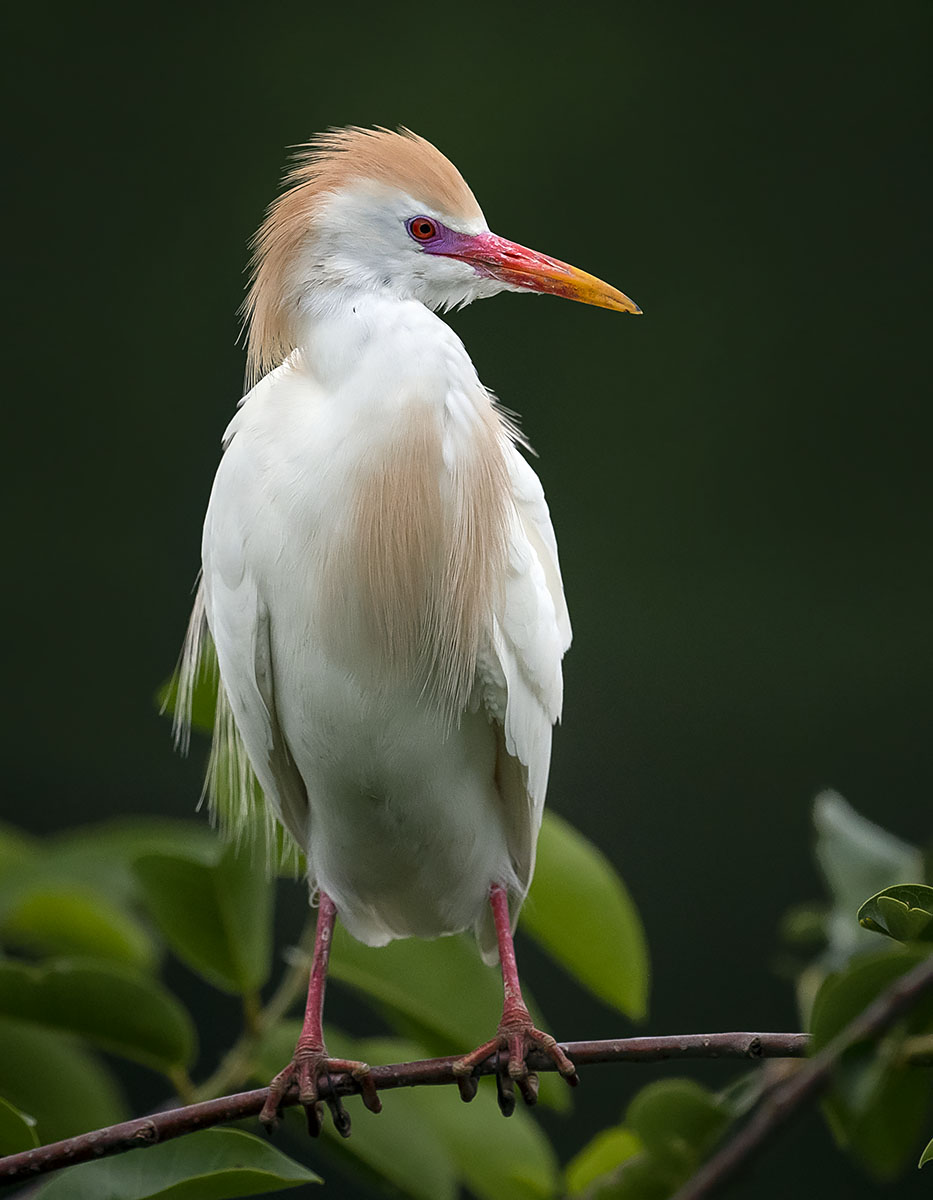
A relatively small egret of 46 to 56 cm with entirely white plumage. In the breeding season it develops golden plumes on the crown, breast and back. The bill is yellow and the legs turn from yellow to pink during breeding. Unlike the other egrets of Iberá, it does not hunt fish but instead associates permanently with large livestock and mammalian fauna to take advantage of the insects they flush as they walk.
Behaviour
The only heron that does not depend directly on water. It walks alongside cattle, horses and capybaras, catching the insects, flies, grasshoppers and other arthropods flushed out by the animal's passage. It also follows tractors and machinery. Very gregarious: it roosts in colonies of thousands of individuals in trees near the water.
How and when to see it
Year-round in the fields with livestock. Ubiquitous beside any herd of cattle or horses in the portals of the Iberá.
Where to see it in the Iberá
The gateways of the Great Iberá Park where cattle egret has confirmed presence:
Tours to see it
Verified providers operating at the gateways where cattle egret lives. You contact them directly on WhatsApp from the app.
- Esteros Ñe’é
Experiences with local storytelling and a cultural take on the marshes.★ 5.0 - Gaucho Argentino
Horseback journeys across a network of refuges in Iberá. Multi-day rides with overnight…★ 5.0 - Irupé Excursiones
Guided hiking. Guided visit to museums, historic sites, chapels and trails of the town…★ 5.0 - Reserva Estero Camba Trapo
Private nature reserve of Ecoposada del Estero, on the Camba Trapo road. One of the…★ 5.0
Species profile
- Common nameCattle Egret
- Scientific nameBubulcus ibis
- GroupBird
- StatusNative
Other species of the Iberá
Discover all the wildlife of the Iberá
More than 250 species with photos, profiles and the gateways where you can see them. Map, providers and trip planner. Free, no download needed.
Open Iberá Experience