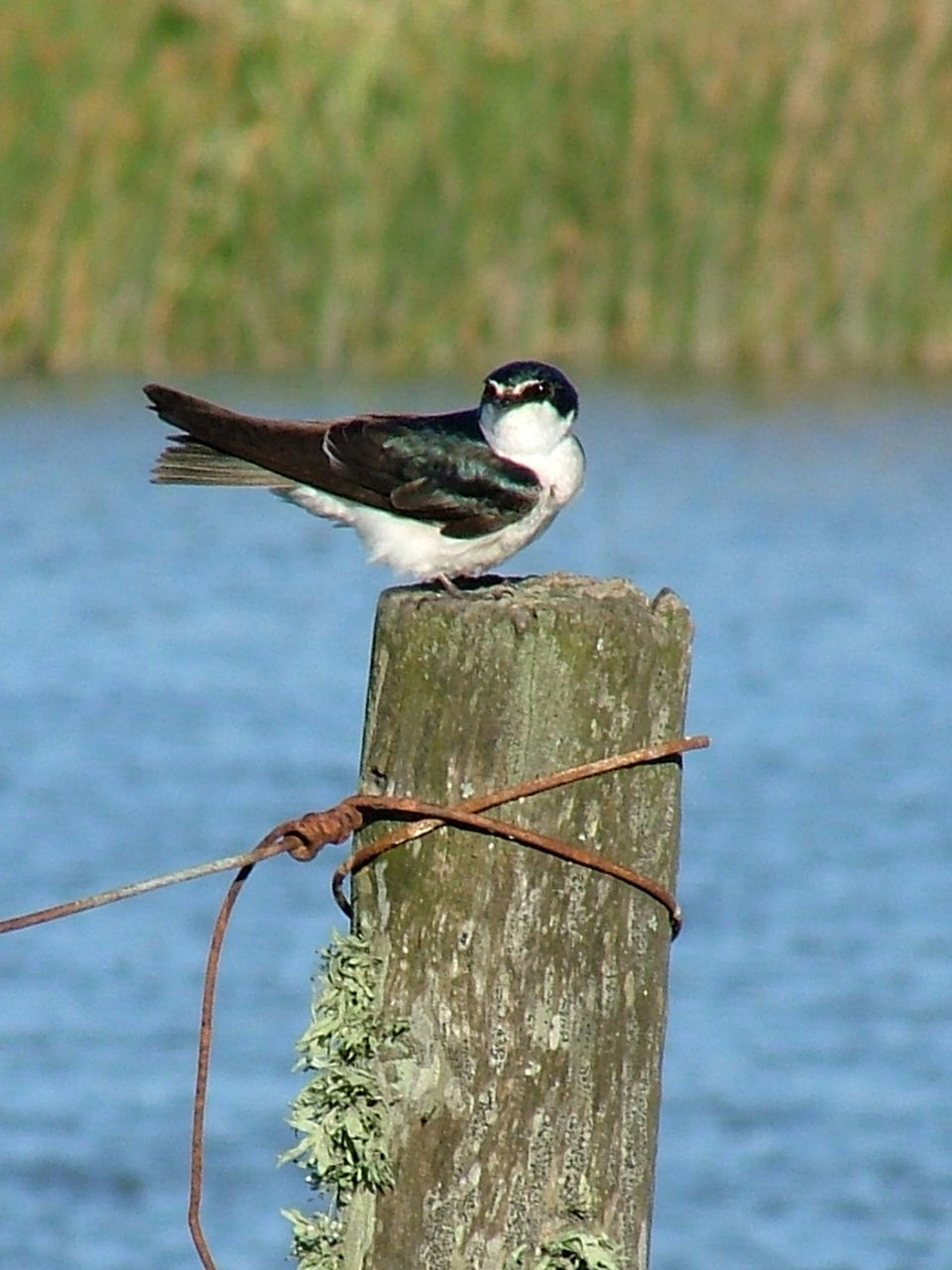
The largest swallow of Iberá: 17 to 19 cm. The back is uniformly brown and the belly whitish. The breast has a brown band that borders the white of the belly. The tail is slightly forked. The bill is short and broad. Unlike the more colorful swallows, it has subdued tones. It inhabits open grasslands, fields and the wetland edges of Iberá. It is frequently seen perched on fence wires.
Behaviour
Migratory: it breeds in South America and migrates north in winter. In the Iberá it is most abundant in spring and summer. It flies in groups catching flying insects on the wing, with wide flights over the grassland. It perches in groups on fences and wires. The song is a series of guttural notes.
How and when to see it
Spring and summer during its stay in the Iberá. It is seen in groups over the grasslands and lagoons of every portal.
Where to see it in the Iberá
The gateways of the Great Iberá Park where brown-chested martin has confirmed presence:
Tours to see it
Verified providers operating at the gateways where brown-chested martin lives. You contact them directly on WhatsApp from the app.
- Esteros Ñe’é
Experiences with local storytelling and a cultural take on the marshes.★ 5.0 - Gaucho Argentino
Horseback journeys across a network of refuges in Iberá. Multi-day rides with overnight…★ 5.0 - Irupé Excursiones
Guided hiking. Guided visit to museums, historic sites, chapels and trails of the town…★ 5.0 - Reserva Estero Camba Trapo
Private nature reserve of Ecoposada del Estero, on the Camba Trapo road. One of the…★ 5.0
Species profile
- Common nameBrown-chested Martin
- Scientific nameProgne tapera
- GroupBird
- StatusNative
Other species of the Iberá
Discover all the wildlife of the Iberá
More than 250 species with photos, profiles and the gateways where you can see them. Map, providers and trip planner. Free, no download needed.
Open Iberá Experience