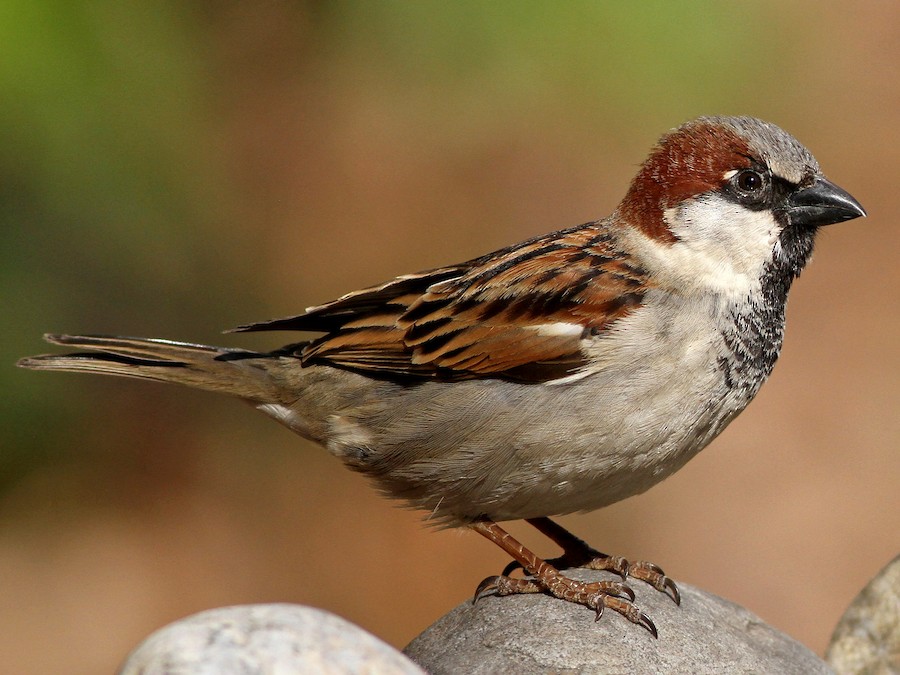
The house sparrow, native to Europe and Asia, was introduced into Argentina in the 19th century and spread throughout the country. The male has a brown back with black streaks, a gray crown, a white cheek and a black bib on the throat. The female is uniformly brown with streaks. The bill is short and conical, grayish. It measures 14 to 16 cm. In Iberá it is restricted to the vicinity of human facilities: ranger posts, camping areas and buildings. It is not a species native to Iberá.
Behaviour
Strongly associated with human buildings, where it nests in holes in walls, eaves and any available cavity. It eats seeds, crumbs and any food available near people. Very adaptable and tolerant of human presence. In the natural setting of the Iberá it is much less frequent than in the cities.
How and when to see it
Year-round in the vicinity of the portal facilities. It is not a species of special interest for birdwatching in the Iberá.
Where to see it in the Iberá
The gateways of the Great Iberá Park where house sparrow has confirmed presence:
Tours to see it
Verified providers operating at the gateways where house sparrow lives. You contact them directly on WhatsApp from the app.
- Esteros Ñe’é
Experiences with local storytelling and a cultural take on the marshes.★ 5.0 - Reserva Estero Camba Trapo
Private nature reserve of Ecoposada del Estero, on the Camba Trapo road. One of the…★ 5.0 - Excursiones Yetapá (Eduardo Alegre)
Excursions in the Iberá based in San Miguel, run by licensed guide Eduardo (Gualo)…★ 5.0 - Cabalgata Cintia
Horseback rides around Carlos Pellegrini.★ 5.0
Species profile
- Common nameHouse Sparrow
- Scientific namePasser domesticus
- GroupBird
- StatusIntroduced
Other species of the Iberá
Discover all the wildlife of the Iberá
More than 250 species with photos, profiles and the gateways where you can see them. Map, providers and trip planner. Free, no download needed.
Open Iberá Experience