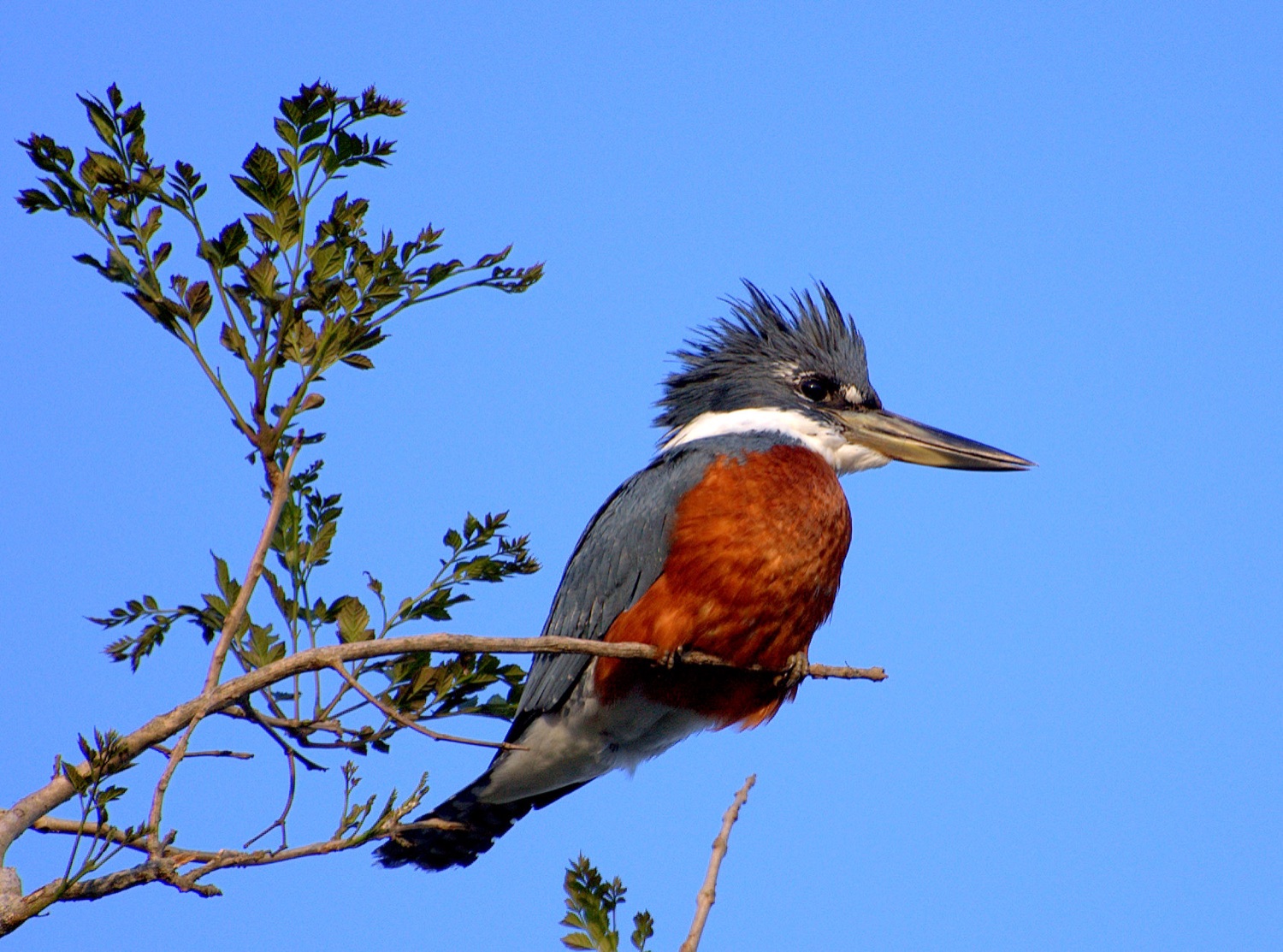
The largest of the kingfishers of the Iberá and one of the biggest in the world. The plumage is slate-blue on the back and head, with a visible blue-and-black crest. The neck has a white band. The breast and belly are chestnut in the male and white with a chestnut band in the female. The bill is long, robust and black. It measures 38 to 42 cm. Unmistakable for its size and two-toned plumage. Its call, a harsh, loud "krrak krrak," is heard from afar.
Behaviour
Solitary and territorial. It perches on branches, posts or cables over the water, from where it watches the surface below. On spotting a fish, it dives vertically bill-first, submerging completely. It returns to the same perch to beat and swallow its prey. It nests in tunnels it digs in the banks of the streams.
How and when to see it
Year round at every body of water in the Iberá. Impossible to miss on any boat or kayak trip. The portals with clear rivers or streams are the best sites.
Where to see it in the Iberá
The gateways of the Great Iberá Park where ringed kingfisher has confirmed presence:
Tours to see it
Verified providers operating at the gateways where ringed kingfisher lives. You contact them directly on WhatsApp from the app.
- Esteros Ñe’é
Experiences with local storytelling and a cultural take on the marshes.★ 5.0 - Gaucho Argentino
Horseback journeys across a network of refuges in Iberá. Multi-day rides with overnight…★ 5.0 - Irupé Excursiones
Guided hiking. Guided visit to museums, historic sites, chapels and trails of the town…★ 5.0 - Navegando Ituzaingó
Private sailboat rides on the Paraná with captain Mario: sunrise, morning and sunset…★ 5.0
Species profile
- Common nameRinged Kingfisher
- Scientific nameMegaceryle torquata
- GroupBird
- StatusNative
Other species of the Iberá
Discover all the wildlife of the Iberá
More than 250 species with photos, profiles and the gateways where you can see them. Map, providers and trip planner. Free, no download needed.
Open Iberá Experience