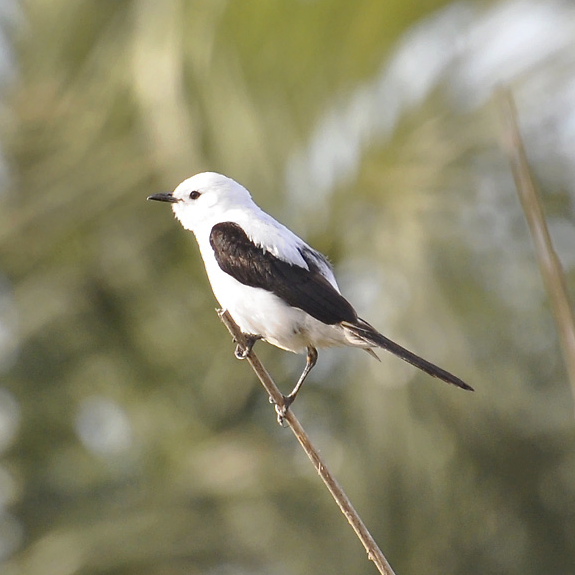
A tyrant flycatcher of 20 to 21 cm with strongly contrasting plumage: the back, wings and crown are black, and the belly, rump and coverts are white. In flight the white of the rump and belly stands out against the black. The bill is black and stout. The eyes are brown. It inhabits the wet grasslands and the tussock marshes of the Iberá. Classified as globally Vulnerable owing to the drastic reduction of the natural grasslands of the Southern Cone.
Behaviour
It hunts from low perches in the grassland or from the ground, making short sallies to catch insects in the air or on the ground. Solitary or in pairs. It nests on the ground among the grasses. In winter it may gather in small groups at roosts.
How and when to see it
Year-round, with greatest detectability in spring and summer. Portal San Nicolás and Uguay in wet grasslands are the best sites.
Where to see it in the Iberá
The gateways of the Great Iberá Park where black-and-white monjita has confirmed presence:
Tours to see it
Verified providers operating at the gateways where black-and-white monjita lives. You contact them directly on WhatsApp from the app.
- Esteros Ñe’é
Experiences with local storytelling and a cultural take on the marshes.★ 5.0 - Reserva Estero Camba Trapo
Private nature reserve of Ecoposada del Estero, on the Camba Trapo road. One of the…★ 5.0 - Excursiones Yetapá (Eduardo Alegre)
Excursions in the Iberá based in San Miguel, run by licensed guide Eduardo (Gualo)…★ 5.0 - Cabalgata Cintia
Horseback rides around Carlos Pellegrini.★ 5.0
Species profile
- Common nameBlack-and-white Monjita
- Scientific nameHeteroxolmis dominicana
- GroupBird
- StatusNative
Other species of the Iberá
Discover all the wildlife of the Iberá
More than 250 species with photos, profiles and the gateways where you can see them. Map, providers and trip planner. Free, no download needed.
Open Iberá Experience