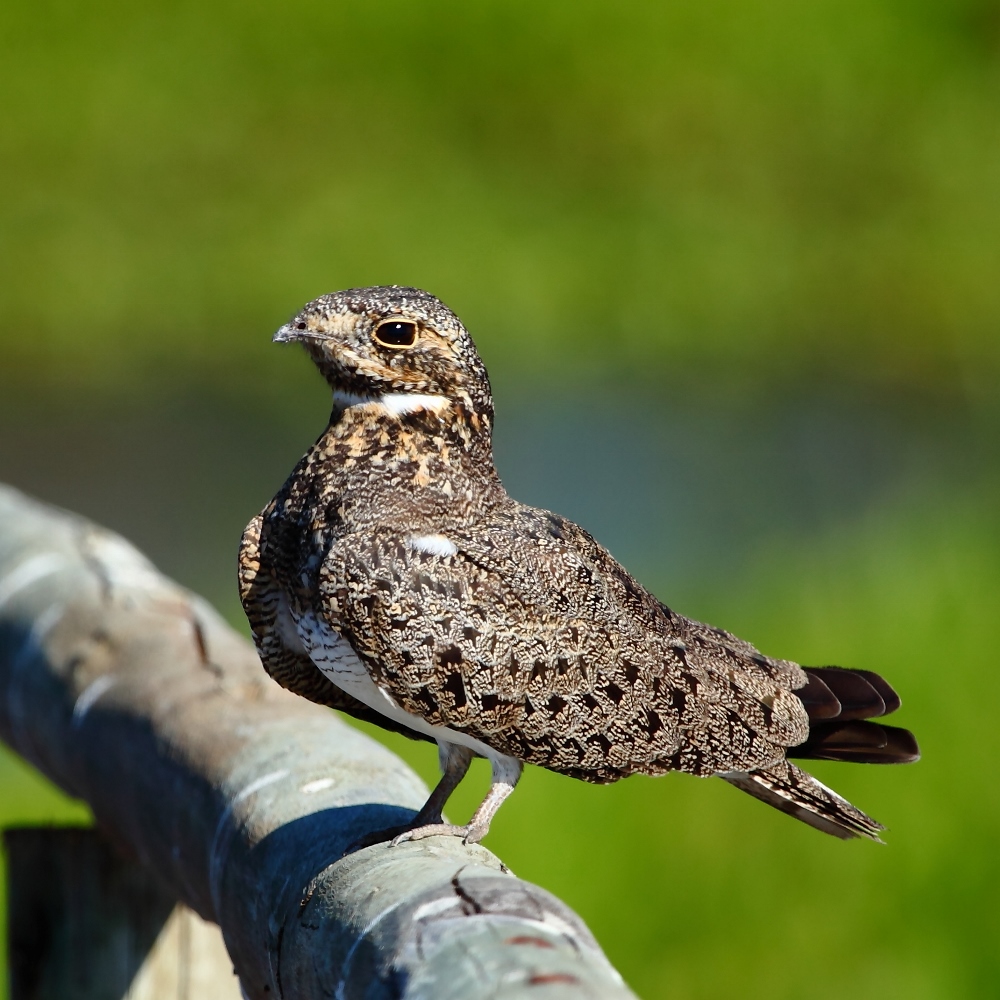
The largest of the nightjars of the Iberá and one of the few active during the day. Brown plumage with black, cream and white markings. The most visible diagnostic feature in flight are the large white patches on the primaries, visible at a distance. The throat has a white band. The eyes are large and dark. The tail has a white terminal band. It measures 27 to 30 cm. Unlike the other nightjars, it can fly in groups and is visible during daylight hours.
Behaviour
Crepuscular and partly diurnal. It is seen flying in groups of 10 to 200 individuals over the grasslands at dusk and dawn, catching insects on the wing. It also hunts actively during the day on cloudy days or in migration. In the Iberá it is especially abundant in spring and summer.
How and when to see it
Spring and summer. The flocks at dusk over the grasslands are one of the most striking spectacles of the open portals such as San Nicolás and Mburucuyá.
Where to see it in the Iberá
The gateways of the Great Iberá Park where nacunda nighthawk has confirmed presence:
Tours to see it
Verified providers operating at the gateways where nacunda nighthawk lives. You contact them directly on WhatsApp from the app.
- Esteros Ñe’é
Experiences with local storytelling and a cultural take on the marshes.★ 5.0 - Gaucho Argentino
Horseback journeys across a network of refuges in Iberá. Multi-day rides with overnight…★ 5.0 - Irupé Excursiones
Guided hiking. Guided visit to museums, historic sites, chapels and trails of the town…★ 5.0 - Reserva Estero Camba Trapo
Private nature reserve of Ecoposada del Estero, on the Camba Trapo road. One of the…★ 5.0
Species profile
- Common nameNacunda Nighthawk
- Scientific nameChordeiles nacunda
- GroupBird
- StatusNative
Other species of the Iberá
Discover all the wildlife of the Iberá
More than 250 species with photos, profiles and the gateways where you can see them. Map, providers and trip planner. Free, no download needed.
Open Iberá Experience