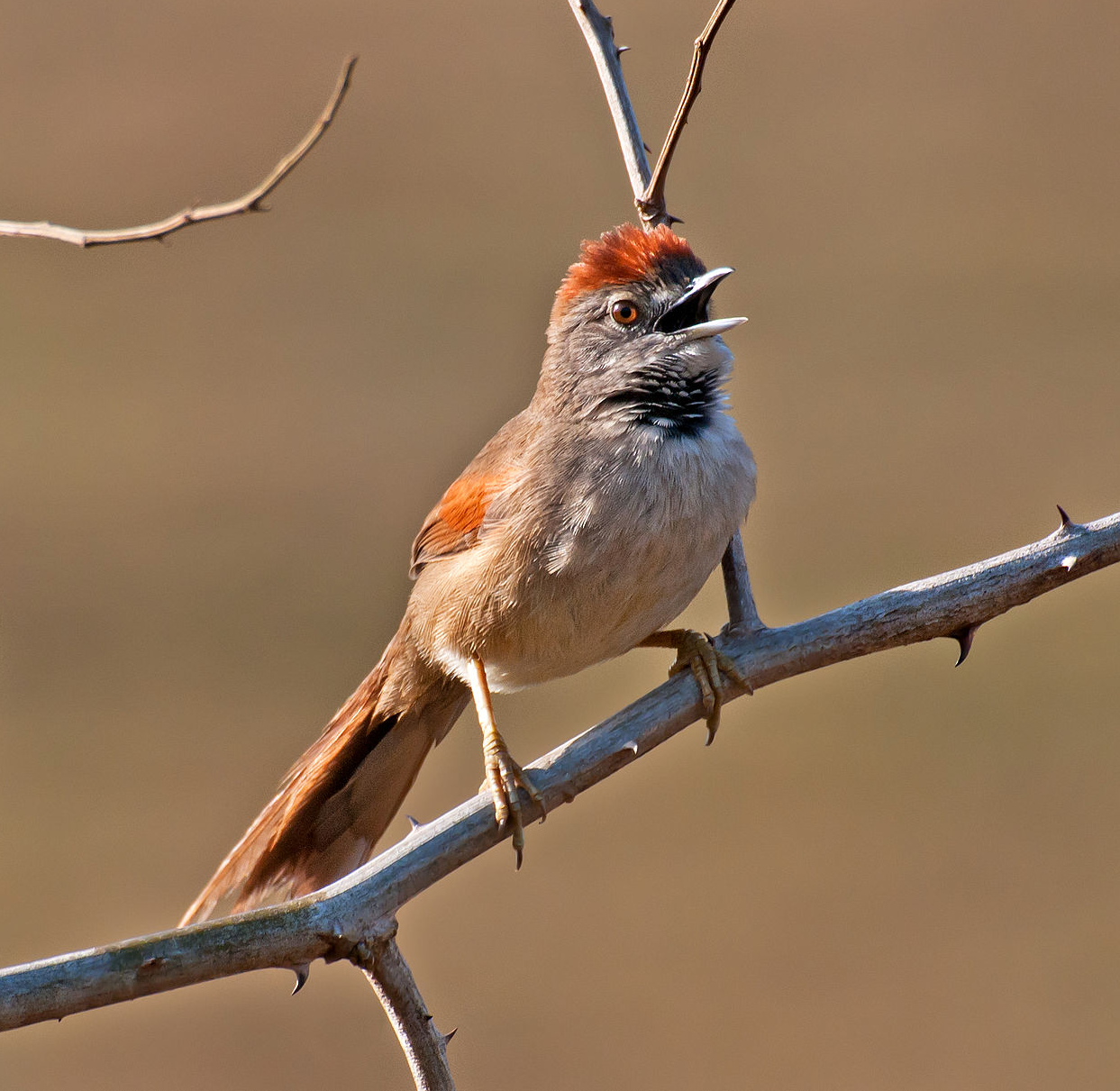
A small furnariid of 15 to 17 cm with an olive-brown back, a rufous crown and a grayish or whitish belly. The tail is brown and fairly long. The bill is short and straight. It inhabits grasslands with shrubs, thickets and the edges of low scrub. It builds a retort-shaped nest: a mass of plant fibers with a long downward-facing entrance tube that can measure 20 to 30 cm.
Behaviour
Active and hard to see because of its habit of moving inside the dense interior of the shrubs. Heard more easily than seen: its song is a two-syllable "pi-chui" repeated insistently. It looks for insects inside the thickets. The pair builds a nest of fine fibers in the shrubs.
How and when to see it
Year round. Its repetitive song is the best way to detect it. The edges of the low woodland and the thickets of all the portals.
Where to see it in the Iberá
The gateways of the Great Iberá Park where pale-breasted spinetail has confirmed presence:
Tours to see it
Verified providers operating at the gateways where pale-breasted spinetail lives. You contact them directly on WhatsApp from the app.
- Esteros Ñe’é
Experiences with local storytelling and a cultural take on the marshes.★ 5.0 - Gaucho Argentino
Horseback journeys across a network of refuges in Iberá. Multi-day rides with overnight…★ 5.0 - Irupé Excursiones
Guided hiking. Guided visit to museums, historic sites, chapels and trails of the town…★ 5.0 - Reserva Estero Camba Trapo
Private nature reserve of Ecoposada del Estero, on the Camba Trapo road. One of the…★ 5.0
Species profile
- Common namePale-breasted Spinetail
- Scientific nameSynallaxis albescens
- GroupBird
- StatusNative
Other species of the Iberá
Discover all the wildlife of the Iberá
More than 250 species with photos, profiles and the gateways where you can see them. Map, providers and trip planner. Free, no download needed.
Open Iberá Experience