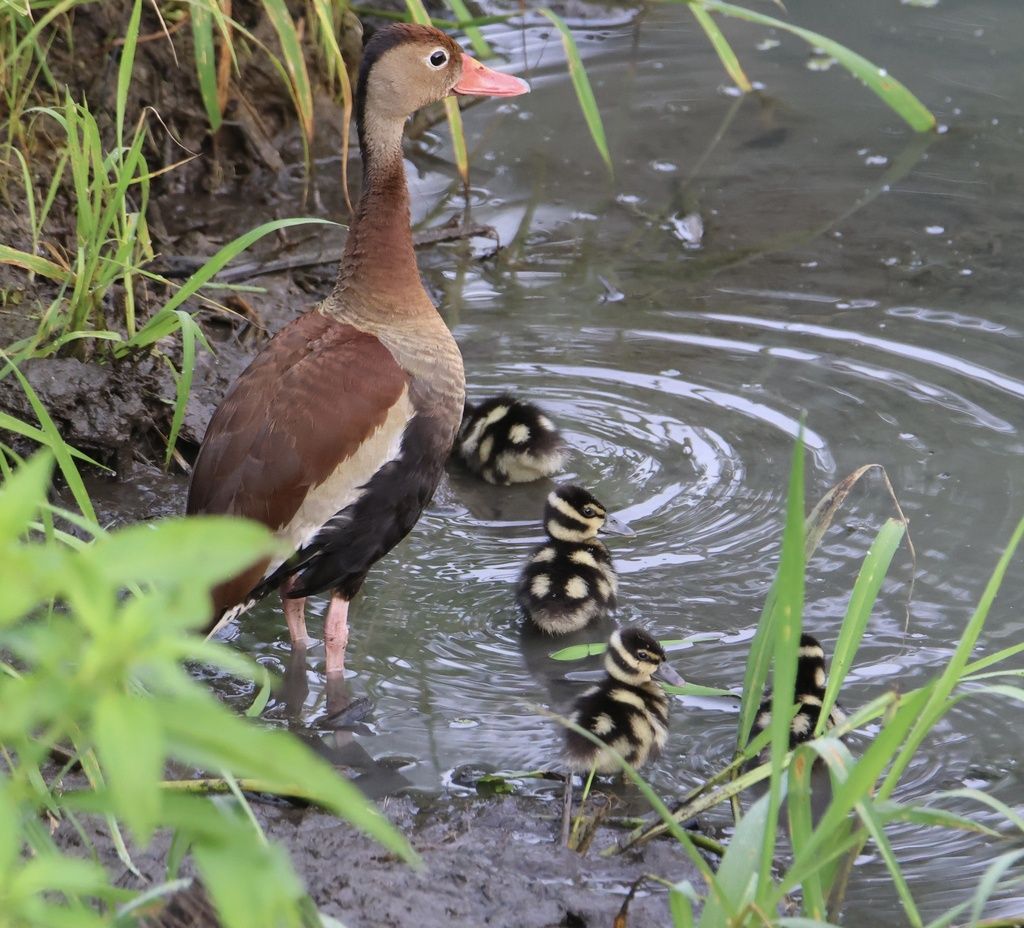
The larger of the two whistling ducks of Iberá. Plumage with a grayish head, reddish-chestnut neck and breast, black belly and tail and wings with a white band very visible in flight. Its bill is red-orange and its legs are long and pink. In flight the legs hang behind the tail, giving it a distinctive look. It measures 48 to 55 cm. The groups emit a characteristic melodious, plaintive whistle.
Behaviour
Gregarious and arboreal: unlike most ducks, it rests and nests in tree hollows or on branches. It forages at night in wetlands, lagoons and rice fields. A herbivorous diet: the seeds of aquatic grasses, rice and marsh plants.
How and when to see it
Year round, most abundant in spring and summer. The flocks of hundreds of individuals in flight at dusk are a feast for the ears and eyes.
Where to see it in the Iberá
The gateways of the Great Iberá Park where black-bellied whistling-duck has confirmed presence:
Tours to see it
Verified providers operating at the gateways where black-bellied whistling-duck lives. You contact them directly on WhatsApp from the app.
- Esteros Ñe’é
Experiences with local storytelling and a cultural take on the marshes.★ 5.0 - Gaucho Argentino
Horseback journeys across a network of refuges in Iberá. Multi-day rides with overnight…★ 5.0 - Irupé Excursiones
Guided hiking. Guided visit to museums, historic sites, chapels and trails of the town…★ 5.0 - Navegando Ituzaingó
Private sailboat rides on the Paraná with captain Mario: sunrise, morning and sunset…★ 5.0
Species profile
- Common nameBlack-bellied Whistling-Duck
- Scientific nameDendrocygna autumnalis
- GroupBird
- StatusNative
Other species of the Iberá
Discover all the wildlife of the Iberá
More than 250 species with photos, profiles and the gateways where you can see them. Map, providers and trip planner. Free, no download needed.
Open Iberá Experience