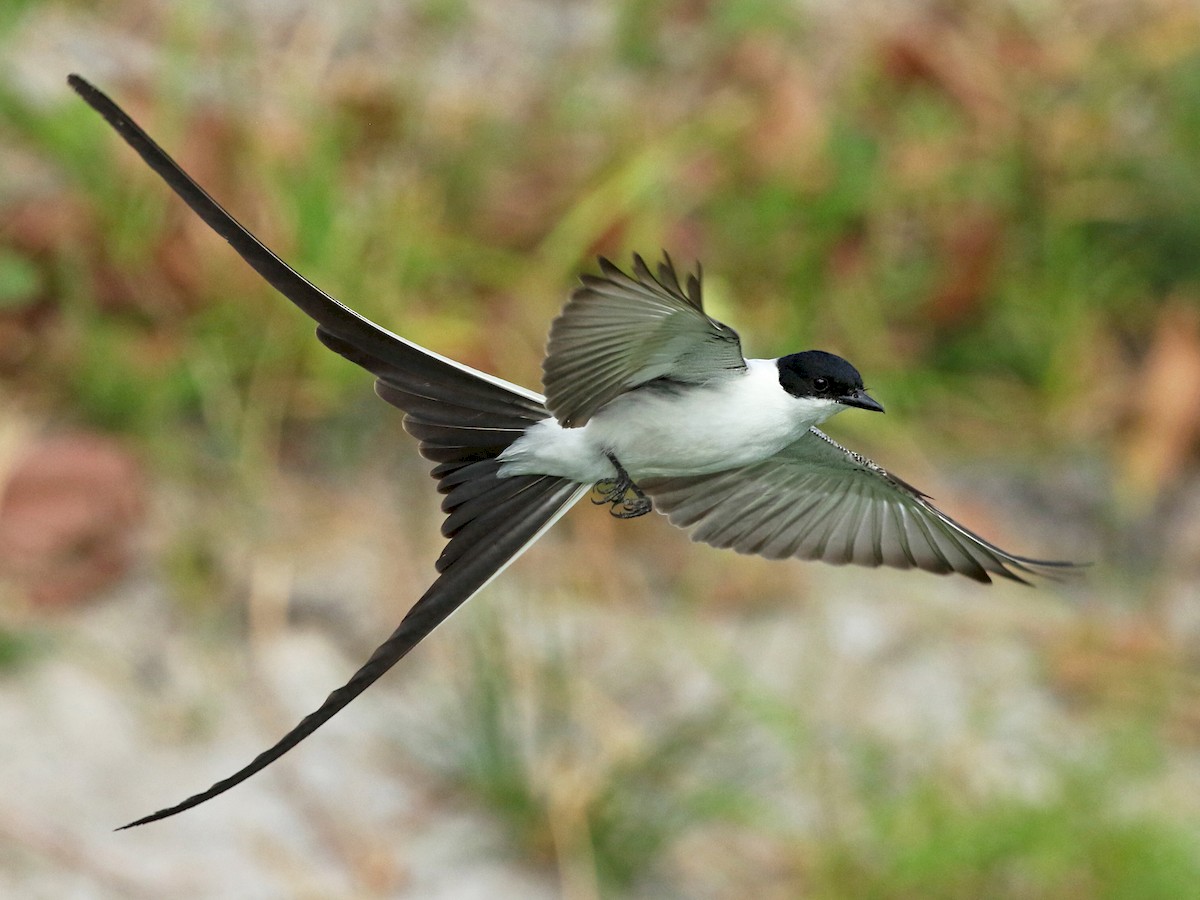
The most elegant tyrant flycatcher of the Iberá. The male has a grayish back, a white belly and extraordinarily long outer tail feathers: an additional 15 to 22 cm, forming a long, graceful scissor that streams in the wind during flight. The female has a much shorter tail. The crown has a concealed red patch. It measures 28 to 38 cm including the tail. It migrates from the South American tropics in spring and departs in summer and autumn.
Behaviour
Very visible and acrobatic. It flies over the grasslands and open fields in undulating, spiraling flights, using its long tail as a rudder. It perches on fences, posts and isolated trees. It catches insects in flight. The male's courtship flights, with the tail spread like scissors, are spectacular.
How and when to see it
From October to March, peaking between November and February; it arrives in September and the last ones leave in April. The open fields of every portal with the male in flight are an exceptional photographic spectacle.
Where to see it in the Iberá
The gateways of the Great Iberá Park where fork-tailed flycatcher has confirmed presence:
Tours to see it
Verified providers operating at the gateways where fork-tailed flycatcher lives. You contact them directly on WhatsApp from the app.
- Esteros Ñe’é
Experiences with local storytelling and a cultural take on the marshes.★ 5.0 - Gaucho Argentino
Horseback journeys across a network of refuges in Iberá. Multi-day rides with overnight…★ 5.0 - Irupé Excursiones
Guided hiking. Guided visit to museums, historic sites, chapels and trails of the town…★ 5.0 - Reserva Estero Camba Trapo
Private nature reserve of Ecoposada del Estero, on the Camba Trapo road. One of the…★ 5.0
Species profile
- Common nameFork-tailed Flycatcher
- Scientific nameTyrannus savana
- GroupBird
- StatusNative
Other species of the Iberá
Discover all the wildlife of the Iberá
More than 250 species with photos, profiles and the gateways where you can see them. Map, providers and trip planner. Free, no download needed.
Open Iberá Experience