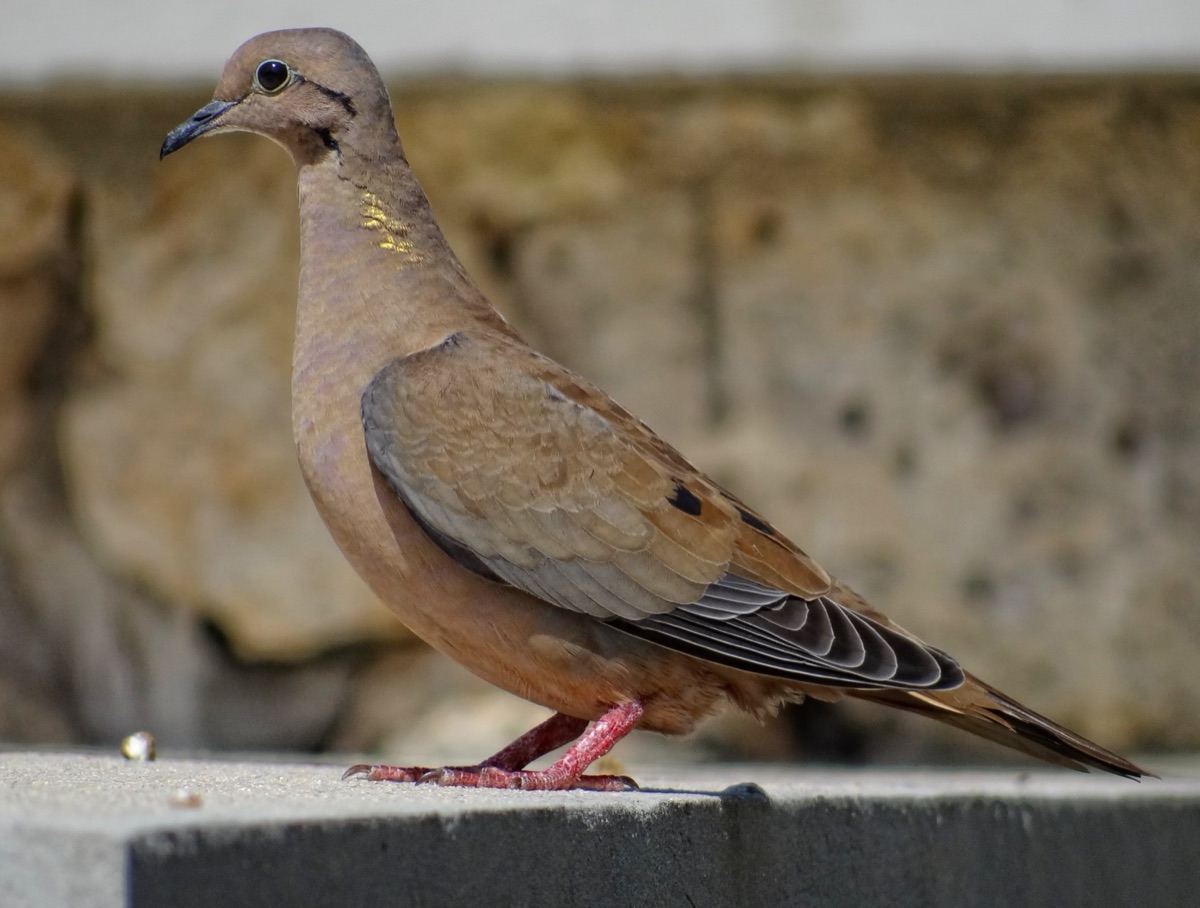
It is everywhere, which is exactly why it deserves a second look: the neck has golden and pink glints that only show in good light, and the two black face marks are its seal. It breeds almost year-round, which is why its flocks never shrink.
Behaviour
It eats seeds on the ground, in groups that take off with a distinctive whistle of wings.
How and when to see it
All year round, in any open area. The challenge is not seeing one: it is really looking at one for the first time.
Where to see it in the Iberá
The gateways of the Great Iberá Park where eared dove has confirmed presence:
Tours to see it
Verified providers operating at the gateways where eared dove lives. You contact them directly on WhatsApp from the app.
- Esteros Ñe’é
Experiences with local storytelling and a cultural take on the marshes.★ 5.0 - Navegando Ituzaingó
Private sailboat rides on the Paraná with captain Mario: sunrise, morning and sunset…★ 5.0 - Reserva Estero Camba Trapo
Private nature reserve of Ecoposada del Estero, on the Camba Trapo road. One of the…★ 5.0 - Excursiones Yetapá (Eduardo Alegre)
Excursions in the Iberá based in San Miguel, run by licensed guide Eduardo (Gualo)…★ 5.0
Species profile
- Common nameEared Dove
- Scientific nameZenaida auriculata
- GroupBird
- StatusNative
Other species of the Iberá
Discover all the wildlife of the Iberá
More than 250 species with photos, profiles and the gateways where you can see them. Map, providers and trip planner. Free, no download needed.
Open Iberá Experience