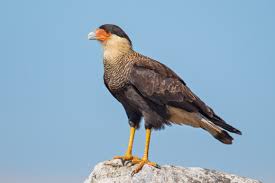
The largest and most conspicuous of the falconids of the Iberá. A brown body with a black nape and crest, a whitish neck and breast with brown barring, and a bare orange-red face that intensifies with the bird's mood. The bill is hooked and yellowish. It measures 49 to 59 cm. It is the opportunistic scavenger par excellence: it walks upright and confidently across pasture, road or sandy flat in search of anything edible.
Behaviour
A complete omnivore: carrion of all sizes, insects, frogs, small lizards, snakes, mice, eggs stolen from other birds' nests, and even plant matter. It often waits patiently for the turkey vulture or the black vulture to find a carcass, then displaces them and eats first. It associates with livestock to catch the insects they flush.
How and when to see it
Year round. Impossible not to see caracaras on any trip through the park, from the access roads to the interior of the portals.
Where to see it in the Iberá
The gateways of the Great Iberá Park where southern caracara has confirmed presence:
Tours to see it
Verified providers operating at the gateways where southern caracara lives. You contact them directly on WhatsApp from the app.
- Esteros Ñe’é
Experiences with local storytelling and a cultural take on the marshes.★ 5.0 - Gaucho Argentino
Horseback journeys across a network of refuges in Iberá. Multi-day rides with overnight…★ 5.0 - Jurassic Plant - Night Tour
The only carnivorous-plant garden in Argentina and a pioneer in Latin America. A guided…★ 5.0 - Irupé Excursiones
Guided hiking. Guided visit to museums, historic sites, chapels and trails of the town…★ 5.0
Species profile
- Common nameSouthern Caracara
- Scientific nameCaracara plancus
- GroupBird
- StatusNative
Other species of the Iberá
Discover all the wildlife of the Iberá
More than 250 species with photos, profiles and the gateways where you can see them. Map, providers and trip planner. Free, no download needed.
Open Iberá Experience