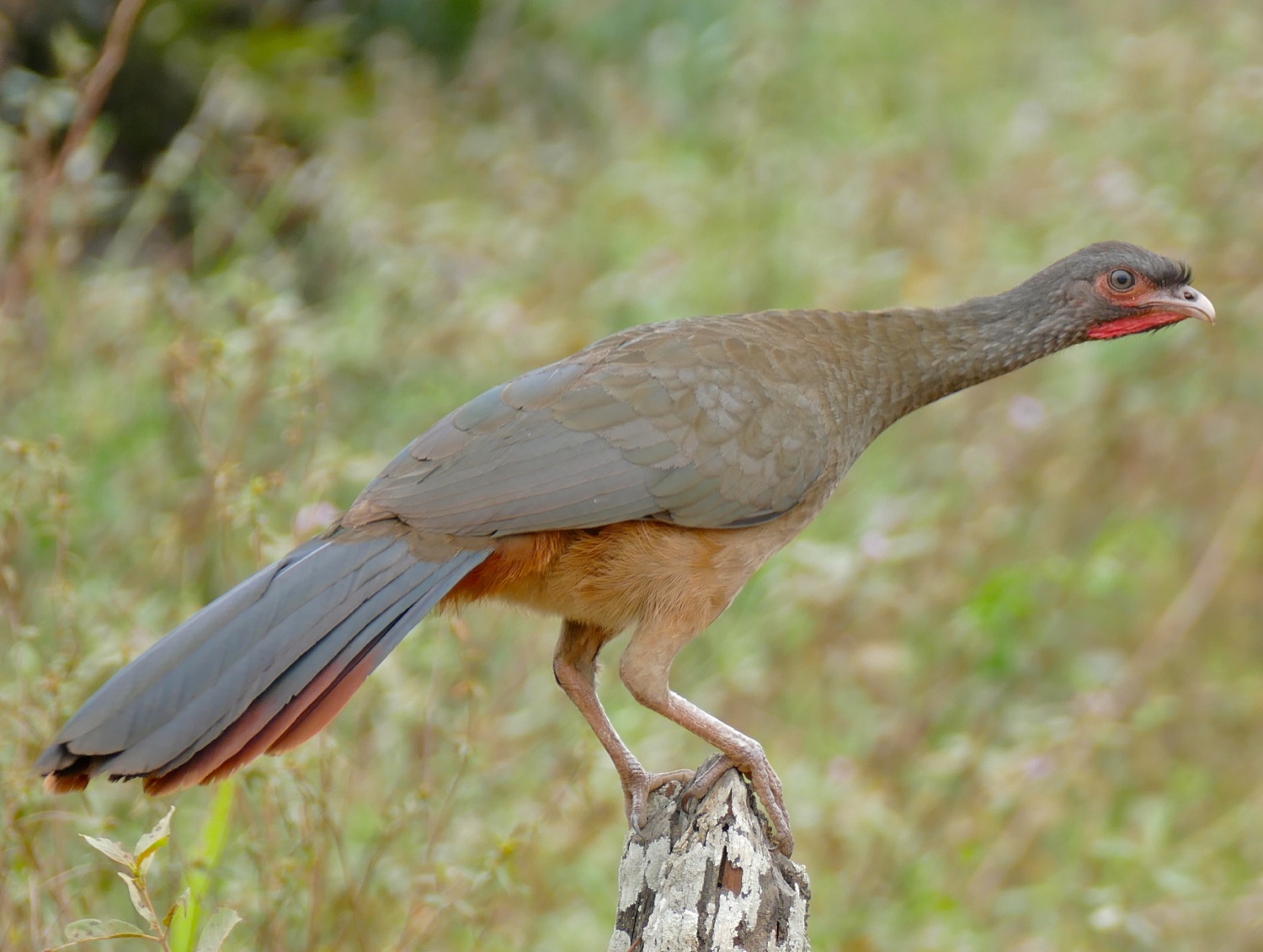
The most abundant cracid of the Chaco woodland and of the riverine forests of the Iberá. Olive-brown plumage on the back, paler on the belly, with a grayish head and neck and a bare reddish-skinned throat. The bill is robust and blackish. The tail is long with reddish outer feathers. It measures 50 to 56 cm. Its colonies in the woodlands are extremely noisy, especially at dawn when the groups exchange booming calls that echo throughout the grove.
Behaviour
Arboreal and gregarious: it lives in groups of 5 to 20 individuals that move together through the woodland canopy in search of fruit, shoots, flowers and insects. It rarely comes down to the ground. Dawn in the woodland with groups of chachalacas calling is one of the most characteristic sounds of northern Corrientes.
How and when to see it
Year round. It is heard from before dawn in the woodlands of Cambyretá, Carambola and Mburucuyá. Very easy to see on the branches of the large trees beside the tracks.
Where to see it in the Iberá
The gateways of the Great Iberá Park where chaco chachalaca has confirmed presence:
Tours to see it
Verified providers operating at the gateways where chaco chachalaca lives. You contact them directly on WhatsApp from the app.
- Esteros Ñe’é
Experiences with local storytelling and a cultural take on the marshes.★ 5.0 - Gaucho Argentino
Horseback journeys across a network of refuges in Iberá. Multi-day rides with overnight…★ 5.0 - Jurassic Plant - Night Tour
The only carnivorous-plant garden in Argentina and a pioneer in Latin America. A guided…★ 5.0 - Irupé Excursiones
Guided hiking. Guided visit to museums, historic sites, chapels and trails of the town…★ 5.0
Species profile
- Common nameChaco Chachalaca
- Scientific nameOrtalis canicollis
- GroupBird
- StatusNative
Other species of the Iberá
Discover all the wildlife of the Iberá
More than 250 species with photos, profiles and the gateways where you can see them. Map, providers and trip planner. Free, no download needed.
Open Iberá Experience